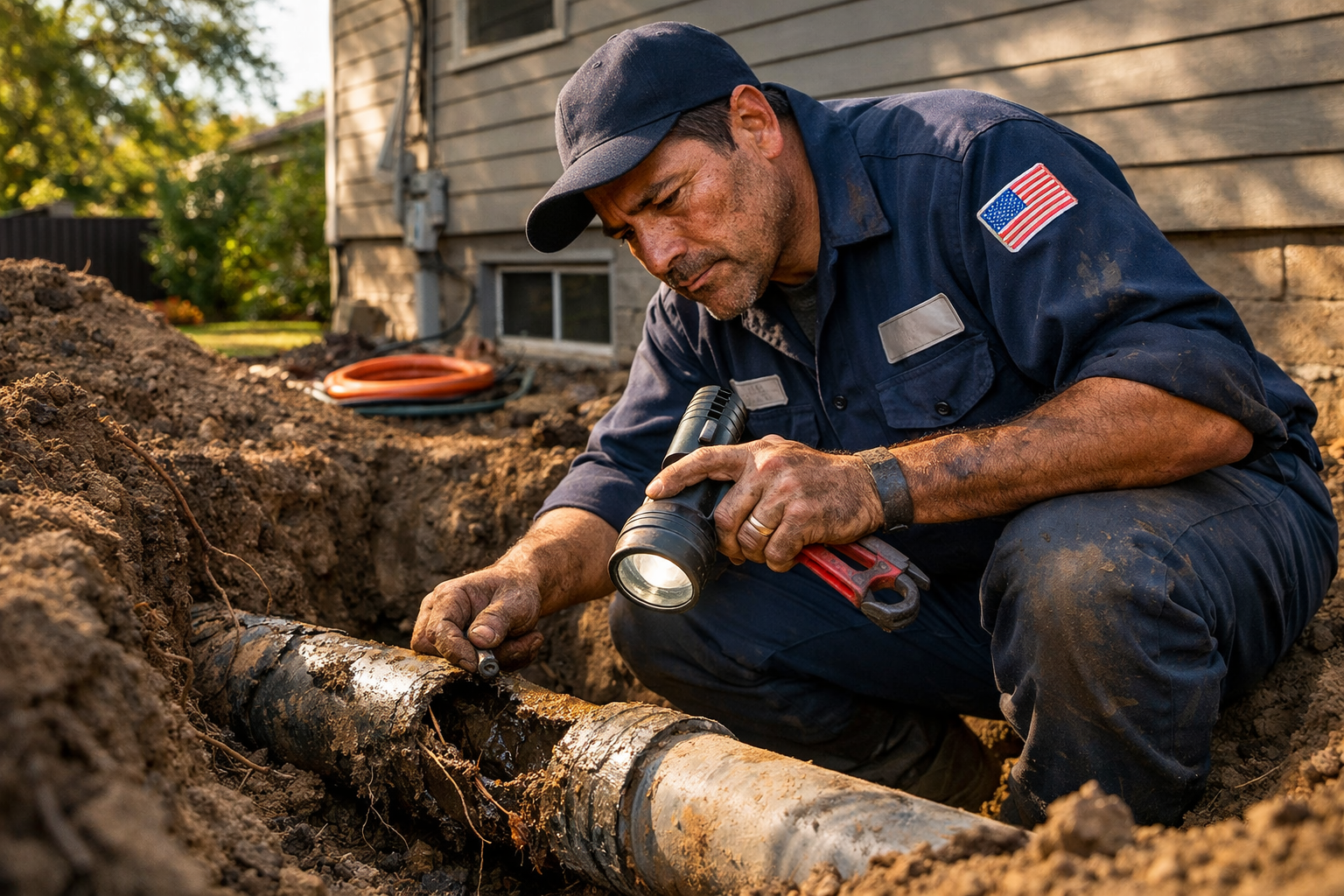
Your sewer line just backed up. Water is pooling in your basement. You wonder if sewer line insurance coverage will pay for this mess.
Most homeowners face this same shock. Your policy might not cover what you think it does. Understanding sewer line insurance coverage in Denver saves you from costly surprises down the road.
Sewer Experts has helped Denver homeowners with sewer line insurance coverage questions for over 25 years. Our team knows exactly what policies cover and what they don’t. This guide walks you through every detail you need to know right now.
Table of Contents
- What Standard Homeowners Insurance Covers for Sewer Lines
- Common Sewer Line Insurance Coverage Exclusions
- Optional Sewer Line Insurance Coverage You Can Add
- Warning Signs Your Sewer Line Needs Attention
- How to File a Sewer Line Insurance Coverage Claim
- Preventing Sewer Line Damage to Protect Your Coverage
What Standard Homeowners Insurance Covers for Sewer Lines
Most standard policies offer limited sewer line insurance coverage. The key word here is “sudden.” Your policy typically covers damage that happens all at once. A tree falls and crushes your pipe. That’s usually covered.
But slow wear and tear gets different treatment. Pipes that corrode over 20 years aren’t sudden events. Your sewer line insurance coverage won’t pay for gradual deterioration. Insurance companies expect you to maintain your property.
Sudden and Accidental Damage
Your policy covers certain unexpected events. A contractor hits your sewer line with heavy equipment. Water damage from that break gets covered under most standard plans. The Insurance Information Institute explains coverage basics in detail.
Fire damage to sewer lines falls under this category too. So does damage from sudden ground movement. These are all “peril” based events. Your sewer line insurance coverage kicks in when something dramatic and instant happens.
What Your Base Policy Typically Includes
Base homeowners insurance includes dwelling coverage. This pays for your house structure. It extends to permanently installed features. Your sewer line connects to your home. So partial coverage exists in most policies.
The coverage limit matters here. Most policies cap sewer line insurance coverage at $5,000 to $10,000. That might not cover a full line replacement. Denver sewer line repairs often cost $15,000 or more for complete jobs.
Key Takeaway: Standard policies cover sudden sewer line damage but cap payouts low. Know your limit before problems hit.
Common Sewer Line Insurance Coverage Exclusions
Insurance companies write exclusions into every policy. These are things they won’t pay for. Understanding sewer line insurance coverage exclusions protects you from claim denials. Let’s look at what typically doesn’t get covered.
Wear and Tear Over Time
Old pipes eventually fail. Rust eats through cast iron. Clay pipes crack from decades of use. No sewer line insurance coverage pays for normal aging. Insurance sees this as your maintenance responsibility.
Your policy expects you to replace old infrastructure. If your home has 50-year-old sewer lines, you’re on the hook. This is the single biggest exclusion in sewer line insurance coverage. Plan ahead for this expense.
Tree Root Intrusion
Tree roots cause major sewer line problems in Denver. They seek out water sources. Your pipes provide exactly that. Roots break through joints and cracks. They fill pipes completely over time.
Most sewer line insurance coverage excludes root damage. Why? Because policies view this as preventable. You should remove problem trees near lines. You should maintain your landscaping. The video inspection service can spot root intrusion early.
Damage Outside Your Property Line
Your sewer line runs from your house to the street. The city owns the main sewer line. You own the lateral line to that connection. But where does your property end?
Sewer line insurance coverage stops at your property boundary. Damage on city property isn’t your insurance problem. But it’s not the city’s problem either. This gray area catches many homeowners off guard. You might pay out of pocket for repairs.
Lack of Maintenance
You must maintain your sewer line. Regular cleanings prevent backups. Inspections catch problems early. If you neglect basic care, your sewer line insurance coverage can deny claims.
Insurance adjusters look for maintenance records. They ask when you last cleaned your line. No records? Your claim might get rejected. Keep receipts from drain cleaning services for this reason.
Key Takeaway: Most exclusions relate to maintenance and gradual damage. You must prove sudden loss for coverage.
Optional Sewer Line Insurance Coverage You Can Add
Standard policies leave gaps. But you can buy extra protection. Optional sewer line insurance coverage fills these holes. Let’s explore what additional coverage looks like and what it costs.
Water Backup Coverage Endorsement
This endorsement covers sewer backups into your home. Water comes up through drains. Your basement floods with sewage. Standard policies often exclude this scenario completely.
Water backup coverage typically costs $40 to $100 per year. Coverage limits range from $5,000 to $25,000. This is the most important addition to your sewer line insurance coverage. Every Denver homeowner should consider it.
The coverage pays for water damage cleanup. It covers damaged belongings. It handles repairs to your home. But it still might not pay for the actual sewer line repair itself.
Service Line Coverage
This newer option specifically targets underground utilities. It covers your water line, sewer line, and other underground services. Service line coverage fills the biggest gap in standard sewer line insurance coverage.
This endorsement costs about $50 to $150 annually. Coverage usually caps at $10,000 to $25,000. It covers repairs or replacement of damaged lines. This includes gradual wear in some policies.
Check if tree root damage is included. Some service line policies cover roots. Others still exclude them. Read your specific endorsement carefully before buying.
Equipment Breakdown Coverage
Sewer ejector pumps and lift stations can fail. These mechanical parts move sewage in some homes. Standard sewer line insurance coverage often excludes mechanical breakdowns.
Equipment breakdown coverage handles these failures. It pays for pump replacement and damage from pump failure. This matters if your home sits below the main sewer line.
Expert Insight from Sewer Experts Team, Licensed Colorado Contractors:
“We see claim denials every week. Most happen because homeowners don’t know what their sewer line insurance coverage actually includes. Always buy the water backup endorsement at minimum.”
Home Warranty Plans
Home warranties differ from insurance. They’re service contracts for repairs and replacements. Many cover sewer lines up to a certain amount. This supplements your sewer line insurance coverage.
Home warranties typically cost $300 to $600 per year. They include a service call fee of $75 to $125 per visit. Coverage caps vary from $1,500 to $10,000 for sewer lines.
These plans work well for older homes. They cover wear and tear that insurance excludes. But read contracts carefully. Many exclude pre-existing conditions and require regular maintenance.
Key Takeaway: Optional coverage costs $100 to $200 yearly but can save you $20,000 in repair bills. Consider your home’s age and condition.
Warning Signs Your Sewer Line Needs Attention
Early detection protects your sewer line insurance coverage. It also prevents massive damage. Watch for these warning signs. Act fast when you spot them.
Slow Draining Throughout Your Home
One slow drain suggests a local clog. Multiple slow drains point to your main sewer line. This affects your sewer line insurance coverage if you ignore it.
Water backs up in lowest fixtures first. Your basement toilet or floor drain shows problems earliest. Kitchen and bathroom sinks drain slowly next. These signs mean your line is partially blocked.
Don’t wait for a complete backup. Call for inspection now. The sewer line repair team can clear blockages before they cause insurance-level damage.
Gurgling Sounds in Drains
Drains shouldn’t make noise. Gurgling means air is trapped in your line. Water can’t flow smoothly. Air bubbles push back up through your drains.
This often happens when tree roots block part of your pipe. It also occurs when pipes start to collapse. These sounds are your sewer line’s early warning system. Listen to them.
Sewage Odors Inside or Outside
Sewer gas smells terrible. It also indicates a problem with your line. Cracks or breaks let gas escape. This impacts your sewer line insurance coverage claim later.
Outside odors near your sewer line route suggest leaks. Wet spots in your yard confirm this. Raw sewage creates health hazards. It also damages your property foundation over time.
Unexplained Lawn Patches
Bright green grass patches seem nice. But they might signal a sewer leak underground. Sewage acts as fertilizer. Grass grows extra thick over leak spots.
Soggy areas when it hasn’t rained also indicate leaks. Your sewer line insurance coverage claim needs this evidence. Take photos of these patches before calling for repairs.
Rodent or Insect Problems
Rats and cockroaches enter through sewer line breaks. Even small cracks let them in. A sudden pest problem might stem from your sewer system.
This warning sign surprises many homeowners. But it’s common with older clay pipes. The pests follow sewage smells to find entry points. Fix your sewer line to solve the pest issue permanently.
Key Takeaway: Early warning signs let you prevent major damage. Document everything to support your sewer line insurance coverage claim if needed.
How to File a Sewer Line Insurance Coverage Claim
Filing a claim correctly makes the difference between approval and denial. Follow these steps for your sewer line insurance coverage claim. Documentation matters more than anything else.
Document the Damage Immediately
Take photos of everything. Capture water damage, sewage backups, and affected belongings. Video works even better. Walk through damaged areas narrating what you see.
Date stamp all documentation. Your sewer line insurance coverage claim needs a clear timeline. Write down when you first noticed problems. Note when damage occurred.
Don’t clean up before documenting. Insurance adjusters need to see original conditions. You can prevent further damage. But preserve evidence of what already happened.
Contact Your Insurance Company Fast
Call your insurer within 24 hours of discovery. Most policies require prompt notification. Delays can complicate your sewer line insurance coverage claim. Some insurers deny late-reported claims entirely.
Get a claim number immediately. Ask about next steps. Find out what documentation they need. Some insurers send adjusters right away. Others ask you to get repair estimates first.
Get Professional Inspection Reports
Insurance companies trust licensed contractors. DIY assessments don’t carry weight. Schedule a professional sewer line inspection immediately. The inspection report becomes crucial evidence for your claim.
Request a detailed report. It should identify the damage cause. It must explain if damage was sudden or gradual. This determines if your sewer line insurance coverage applies. Video inspection footage provides undeniable proof.
Obtain Detailed Repair Estimates
Get at least two repair quotes. Include all necessary work. Break down labor and materials separately. Your insurer needs to see exactly what repairs cost.
Make sure estimates address the damage cause. If roots damaged your line, the estimate should say so. If a sudden break occurred, that needs documentation. This connects your claim to your sewer line insurance coverage terms.
Keep All Communication Records
Save every email from your insurance company. Record phone call dates and names. Keep copies of all submitted documents. Your sewer line insurance coverage claim might take months to resolve.
Create a claim folder. Put everything in one place. This helps if disputes arise. It also speeds up the process when the adjuster asks for information.
Understand Your Out-of-Pocket Costs
You’ll pay your deductible first. This typically ranges from $500 to $2,500. Your sewer line insurance coverage only pays amounts above the deductible. Factor this into your budget.
You might also pay for coverage gaps. If damage exceeds your policy limit, you cover the difference. If exclusions apply, you pay for those portions. Emergency cleanup often comes from your pocket initially.
Expert Insight from Sewer Experts Team, Licensed Colorado Contractors:
“We help homeowners with sewer line insurance coverage documentation regularly. The number one mistake is inadequate photo evidence. Take 50 photos instead of 5. You can’t have too much proof.”
Key Takeaway: Document everything and act fast. Your sewer line insurance coverage claim depends on proof and timing.
Preventing Sewer Line Damage to Protect Your Coverage
Prevention is cheaper than repairs. It also protects your sewer line insurance coverage eligibility. Insurers reward good maintenance. They deny claims when you neglect basic care.
Schedule Regular Inspections
Get your sewer line inspected every 2-3 years. Video inspections show problems before they worsen. This costs $200 to $400 but saves thousands later.
Older homes need annual inspections. If your house is over 30 years old, inspect yearly. Original sewer lines in these homes are reaching end-of-life. Catch problems while your sewer line insurance coverage still applies.
Clean Your Lines Regularly
Professional cleaning removes buildup. It prevents blockages before they happen. Schedule cleaning every 18-24 months. This maintains your line and your coverage eligibility.
Keep all service receipts. These prove maintenance if you file a claim. Insurance adjusters look for this documentation. Regular cleaning shows you care for your property properly.
Manage Trees Near Sewer Lines
Plant trees away from sewer line routes. Keep aggressive species like willows far from underground pipes. Existing problem trees might need removal. This protects your sewer line insurance coverage from root-related claim denials.
Root barriers help with established trees. These plastic shields direct roots away from pipes. Install them if removing trees isn’t an option. Consult an arborist for proper placement.
Avoid Flushing Harmful Items
Only flush human waste and toilet paper. Everything else damages your sewer line over time. “Flushable” wipes aren’t actually flushable. They create clogs and void your sewer line insurance coverage claims.
Grease, oils, and fats solidify in pipes. Pour them in trash containers instead. Coffee grounds and eggshells also cause problems. Proper disposal prevents maintenance-related claim denials.
Address Small Issues Immediately
Minor leaks become major breaks. Small clogs grow into complete blockages. Fix problems when they’re still small. This preserves your sewer line insurance coverage for true emergencies.
Don’t ignore slow drains or minor backups. These are warning signs. Call professionals for diagnosis. The contact team can assess issues before they escalate.
Know Your Line’s Age and Material
Clay pipes last 50-60 years. Cast iron lasts 75-100 years. PVC lasts indefinitely. Know what material your line uses. Plan replacement before catastrophic failure.
This knowledge impacts your sewer line insurance coverage strategy. Older lines need that service line endorsement. Newer lines might skip extra coverage safely. Match your insurance to your infrastructure age.
Key Takeaway: Prevention costs hundreds but saves thousands. It also keeps your sewer line insurance coverage valid when you need it most.
Understanding Denver-Specific Sewer Line Insurance Coverage Considerations
Denver presents unique challenges for sewer lines. Clay soil expands and contracts dramatically. This movement stresses pipes year-round. Your sewer line insurance coverage needs to account for these local factors.
Clay Soil Impact on Sewer Lines
Colorado clay soil is highly reactive. It swells when wet and shrinks when dry. This constant movement shifts your sewer line. Joints separate and pipes crack over time.
Standard sewer line insurance coverage often excludes earth movement damage. But sudden ground shifts from extreme weather might qualify. Document weather conditions if your line breaks during storms or droughts.
Freeze-Thaw Cycles
Denver winters freeze and thaw repeatedly. Water inside cracked pipes expands when frozen. This widens existing cracks. Eventually pipes burst completely.
Your sewer line insurance coverage might cover sudden freeze damage. It won’t cover the original crack that let water in. This gray area causes many claim disputes. Proper insulation and depth prevent these problems.
Older Home Infrastructure
Many Denver neighborhoods feature homes from the 1950s and 1960s. Original sewer lines in these homes are now 60-70 years old. Clay and cast iron lines from this era are failing throughout the metro area.
Sewer line insurance coverage for older homes costs more. Some insurers require inspection reports before issuing policies. Others exclude pre-existing conditions entirely. Shop carefully if your home is over 50 years old.
Municipal Requirements and Coverage
Denver requires backflow prevention devices in some areas. These protect the municipal system from contamination. If yours fails, damage might not be covered. Check your sewer line insurance coverage for backflow device protection.
The city also has specific repair requirements. Not all contractors meet Denver standards. Using unlicensed contractors can void your insurance claim. Always hire licensed professionals like sewer line replacement specialists who know local codes.
Key Takeaway: Denver’s climate and soil create unique challenges. Your sewer line insurance coverage must address these local conditions specifically.
Comparing Sewer Line Insurance Coverage Options
Different policies offer different protection levels. Understanding these differences helps you choose the right sewer line insurance coverage. Let’s compare your options side by side.
Standard Homeowners Policy Only
This basic option covers sudden and accidental damage only. Coverage caps at $5,000 to $10,000. It excludes backups, wear and tear, and most common problems.
Cost: Included in standard premium. Pros: No additional cost. Cons: Very limited protection. Best for: New homes with new sewer lines only.
Standard Policy Plus Water Backup
This adds sewage backup coverage to your base policy. It protects your home from water damage. But it still might not pay for the actual line repair.
Cost: Add $40-$100 annually. Pros: Protects against most common Denver sewer problems. Cons: Doesn’t cover the pipe itself. Best for: Most Denver homeowners as minimum protection.
Standard Policy Plus Service Line Coverage
This option covers your underground sewer line specifically. It includes gradual damage in some policies. Coverage extends from house to property line.
Cost: Add $50-$150 annually. Pros: Covers actual pipe repairs or replacement. Cons: Still has coverage caps and some exclusions. Best for: Homes with aging infrastructure.
Comprehensive Package
This combines water backup and service line coverage. It offers maximum sewer line insurance coverage protection. You’re covered for almost all scenarios.
Cost: Add $100-$250 annually. Pros: Complete peace of mind. Cons: Highest annual cost. Best for: Older homes or those with previous issues.
Home Warranty Alternative
Some homeowners choose warranties instead of insurance endorsements. Warranties cover maintenance and wear issues. But they don’t cover your belongings or water damage.
Cost: $300-$600 annually plus service fees. Pros: Covers wear and tear. Cons: Doesn’t replace insurance. Best for: Supplement to insurance, not replacement.
Key Takeaway: Most Denver homeowners need at minimum water backup coverage. Homes over 30 years old should add service line coverage too.
Frequently Asked Questions
Does homeowners insurance cover sewer line replacement?
Standard policies rarely cover full replacement costs. They cover sudden damage only. Wear and tear isn’t covered under basic sewer line insurance coverage. Service line endorsements add this protection. Expect to pay extra for replacement coverage.
What causes most sewer line insurance coverage claim denials?
Lack of maintenance causes most denials. Insurance requires proof of regular care. Gradual damage also gets denied often. Tree root damage is another common exclusion. Always document maintenance and address problems quickly to protect your coverage.
How much does sewer line insurance coverage cost in Denver?
Water backup endorsements cost $40-$100 yearly. Service line coverage adds $50-$150 per year. Comprehensive protection runs $100-$250 annually. These costs are far less than repair bills. A full sewer line replacement costs $10,000-$25,000 in Denver.
When should I file a sewer line insurance coverage claim?
File within 24 hours of discovering major damage. Don’t wait if sewage backs up into your home. Document everything before cleanup. Quick action prevents claim disputes. Delayed reporting can void your sewer line insurance coverage entirely.
Can I prevent sewer line insurance coverage issues?
Yes, through regular maintenance and inspections. Clean your lines every 18-24 months. Inspect every 2-3 years minimum. Address small problems immediately. Keep all maintenance records. This documentation protects your sewer line insurance coverage when you need it.
Step-by-Step Process: Maximizing Your Sewer Line Insurance Coverage
- Review your current homeowners policy carefully. Identify your base sewer line insurance coverage limits and exclusions now.
- Contact your insurance agent. Ask about water backup and service line endorsements available for your property.
- Get your sewer line inspected by licensed professionals. This establishes a baseline for your line’s current condition today.
- Add appropriate endorsements to your policy. Most Denver homes need at minimum water backup coverage added.
- Create a maintenance schedule. Mark your calendar for inspections every 2-3 years and cleaning every 18-24 months.
- Document all maintenance work completed. Keep receipts, reports, and photos in a dedicated sewer line insurance coverage file.
- Watch for warning signs daily. Note any slow drains, odors, or unusual sounds in your plumbing system.
- Act immediately if problems appear. Don’t wait for small issues to become insurance-level emergencies.
- Take extensive photos if damage occurs. Document everything before any cleanup to support your sewer line insurance coverage claim.
- File claims within 24 hours. Contact your insurer immediately and follow their specific claim process exactly.
Quick Reference: Sewer Line Insurance Coverage Defined
Sewer line insurance coverage protects homeowners from costs related to sewer line damage and failure. Standard homeowners policies provide limited coverage for sudden and accidental damage only. Most base policies cap sewer line insurance coverage at $5,000 to $10,000 and exclude gradual wear, tree roots, and maintenance-related failures. Homeowners can purchase additional protection through water backup endorsements, which cover sewage entering the home, and service line coverage endorsements, which protect the underground pipe itself. Comprehensive sewer line insurance coverage combines multiple endorsements to provide maximum protection. This coverage is especially important in Denver due to reactive clay soil, freeze-thaw cycles, and aging infrastructure in many neighborhoods. Proper maintenance documentation is essential to maintain coverage eligibility and prevent claim denials.
Making the Right Sewer Line Insurance Coverage Decision
Your sewer line sits underground and out of sight. But problems surface fast when failure happens. Water damage ruins basements. Sewage creates health hazards. Repair bills reach $20,000 or more for full replacement.
Standard sewer line insurance coverage won’t handle these costs. You need additional protection. Water backup coverage is essential for Denver homeowners. Service line coverage adds another layer of security for older homes.
Don’t wait until problems strike. Review your policy today. Add necessary endorsements now. Schedule that first inspection this month. These simple steps protect you from financial disaster and maintain your sewer line insurance coverage when you need it most.
Take action before the next heavy rain or freeze cycle tests your system. Contact Sewer Experts for inspection and maintenance services. Your future self will thank you when your coverage actually pays instead of getting denied.
“`