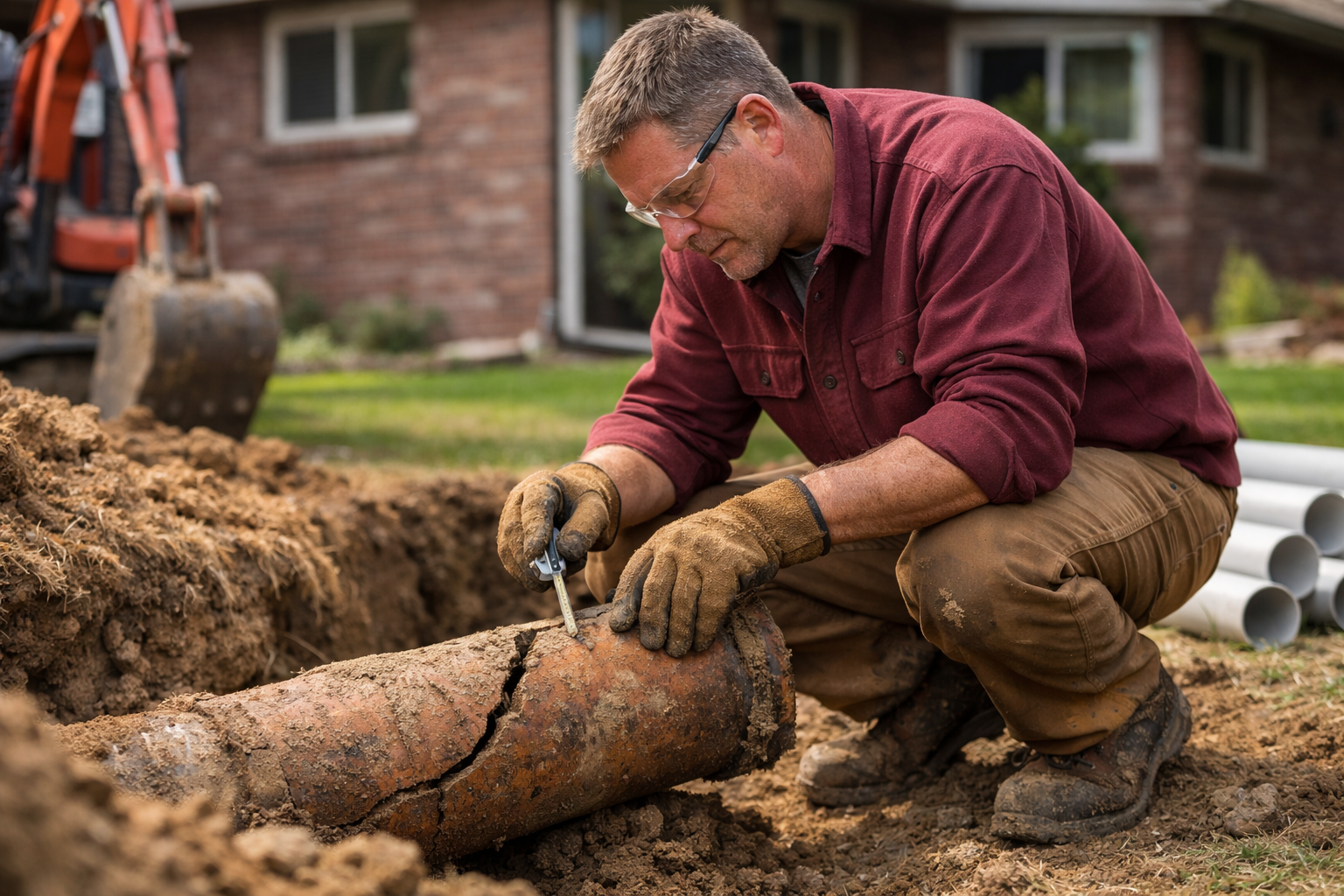
Your sewer line age matters more than you think. Most Denver homeowners ignore this until a backup forces action. So, knowing your sewer line lifespan helps you plan ahead.
Sewer lines fail without warning. But the signs show up early if you know what to watch. This guide shows you how long sewer lines last in Denver.
You will learn the real lifespan of each sewer pipe material. You will see the warning signs of aging sewer lines. Then, you will know when repair makes sense and when replacement saves money.
Table of Contents
- What Affects Sewer Line Lifespan
- Sewer Line Lifespan By Material Type
- Warning Signs Your Sewer Line Is Aging
- How To Extend Your Sewer Line Lifespan
- When To Replace vs Repair Your Sewer Line
- Quick Reference Definition
- Step-by-Step Sewer Line Assessment Process
- Frequently Asked Questions
What Affects Sewer Line Lifespan
Several factors control how long your sewer line lasts. The pipe material plays the biggest role in sewer line lifespan. But soil conditions matter just as much.
Denver soil shifts and settles over time. Clay soil expands when wet and shrinks when dry. So, this movement stresses your sewer line every season.
Soil Type and Ground Movement
Clay-heavy soil around Denver creates pressure on sewer pipes. The expansion cycle causes small cracks first. Then, those cracks grow into bigger problems.
Rocky soil can puncture older sewer lines during settling. Tree roots find these weak spots fast. Also, roots grow inside sewer pipes seeking water and nutrients.
Ground freezing affects shallow sewer line sections. Frost heave pushes pipes upward in winter. So, this stress shortens your sewer line lifespan over decades.
Installation Quality and Depth
Proper installation adds years to any sewer line material. Pipes need correct slope for drainage. Also, bedding material protects against ground movement.
Shallow sewer lines face more temperature stress. Deep installations avoid frost damage better. But depth also makes sewer line repair more complex when needed.
Poor backfill creates voids under pipes. These voids let pipes sag or break. So, professional installation protects your sewer line investment.
Water Chemistry and Flow Patterns
Hard water in Denver corrodes metal sewer pipes faster. Mineral buildup narrows pipe diameter over time. Then, slow drainage becomes a constant issue.
Low flow lets solids settle in sewer lines. This creates clogs that stress pipe walls. Also, standing water accelerates corrosion inside metal pipes.
According to the EPA water quality standards, acidic water shortens metal pipe lifespan significantly. pH levels below 6.5 attack cast iron and steel aggressively.
Tree Root Intrusion Impact
Mature trees send roots 50 feet or more seeking moisture. Sewer lines provide both water and nutrients. So, roots enter through joints and small cracks.
Once inside, roots grow thick and block flow. They also crack pipes wider as they expand. Also, root removal damages aging sewer line walls further.
Fast-growing trees like cottonwoods and willows threaten sewer lines most. But any tree within 30 feet poses risk. So, regular camera inspections catch root intrusion early.
Sewer Line Lifespan By Material Type
Each sewer pipe material has different life expectancy. Knowing your sewer line material helps you plan for replacement. So, check your home records first.
Older Denver homes often have cast iron or clay sewer pipes. Newer homes use PVC or modern materials. But age alone does not tell the whole story.
Cast Iron Sewer Line Lifespan
Cast iron sewer lines last 50 to 75 years typically. But Denver water chemistry can shorten this timeline. So, many cast iron lines fail around 50 years.
These pipes corrode from inside out. Small pinholes appear first, then grow larger. Also, rust buildup narrows the pipe diameter over time.
Cast iron was common in Denver homes built before 1975. The material handles ground movement well initially. But corrosion weakens the pipe structure steadily.
Key Warning: Cast iron sewer lines over 50 years old need camera inspection now.
Clay Pipe Sewer Line Lifespan
Clay sewer pipes can last 50 to 60 years. But joints between sections fail sooner. So, root intrusion happens easily at these weak points.
Clay resists corrosion better than metal pipes. However, ground movement cracks clay easily. Also, these pipes break under pressure from settling.
Denver homes from 1900 to 1980 often have clay sewer lines. The material was cheap and readily available. But modern options last much longer.
Orangeburg Pipe Sewer Line Lifespan
Orangeburg sewer lines last only 30 to 50 years. This fiber pipe material degrades in soil moisture. So, most Orangeburg pipes fail before 50 years.
These pipes were used mainly from 1945 to 1972. They collapse under pressure over time. Also, roots penetrate Orangeburg very easily.
If your Denver home was built in this era, check your sewer line material. Orangeburg pipes need replacement now in most cases. So, do not wait for complete failure.
PVC Sewer Line Lifespan
PVC sewer lines last 100 years or more. This plastic material resists corrosion completely. Also, tree roots cannot penetrate solid PVC easily.
Most Denver homes built after 1980 have PVC sewer lines. The joints seal tight with solvent cement. So, root intrusion at connections is rare.
PVC handles ground movement better than rigid materials. Temperature changes do not affect it much. Also, professional sewer line installation ensures long PVC lifespan.
ABS Plastic Sewer Line Lifespan
ABS sewer lines also last 50 to 80 years. This black plastic resists chemicals well. But UV exposure weakens ABS over time.
Some Denver homes use ABS for indoor drain lines. It works well for this purpose. However, PVC performs better for main sewer line runs.
Modern Trenchless Pipe Lining Lifespan
Trenchless pipe lining creates a new pipe inside old ones. The cured-in-place pipe lasts 50 years or more. So, trenchless pipe lining extends sewer line lifespan without digging.
This epoxy liner resists roots and corrosion completely. It also seals cracks and leaks permanently. Also, the smooth surface improves flow better than old pipes.
Expert Insight from Sewer Experts Team:
“We see cast iron sewer lines failing around 55 years in Denver. Clay pipes last longer but joints fail first. Modern PVC gives the best lifespan value.”
Warning Signs Your Sewer Line Is Aging
Your sewer line shows symptoms before complete failure. Catching these signs early saves thousands in damage costs. So, watch for these common problems.
Most homeowners ignore slow drains until backups happen. But slow drainage means your sewer line needs attention now. Also, strange sounds from drains signal issues.
Frequent Drain Clogs and Backups
Clogs in multiple drains point to sewer line problems. One clogged sink means that drain needs clearing. But clogs throughout the home signal main line issues.
Backups in basement drains happen first usually. Water seeks the lowest point when the sewer line blocks. So, floor drains overflow before upstairs fixtures.
Tree roots cause most recurring clogs in aging sewer lines. Chemical drain cleaners do not remove roots effectively. Also, these chemicals damage old pipe walls further.
Slow Drainage Throughout the Home
Aging sewer lines drain slower over time. Buildup narrows the pipe diameter gradually. So, you notice slower drainage across all fixtures.
When every drain runs slow, your main sewer line needs inspection. This symptom means partial blockage or pipe degradation. Also, slow flow increases backup risk significantly.
Professional drain cleaning helps temporarily with slow flow. But recurring problems mean your sewer line lifespan is ending. So, schedule camera inspection to see pipe condition.
Gurgling Sounds From Drains
Gurgling means trapped air in your sewer line. Blockages create air pockets that escape through fixtures. So, toilets and drains make bubbling sounds.
These sounds get louder as blockages grow worse. You might hear gurgling when using nearby fixtures. Also, gurgling can signal venting problems or partial clogs.
Consistent gurgling from multiple drains means main sewer line issues. The trapped air seeks escape through any opening. So, this symptom needs professional diagnosis fast.
Sewage Odors Inside or Outside
Sewer gas smells mean your line has cracks or breaks. These openings let odors escape into your home. Also, outdoor sewage smells indicate underground leaks.
Methane gas from sewage is both smelly and dangerous. Small amounts cause headaches and nausea. So, never ignore persistent sewer odors anywhere.
Cracks in aging sewer lines release gases constantly. The smell gets worse in humid weather. Also, venting problems can cause similar odors indoors.
Wet Spots and Lush Grass Patches
Soggy areas in your yard signal underground sewer line leaks. Sewage fertilizes grass, creating extra-green patches. So, unexplained wet spots need investigation.
Leaking sewage keeps soil moist even during dry periods. You might see sinkholes forming over broken pipe sections. Also, paved areas can crack from underground water erosion.
According to the EPA sewer overflow guidance, even small leaks waste water and threaten property foundations. Early detection prevents costly structural damage later.
Foundation Cracks and Settling
Sewer line leaks erode soil under foundations. This creates voids that let concrete settle. So, new cracks in foundation walls can trace to sewer problems.
Doors and windows that stick suddenly might indicate settling. Uneven floors also suggest foundation issues below. Also, sewer line leaks take years to show these symptoms.
The connection is not always obvious at first. But persistent moisture from aging sewer lines causes serious damage. So, foundation issues warrant sewer line inspection too.
Increased Water Bills Without Explanation
Leaking sewer lines waste treated water constantly. Your water meter runs even when no fixtures are on. So, unexplained bill increases can mean sewer line leaks.
Check your water meter with all fixtures off. If it still moves, you have a leak somewhere. Also, sewer line leaks usually waste more water than fixture leaks.
How To Extend Your Sewer Line Lifespan
Regular maintenance adds years to any sewer line material. Simple habits prevent most clogs and damage. So, protecting your sewer line saves money long-term.
Most sewer line problems develop slowly over years. Preventive care catches issues before they become emergencies. Also, professional inspections spot hidden damage early.
Regular Camera Inspections
Camera inspections show your sewer line condition clearly. High-definition cameras travel through pipes revealing cracks and roots. So, you see problems before they cause backups.
Schedule inspections every 2 to 3 years for older homes. Homes with mature trees need annual inspections. Also, inspect before buying any property over 30 years old.
Professional video inspection costs less than emergency repairs. The camera footage shows exactly where problems exist. So, you can plan repairs strategically instead of reactively.
Proper Waste Disposal Habits
What goes down your drains affects sewer line lifespan directly. Grease solidifies in pipes and traps other debris. So, never pour cooking oil or grease down drains.
Flush only toilet paper and human waste in toilets. Wipes labeled “flushable” still clog sewer lines often. Also, feminine products and paper towels cause serious blockages.
Food waste belongs in trash or compost, not drains. Coffee grounds and eggshells accumulate in sewer lines. So, use drain screens to catch debris before it enters pipes.
Tree and Shrub Management
Plant trees away from sewer line paths. Root barriers installed during landscaping protect pipes. So, plan your yard with underground utilities in mind.
Remove trees growing too close to existing sewer lines. Fast-growing species threaten pipes most. Also, consider root-killing treatments for established problem trees.
Know where your sewer line runs before planting anything. Most cities provide utility location services free. So, call before digging to avoid damaging pipes yourself.
Professional Drain Cleaning Schedule
Annual professional cleaning removes buildup before it causes problems. Hydro-jetting scours pipe walls clean safely. So, regular service prevents most emergency clogs.
Chemical drain cleaners damage old sewer line walls over time. The harsh chemicals weaken pipes already stressed by age. Also, these products rarely clear main line blockages effectively.
Professional equipment clears roots and buildup safely. Technicians also inspect during cleaning to spot issues. So, you get maintenance and assessment together.
Water Pressure Management
Extremely high water pressure stresses old sewer line joints. Pressure regulators protect both supply and drain pipes. So, maintain pressure between 40 and 70 PSI.
Test your home water pressure annually with a simple gauge. Hardware stores sell these gauges for under $15. Also, high pressure wastes water and energy constantly.
Winter Protection Measures
Insulate exposed sewer line sections before winter. Frozen pipes can crack even below ground in severe cold. So, protect shallow sections near the home foundation.
Keep water running during extreme cold snaps. Moving water resists freezing better than standing water. Also, a slow drip prevents drainage system freeze-ups.
Denver winters stress aging sewer lines significantly. Temperature cycles expand and contract pipes daily. So, older systems need extra winter monitoring.
Expert Insight from Sewer Experts Team:
“We find that homes with annual inspections avoid 80% of emergency sewer line repairs. Prevention costs far less than emergency replacement.”
When To Replace vs Repair Your Sewer Line
Deciding between sewer line repair and replacement saves money long-term. Small problems need simple fixes usually. But aging sewer lines often need complete replacement soon.
The 50% rule helps make this decision clearly. If repairs cost more than half of replacement, replace instead. So, calculate both options before choosing.
Repair Makes Sense When
Single isolated breaks in otherwise healthy sewer lines need repair only. Modern techniques fix specific sections without full replacement. So, spot repairs extend overall sewer line lifespan affordably.
Sewer lines under 40 years old usually benefit from targeted repairs. The remaining pipe sections still have decades of life left. Also, repair costs stay low for localized damage.
Root intrusion in one area can be cleared and that section lined. This prevents future root growth at that spot. So, trenchless pipe bursting repairs specific sections without digging.
Replacement Makes Sense When
Multiple problem areas throughout your sewer line indicate system-wide failure. Fixing one spot today means another fails next month. So, full replacement stops the cycle of repairs.
Sewer lines over 50 years old often need replacement regardless of symptoms. The remaining lifespan is short even with repairs. Also, modern materials outlast old pipes by decades.
Entire sewer line material change requires full replacement. You cannot mix cast iron with PVC effectively. So, upgrading materials means new line installation.
Cost Comparison Factors
Repair costs range from $1,500 to $4,000 for typical spot fixes. Full sewer line replacement costs $3,000 to $25,000 depending on length. So, complex projects cost more than simple ones.
Trenchless methods cost more upfront but save landscaping expenses. Traditional excavation destroys driveways and gardens that need restoration. Also, trenchless work finishes faster than digging.
According to HomeAdvisor sewer line cost data, replacement becomes cost-effective when repairs exceed $5,000 total. Multiple repairs within 5 years signal replacement time.
Lifespan Remaining Calculation
Estimate years left by subtracting current age from expected material lifespan. Cast iron sewer lines at 55 years have maybe 5 years remaining. So, repairs make less sense here.
If remaining lifespan is under 10 years, replacement makes financial sense. You avoid paying twice for the same problem. Also, new sewer lines add home value significantly.
Camera inspection shows actual pipe condition versus calendar age. Some 40-year-old lines look like new inside. But others fail at 30 years from corrosion.
Future Problem Prevention
Replacement lets you reroute sewer lines away from problem trees. This prevents future root intrusion completely. So, planning now saves money for decades ahead.
Modern pipe materials resist issues that plagued old ones. PVC will not corrode like cast iron does. Also, proper installation prevents settling damage long-term.
Warranty coverage favors replacement over repair too. New sewer line installation includes 5-year or longer warranties. But repairs might have only 1-year coverage.
Quick Reference Definition
Sewer line lifespan is the expected number of years a sewer pipe system functions properly before requiring replacement. This lifespan varies by material type, with cast iron lasting 50-75 years, clay lasting 50-60 years, and PVC lasting 100 years or more. Factors affecting sewer line lifespan include soil conditions, installation quality, water chemistry, tree root intrusion, and maintenance practices. Denver homeowners should inspect older sewer lines regularly and plan replacement when pipes exceed 50 years of age or show multiple failure symptoms. Professional camera inspection reveals actual pipe condition better than age alone.
Step-by-Step Sewer Line Assessment Process
Follow these steps to evaluate your sewer line condition systematically. This process helps you make informed decisions about repair or replacement. So, start with simple checks first.
- Determine Your Sewer Line Age: Check home sale records or city building permits for installation date. Homes built before 1980 likely have aging sewer lines needing inspection.
- Identify Your Pipe Material: Review home inspection reports or contact previous owners about sewer line material. Cast iron, clay, and Orangeburg pipes have shorter lifespans than PVC.
- Document Current Symptoms: List all drainage issues, odors, and yard wet spots noticed in the past year. Multiple symptoms indicate serious sewer line problems requiring professional help.
- Schedule Professional Camera Inspection: Contact licensed plumbers for high-definition sewer line video inspection. This reveals cracks, roots, corrosion, and blockages precisely.
- Review Inspection Footage Together: Watch the camera recording with the technician to understand damage locations and severity. Ask questions about repair options shown in the video.
- Calculate Remaining Expected Lifespan: Subtract current age from material expected lifespan to estimate years remaining. Sewer lines with under 10 years left often need replacement now.
- Get Written Estimates for Both Options: Request detailed quotes for targeted repair and full replacement separately. Compare long-term costs including warranties and future maintenance.
- Consider Trenchless Technology Benefits: Ask about trenchless pipe lining or bursting instead of excavation. These methods preserve landscaping and complete work faster than traditional digging.
- Plan Timing Based on Problem Severity: Emergency issues need immediate repair, while proactive replacement can wait for optimal scheduling. Avoid winter replacement when possible in Denver climate.
- Arrange Financing if Needed: Many sewer line contractors offer payment plans for replacement projects. Home equity loans or insurance coverage may help with major repairs too.
Frequently Asked Questions
What is the average lifespan of residential sewer lines?
The average sewer line lifespan ranges from 50 to 100 years depending on pipe material. Cast iron sewer lines last 50 to 75 years typically. Clay sewer pipes function for 50 to 60 years. PVC sewer lines last 100 years or more. Denver soil conditions and maintenance practices affect these lifespans significantly. Professional inspection reveals actual pipe condition better than age estimates alone.
How do I know if my sewer line needs replacement?
Your sewer line needs replacement when you see multiple failure symptoms together. Frequent backups, slow drainage, sewage odors, and wet yard spots indicate serious problems. Sewer lines over 50 years old with any symptoms should be replaced. Camera inspection shows cracks, root intrusion, and corrosion clearly. Also, replacement makes sense when repair costs exceed half of replacement cost.
Can tree roots really damage sewer lines?
Tree roots cause major damage to aging sewer lines throughout Denver. Roots enter through small cracks and joints seeking moisture and nutrients. Once inside, roots grow thick and block sewer line flow completely. Roots also crack pipes wider as they expand over years. Trees within 30 feet of sewer lines pose the greatest risk. Regular camera inspections catch root intrusion before severe damage occurs.
Is trenchless sewer line repair worth the extra cost?
Trenchless sewer line methods cost more initially but save money overall in most cases. These techniques preserve landscaping, driveways, and gardens completely. Traditional excavation requires expensive restoration after pipe replacement. Trenchless work also completes faster than digging, usually within one day. The 50-year warranty on trenchless lining protects your investment long-term. So, trenchless methods deliver better value despite higher upfront costs.
How often should I inspect my sewer line?
Inspect your sewer line every 2 to 3 years if your home is over 30 years old. Homes with mature trees need annual sewer line camera inspections. Schedule inspection immediately if you notice any drainage problems or sewage odors. Pre-purchase inspections reveal sewer line condition before buying older homes. Regular inspections catch small problems before they become expensive emergencies. Professional video inspection costs far less than emergency sewer line repairs or replacement.