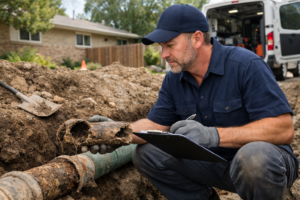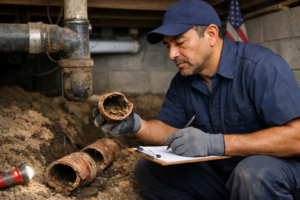
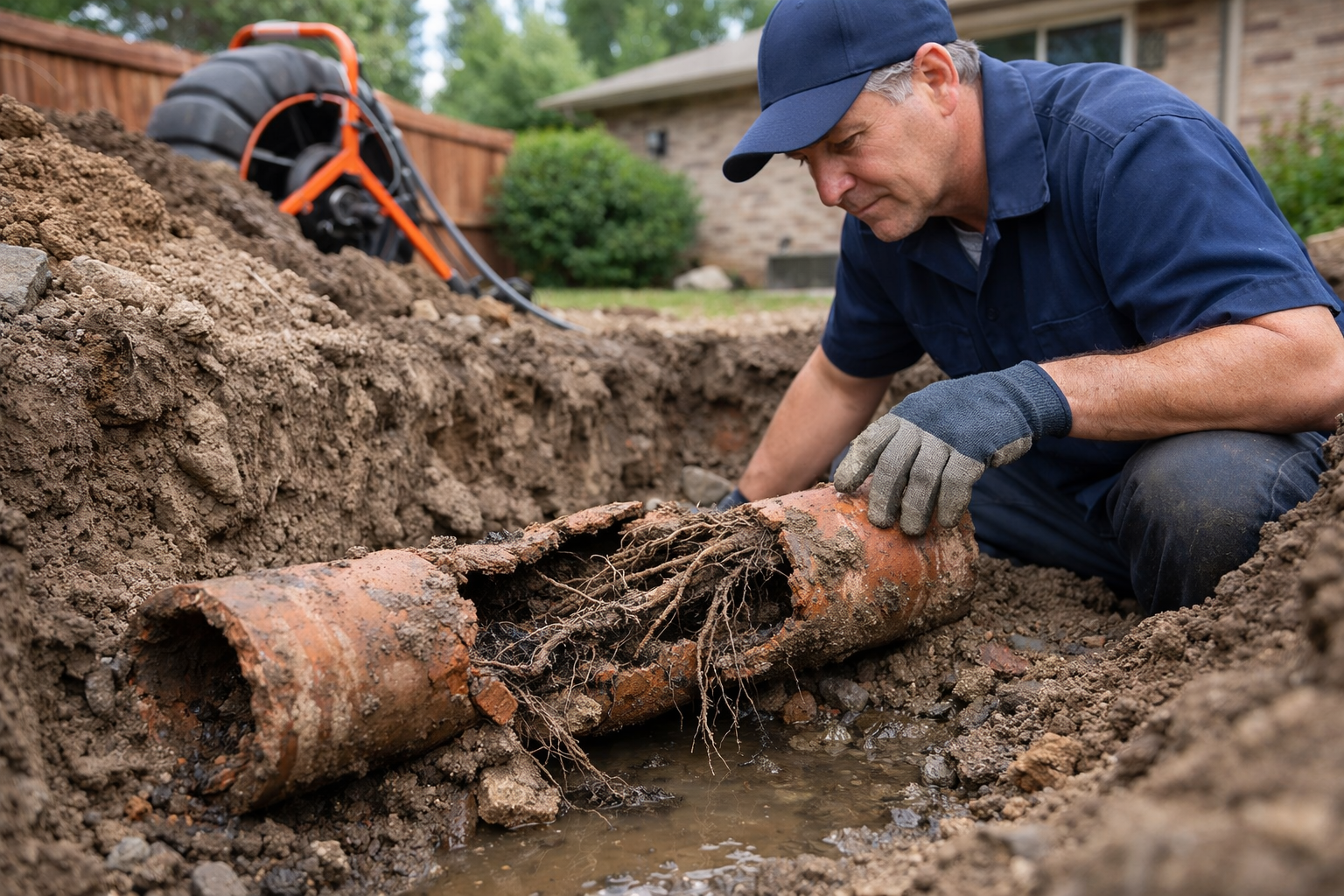
Your sewer line sits underground. The soil around it pushes and pulls constantly. Colorado’s expansive clay soil creates unique pressure on sewer pipes. This soil impact on sewer lines causes cracks, breaks, and costly repairs.
So, understanding how soil conditions affect sewer line failure helps you protect your property. The ground beneath your home shifts with moisture changes. Clay soil expands when wet and shrinks when dry. This cycle damages sewer pipes over time.
Sewer Experts has served Denver for over 25 years. We’ve repaired thousands of sewer lines damaged by Colorado soil conditions. Our licensed technicians know how expansive soil causes sewer line problems. We help homeowners identify soil-related sewer damage early.
Table of Contents
- Colorado Soil Types That Damage Sewer Lines
- How Soil Movement Breaks Sewer Pipes
- Warning Signs of Soil Impact on Sewer Lines
- Protecting Your Sewer Line From Soil Damage
- Repair Solutions for Soil-Damaged Sewer Lines
- Quick Reference Definition
- Step-by-Step Assessment Process
- Frequently Asked Questions
Colorado Soil Types That Damage Sewer Lines
Colorado soil varies across the Front Range. But expansive clay soil dominates most of Denver. This clay soil creates the biggest risk for sewer line damage. The soil expands up to 10% when moisture increases.
Clay soil particles are tiny and flat. They absorb water like a sponge. So, the soil swells during spring snowmelt and heavy rains. Then it shrinks during hot, dry summers. This cycle repeats every year.
Bentonite Clay
Bentonite clay is the most expansive soil type. It’s common throughout Denver and surrounding areas. This soil can swell 15 times its dry volume. The pressure on sewer pipes is enormous.
Most sewer line breaks occur in areas with bentonite clay. The soil pushes on pipes from all sides. Even modern PVC pipes crack under this constant pressure. Older clay and cast iron pipes fail quickly.
Sandy Soil Areas
Some Denver areas have sandy soil. Sandy soil drains water quickly and doesn’t expand much. But it creates different sewer line problems. The soil shifts and settles unevenly.
Sewer pipes in sandy soil may sag or separate. The soil doesn’t support the pipe weight well. Also, tree roots penetrate sandy soil easily. They grow into sewer line joints looking for water.
Mixed Soil Conditions
Many properties have mixed soil conditions. Clay soil may sit above sandy layers. Or rocky soil may alternate with clay pockets. These mixed conditions create unpredictable soil impact on sewer lines.
The soil expands and contracts at different rates. So, one section of your sewer line may face more pressure. This uneven stress causes cracks at pipe joints. Professional sewer camera inspection reveals soil-related damage patterns.
Expert Insight from Sewer Experts Team:
“We’ve seen how Colorado’s expansive clay soil damages sewer lines. The soil impact is constant and unavoidable. Most sewer line failures we repair started with soil movement.”
How Soil Movement Breaks Sewer Pipes
Soil movement creates several types of sewer line damage. The most common is cracking from expansion pressure. Clay soil pushes on pipes when it swells. This pressure exceeds what most pipes can handle.
Also, soil shrinkage creates voids around pipes. The pipe loses support and may sag. Sagging sewer lines collect waste and water. This leads to clogs and backups.
The Expansion and Contraction Cycle
Spring brings moisture to Colorado soil. Snowmelt and rain soak into the ground. Clay soil absorbs this water and expands rapidly. The expanding soil pushes on your sewer line.
But summer heat dries the soil out. The clay soil shrinks away from the pipe. This creates gaps and removes support. Then fall rain starts the cycle again. Year after year, this cycle weakens sewer pipes.
The USGS explains expansive soils and their impact on underground structures. Colorado ranks among states with severe expansive soil problems. The soil impact on sewer lines here is more intense.
Differential Settlement
Differential settlement happens when soil settles unevenly. Part of your sewer line drops while another section stays level. This creates stress at pipe joints. The joints separate or crack.
Clay soil settles more than sandy soil. So, areas with mixed soil conditions face higher risk. The sewer pipe bends or twists as soil settles. Even small movements cause damage over time.
Frost Heave Effects
Winter brings another soil challenge in Colorado. Water in soil freezes and expands. This pushes the ground upward. The process is called frost heave.
Frost heave lifts shallow sewer lines. The pipe moves up with the soil. But it can’t move freely because it connects to your house. So, stress builds at connection points. Spring thaw drops the soil back down suddenly.
Hydrostatic Pressure
Heavy rain saturates clay soil quickly. The soil doesn’t drain water well. Water pressure builds around your sewer line. This hydrostatic pressure pushes on the pipe.
Old sewer pipes crack under this pressure. Water then seeps into the sewer line. This adds flow volume and may cause backups. The soil impact on sewer lines increases during wet seasons.
Understanding these damage mechanisms helps you recognize problems early. Professional sewer line repair addresses soil-related damage before it gets worse. Regular inspections catch small cracks before they become breaks.
Warning Signs of Soil Impact on Sewer Lines
Soil damage to sewer lines creates visible warning signs. Learning these signs helps you act quickly. Early detection saves money and prevents property damage. Most homeowners notice symptoms before the sewer line fails completely.
Slow Drains Throughout Your Home
Multiple slow drains indicate a main sewer line problem. If just one sink drains slowly, it’s likely a local clog. But when all drains slow down, suspect sewer line damage. Soil pressure may have cracked the pipe.
The crack lets dirt and debris enter the line. This material builds up and restricts flow. Also, a sagging sewer line collects waste. Soil movement causes these sags over time.
Sewage Backups
Sewage backing up into your home is serious. It often happens in the lowest drains first. Check basement floor drains and toilets. Backups occur when soil damage blocks the sewer line.
Clay soil expansion can crush old clay pipes. The broken pieces block the line completely. Or tree roots enter through soil-caused cracks. Either way, waste can’t flow properly.
Wet Spots in Your Yard
Unexplained wet spots may signal sewer line breaks. Soil impact on sewer lines creates cracks. Sewage leaks through these cracks into surrounding soil. The wet area stays damp even without rain.
You may notice grass growing faster in one spot. Sewage acts as fertilizer for plants. Also, the area may smell bad. These signs point to a broken sewer line below.
Foundation Cracks
The same soil conditions that damage sewer lines also affect foundations. Expansive clay soil pushes on foundation walls. You may see new cracks in basement walls. Or doors and windows may stick.
Foundation problems and sewer line damage often occur together. Both result from soil movement. The FEMA guidance on expansive soils explains these connected issues. Addressing both protects your property long-term.
Gurgling Sounds
Strange gurgling sounds from drains indicate air in the line. Soil damage creates cracks that let air in. The air moves through the line as water drains. You hear it bubble up through fixtures.
Gurgling happens most often when using multiple fixtures. Flush the toilet and listen to other drains. The sound means your sewer line needs inspection. Don’t ignore this early warning sign.
Increased Water Bills
A sudden water bill increase may indicate a sewer leak. Soil pressure cracks both sewer lines and water lines. Water escapes through the crack underground. You pay for water you never used.
Check your water meter when no water is running. If it moves, you have a leak somewhere. Professional water line repair fixes leaks quickly. But first determine if soil impact caused the damage.
Expert Insight from Sewer Experts Team:
“Most sewer line failures we see started with small warning signs. Homeowners often ignore slow drains or gurgling sounds. But catching soil damage early prevents expensive emergency repairs.”
Protecting Your Sewer Line From Soil Damage
You can’t stop Colorado soil from expanding and contracting. But you can reduce soil impact on sewer lines. Several strategies protect your pipes from soil damage. These methods extend sewer line life significantly.
Maintain Consistent Soil Moisture
Keeping soil moisture stable reduces expansion and contraction. Water your lawn regularly during dry periods. This prevents clay soil from shrinking dramatically. The soil stays more uniform in volume.
But don’t overwater. Too much water saturates clay soil. This causes maximum expansion and hydrostatic pressure. So, find a balance that keeps soil moderately moist. Drip irrigation works better than sprinklers for this.
Install Root Barriers
Tree roots seek water and nutrients. They grow toward sewer lines. Roots enter through small cracks caused by soil movement. Then they expand and make the damage worse.
Root barriers block tree roots from reaching sewer lines. Install them between trees and your sewer pipe. The barrier redirects roots away from the line. This protects pipes from a common secondary damage source.
Improve Drainage Around Your Property
Poor drainage leads to soil saturation. Water collects near your foundation and sewer line. The soil expands more when constantly wet. Better drainage prevents this problem.
Extend downspouts away from your house. Grade your yard so water flows away from the foundation. Also, consider installing French drains in problem areas. These steps reduce soil moisture near sewer lines.
Schedule Regular Sewer Inspections
Professional sewer camera inspections catch problems early. A camera travels through your entire sewer line. It shows cracks, roots, and soil damage. Small problems get fixed before they become emergencies.
Schedule inspections every 2-3 years if you have older pipes. Properties with clay soil should inspect more often. The investment prevents costly repairs later. Early detection is key to managing soil impact on sewer lines.
Consider Pipe Relining
Trenchless pipe relining strengthens your existing sewer line. A new pipe forms inside the old one. This eliminates cracks where roots can enter. The relined pipe resists soil pressure better.
Pipe relining works well for preventing future soil damage. It’s less disruptive than full replacement. The trenchless pipe lining process takes just one day usually. Your sewer line becomes more resistant to soil movement.
Replace Vulnerable Pipe Materials
Old clay and cast iron pipes crack easily under soil pressure. Consider replacing them with modern materials. PVC and HDPE pipes flex slightly with soil movement. They resist cracking better than rigid materials.
Replacement costs less than repeated repairs. Also, modern pipes last 50-100 years. The investment protects your property long-term. Professional sewer line replacement uses materials suited to Colorado soil conditions.
Repair Solutions for Soil-Damaged Sewer Lines
Soil impact on sewer lines requires professional repair. Several methods fix damage effectively. The best solution depends on damage extent and pipe condition. Modern techniques minimize disruption to your property.
Trenchless Pipe Bursting
Pipe bursting replaces your sewer line without digging trenches. A machine pulls a new pipe through the old one. The old pipe breaks apart and pushes into surrounding soil. The new pipe takes its place immediately.
This method works well when soil damage is extensive. It replaces the entire line in one day usually. Your landscaping stays intact. The new pipe resists future soil movement better.
The trenchless pipe bursting process costs less than traditional excavation. You avoid landscape restoration expenses. Also, the work finishes faster with less disruption.
Cured-In-Place Pipe (CIPP) Lining
CIPP lining creates a new pipe inside your existing sewer line. A resin-soaked liner gets inserted through an access point. Then it inflates and cures in place. The result is a seamless new pipe.
CIPP lining works great for pipes with multiple small cracks. These cracks often result from soil pressure. The new liner seals all cracks at once. It also resists root intrusion completely.
This repair method takes less time than excavation. Most projects finish in 4-6 hours. Your sewer line works immediately after curing. The liner lasts 50 years or more.
Spot Repairs
Sometimes soil damage affects just one section. A spot repair fixes that section without replacing the entire line. This costs less than full replacement. It works when damage is localized.
The damaged section gets cut out. A new piece connects in its place. Or a short liner seals just the damaged area. Spot repairs make sense for newer pipes with limited damage.
Traditional Excavation
Severe soil damage may require digging up the sewer line. Excavation allows complete pipe replacement. It also lets us address soil conditions. We can add gravel bedding or improve drainage.
Traditional excavation costs more and takes longer. Your yard needs restoration afterward. But sometimes it’s the best long-term solution. Especially when we need to reroute the line or change pipe depth.
Hybrid Approaches
Many repairs combine methods. We might use trenchless techniques for most of the line. Then excavate just one problem section. This hybrid approach balances cost and effectiveness.
Every property is different. Soil conditions vary even within one yard. So, we assess your specific situation first. Then we recommend the best repair method. Our goal is lasting results at reasonable cost.
Expert Insight from Sewer Experts Team:
“We’ve repaired thousands of sewer lines damaged by Colorado soil. Modern trenchless methods work remarkably well. They fix soil damage without tearing up your yard.”
Quick Reference Definition
What is soil impact on sewer lines?
Soil impact on sewer lines refers to damage caused by ground movement around underground pipes. Expansive clay soil common in Colorado swells when wet and shrinks when dry. This repeated expansion and contraction creates pressure on sewer pipes. The pressure causes cracks, breaks, and joint separations. Also, soil settlement removes pipe support, causing sags. Frost heave lifts pipes in winter. All these soil movements stress sewer lines over time. Eventually the pipe fails and leaks sewage. Denver’s bentonite clay soil creates particularly severe conditions. Most sewer line failures in Colorado result partly from soil impact. Understanding this helps property owners prevent damage. Regular inspections catch soil-related problems early. Modern repair methods address the underlying soil conditions. This reduces future damage risk significantly.
Step-by-Step Sewer Line Assessment Process
How to Assess Soil Impact on Your Sewer Line
- Watch for warning signs like slow drains, backups, or wet yard spots. Document when symptoms occur and their frequency.
- Check your property’s soil type through county records or soil testing. Identify if you have expansive clay soil present.
- Schedule a professional sewer camera inspection. The camera reveals cracks, breaks, and damage patterns inside the line.
- Review the camera footage with your technician. Look for soil intrusion, root penetration, and crack locations.
- Assess your sewer line age and material. Older clay and cast iron pipes suffer more soil damage.
- Evaluate surrounding soil conditions. Check foundation cracks, settling, and drainage problems that indicate soil movement.
- Get a detailed assessment report. It should identify all damage and explain soil impact contribution.
- Review repair options with your contractor. Compare trenchless methods versus traditional excavation for your situation.
- Consider preventive measures along with repairs. Improve drainage, install root barriers, or add soil moisture management.
- Create a maintenance plan. Schedule regular inspections every 2-3 years to catch new problems early.
Frequently Asked Questions
What causes the most sewer line damage in Colorado?
Expansive clay soil causes most Colorado sewer line damage. The soil swells when wet and shrinks when dry. This cycle creates constant pressure on underground pipes. Denver’s bentonite clay is especially damaging. It expands up to 15 times its dry volume. Most sewer line breaks we repair show clear soil damage patterns.
How do I know if soil damaged my sewer line?
Several signs indicate soil impact on sewer lines. Watch for slow drains throughout your home. Sewage backups often mean soil crushed or cracked pipes. Wet spots in your yard suggest leaks from soil damage. Also, foundation cracks may appear alongside sewer problems. Professional camera inspection confirms soil damage. The camera shows crack patterns typical of soil pressure.
Can I prevent soil from damaging my sewer line?
You can reduce but not eliminate soil impact on sewer lines. Maintain consistent soil moisture with regular watering during dry periods. This prevents extreme shrinkage and expansion. Improve drainage around your property to reduce soil saturation. Install root barriers between trees and sewer lines. Schedule regular inspections to catch small problems early. These steps minimize soil damage risk significantly.
Does homeowners insurance cover soil damage to sewer lines?
Most homeowners insurance policies exclude sewer line damage from soil movement. Soil impact is considered gradual deterioration, not a sudden event. However, some policies offer optional sewer line coverage. Check your policy or ask your agent. Consider this coverage if you have expansive clay soil. Professional repairs cost thousands without insurance help.
How long do sewer line repairs last in Colorado soil?
Modern sewer line repairs last 50-100 years in Colorado soil. Trenchless pipe lining creates seamless pipes that resist soil pressure. New PVC and HDPE pipes flex with soil movement. They don’t crack like old clay pipes. Traditional excavation with proper bedding also lasts decades. The key is using materials suited to expansive soil conditions. Regular maintenance extends repair life even more.