Your sewer line won’t last forever. Most lines show clear warning signs before they fail. Knowing these old sewer line signs can save you thousands in emergency repairs.
Sewer lines in Denver homes age faster than many homeowners expect. Clay pipes crack. Cast iron corrodes. Tree roots invade. Each material has a lifespan, and each shows specific symptoms as it reaches the end.
Sewer Experts has repaired and replaced thousands of aging sewer lines across the Denver metro area. We’ve seen every type of failure pattern. This guide shows you exactly what to watch for.
Table of Contents
- Why Sewer Line Age Matters in Denver
- Old Sewer Line Materials and Their Lifespans
- 10 Warning Signs Your Sewer Line Is Failing
- How to Inspect Your Aging Sewer Line
- Modern Replacement Options for Old Sewer Lines
- Preventing Premature Sewer Line Failure
Why Sewer Line Age Matters in Denver
Denver’s soil conditions accelerate sewer line aging. Clay soil expands when wet. It contracts when dry. This constant movement stresses old sewer lines year after year.
Most Denver homes built before 1980 have original sewer lines. That means pipes are now 45+ years old. Clay pipes typically last 50-60 years. Cast iron lasts 50-75 years. Your line may be near the end.
Denver’s Aging Infrastructure Challenge
The Denver metro area experienced major growth from 1950-1980. Builders installed thousands of sewer lines during this period. Now all these lines are aging at once.
According to the EPA infrastructure gap analysis, aging sewer systems need massive investment nationwide. Denver faces the same challenge. Old sewer line signs appear more frequently each year.
Colorado’s freeze-thaw cycles make things worse. Water enters small cracks. It freezes and expands. The crack grows larger. This process repeats every winter, accelerating damage to old sewer lines.
Cost of Waiting Too Long
Emergency sewer line repairs cost 2-3 times more than planned replacements. Raw sewage backups damage floors, walls, and belongings. Insurance often won’t cover damage from old sewer line failure.
Early detection saves money. Spotting old sewer line signs early lets you plan and budget. You can choose the best repair method. You avoid emergency pricing.
Key Takeaway: Denver’s soil and climate put extra stress on aging sewer lines.
Old Sewer Line Materials and Their Lifespans
Different sewer line materials age differently. Each shows unique old sewer line signs. Knowing your pipe material helps predict failure timing.
Clay Sewer Pipes (1900-1980)
Clay was the standard sewer line material for decades. Clay pipes last 50-60 years in good conditions. Denver’s conditions aren’t always good.
Clay pipe sections connect with compression joints. These joints separate as the ground shifts. Tree roots easily penetrate the gaps. Clay also cracks when the ground freezes or settles.
Old sewer line signs in clay pipes include:
- Slow drains throughout the house
- Gurgling sounds when water drains
- Wet spots in the yard above the line
- Lush grass patches from nutrient-rich leaks
Cast Iron Sewer Pipes (1950-1980)
Cast iron replaced clay in many newer Denver homes. It lasts 50-75 years. But Denver’s soil chemistry accelerates corrosion.
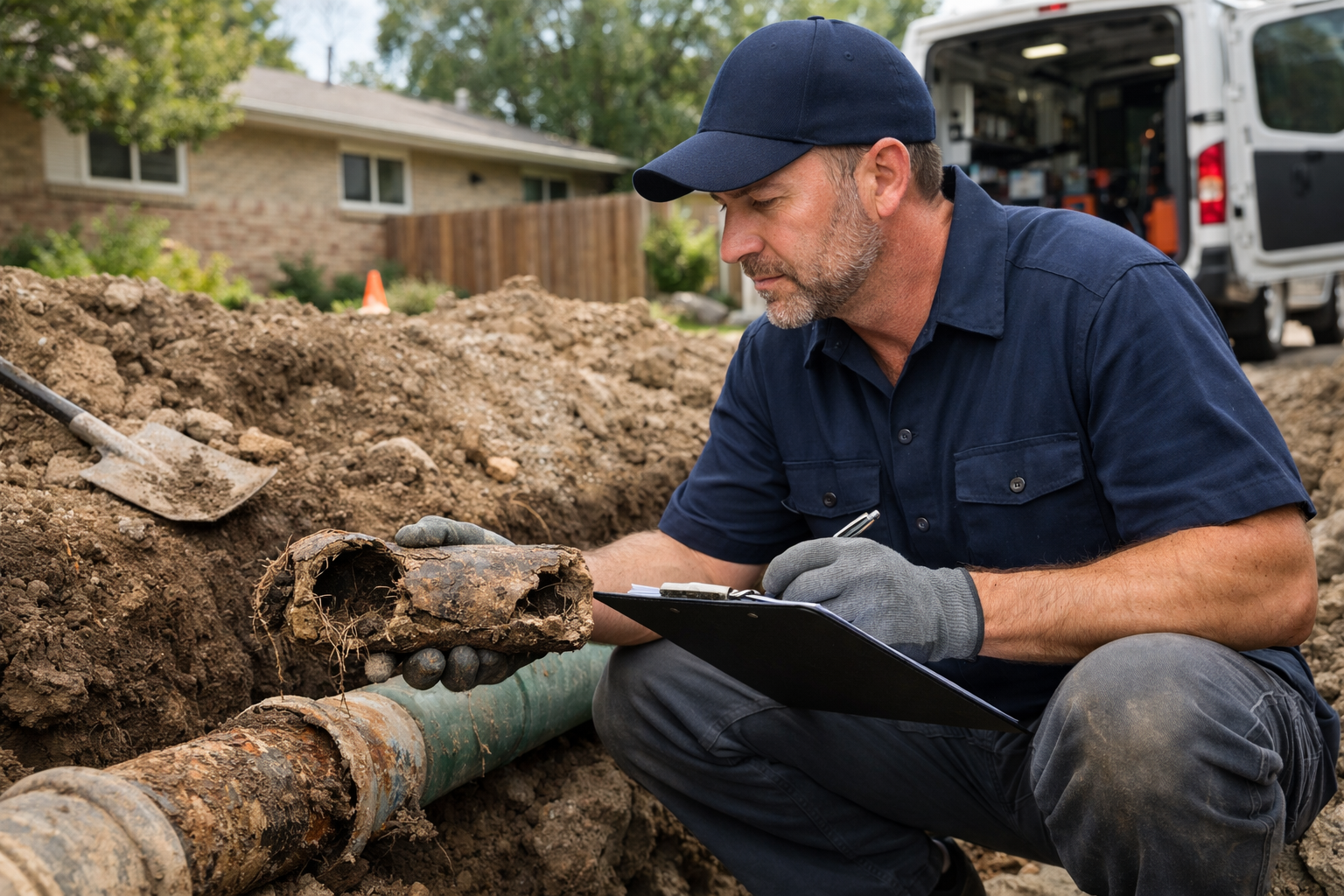
Cast iron corrodes from inside and outside simultaneously. Waste creates hydrogen sulfide gas. This gas becomes sulfuric acid. The acid eats through the pipe walls.
Outside, Denver’s clay soil holds moisture against the pipe. This moisture causes rust. Eventually, the pipe wall becomes thin. It develops holes or collapses completely.
Old sewer line signs in cast iron include:
- Rust-colored water backing up into fixtures
- Frequent clogs in the same location
- Sewage odors near the foundation
- Visible rust on exposed pipe sections
Orangeburg Sewer Pipes (1945-1972)
Orangeburg pipe was made from wood pulp and tar. It was cheap and easy to install. But it only lasts 30-50 years maximum.
Orangeburg deteriorates faster than any other sewer line material. The pipe becomes soft and deformed. It collapses under normal soil pressure. Tree roots penetrate easily.
If your Denver home was built between 1945-1972, you likely have Orangeburg. These old sewer line signs demand immediate attention:
- Complete drain failure
- Sunken areas in the yard
- Multiple sewage backups
- Visible pipe deformation on camera inspection
The Department of Energy residential buildings data shows most homes from this era need major sewer line work.
Early PVC Installations (1970-1990)
PVC became common in the 1970s. Early PVC formulations weren’t as durable as modern versions. Some early PVC lines now show age-related issues.
PVC doesn’t corrode like metal. It doesn’t absorb moisture like Orangeburg. But older PVC can become brittle. Joints may separate. The pipe can crack under pressure.
Old sewer line signs in early PVC include:
- Leaks at joint connections
- Cracks from ground settlement
- Root intrusion at separated joints
Key Takeaway: Clay and cast iron sewer lines over 50 years old need inspection.
10 Warning Signs Your Sewer Line Is Failing
Old sewer line signs progress from minor to severe. Early signs are easy to miss. Later signs are impossible to ignore. Here’s what to watch for.
1. Multiple Slow Drains
One slow drain usually means a local clog. Multiple slow drains signal a main sewer line problem. This is one of the earliest old sewer line signs.
When your sewer line starts failing, drainage slows throughout the house. Sinks drain slowly. Tubs take longer to empty. The toilet struggles to flush completely.
This happens because the old sewer line has reduced capacity. Cracks, root intrusion, or partial collapse narrow the pipe. Water can still flow, but not at normal speed.
2. Frequent Backups
Sewage backups are serious old sewer line signs. Backups that happen repeatedly point to a failing line. The problem will only get worse.
Backups often occur at the lowest drain first. In most Denver homes, that’s a basement floor drain. You might see water pooling there after heavy use upstairs.
If you need professional help addressing backups, our drain cleaning services can diagnose the underlying cause.
3. Sewage Odors
Sewer gas smells mean your line has cracks or breaks. Properly sealed sewer lines don’t release odors. This is one of the most obvious old sewer line signs.
You might smell sewage near your foundation. Odors may appear in your basement. Sometimes you’ll notice the smell in your yard above the sewer line path.
Sewer gas contains harmful compounds. It also indicates that sewage is escaping into the soil. This creates health risks and environmental damage.
4. Wet Spots in the Yard
Unexplained wet spots above your sewer line route mean leaks. The line is releasing water into the surrounding soil. This creates perpetually damp areas even during dry weather.
These wet spots often appear as strips across your lawn. They follow the sewer line path from your house to the street connection. The grass may be unusually green and lush.
Leaking sewage acts as fertilizer. Plants above a leaking old sewer line grow faster than surrounding vegetation. This creates visible patches of different growth.
5. Foundation Cracks
Major sewer line leaks can undermine your foundation. Escaping water saturates the soil. The ground becomes unstable. Your foundation may settle or crack.
Not all foundation cracks mean sewer problems. But combined with other old sewer line signs, foundation issues suggest serious leaks. The saturated soil can’t support the foundation properly.
Sinkholes sometimes develop above severely damaged sewer lines. The soil washes into the broken pipe. This leaves voids underground. The ground surface eventually collapses.
6. Gurgling Sounds
Gurgling from drains signals air trapped in the system. Air shouldn’t be in your sewer line. It enters through cracks or breaks in the pipe.
You’ll hear gurgling when water drains. Toilets make bubbling sounds. Sink drains gurgle as water flows down. These sounds indicate old sewer line signs you shouldn’t ignore.
The gurgling happens because air displaces water in the damaged section. As water flows past the break, it pulls air into the line. This creates the characteristic sound.
7. Pest Infestations
Rats and insects can enter through broken sewer lines. Rats especially love sewer systems. They use old sewer line cracks as entry points to your home.
Cockroaches also travel through sewer lines. They enter through even small cracks. If you suddenly have pest problems, check for other old sewer line signs.
Fruit flies sometimes indicate sewer problems too. They breed in the organic material that accumulates in damaged pipes. Large numbers of fruit flies may mean line issues.
8. Indentations in Your Lawn
Collapsed sewer lines create depressions in your yard. The ground sinks where the pipe has failed. You might notice strips of lower ground following your sewer line route.
These indentations start small. They grow larger as more soil washes away. Eventually, you may see significant trenches or holes. This represents advanced failure of old sewer line sections.
9. Mold Growth
Sewer leaks create moisture inside walls and under floors. This moisture promotes mold growth. You might see mold in your basement near where the sewer line exits.
Mold from sewer leaks poses health risks. The combination of moisture and sewage creates ideal conditions for dangerous mold species. Professional remediation becomes necessary.
10. High Water Bills
Leaking sewer lines waste water. If you notice unexplained increases in water usage, check for old sewer line signs. Underground leaks can waste hundreds of gallons daily.
The EPA WaterSense program notes that household leaks waste nearly 1 trillion gallons annually nationwide. Old sewer lines contribute significantly to this waste.
Key Takeaway: Multiple symptoms together indicate serious old sewer line problems needing immediate attention.
How to Inspect Your Aging Sewer Line
Professional inspection reveals exactly what’s happening inside your old sewer line. Modern camera technology shows every crack, root, and corrosion spot. This information guides repair decisions.
Video Camera Inspection Process
Camera inspection is the gold standard for evaluating old sewer line condition. A waterproof camera travels through the entire line. It records high-definition video of the interior.
The camera attaches to a flexible cable. Technicians feed it through a cleanout or toilet connection. It travels the full length of your sewer line to the street connection.
Real-time monitoring lets technicians see problems immediately. They can measure crack sizes. They can identify root locations. They can spot corrosion patterns. This detailed information is crucial for old sewer line assessment.
Our video inspection services provide complete documentation of your sewer line condition.
What Inspections Reveal
Camera inspections show several key old sewer line signs:
- Cracks and breaks in the pipe walls
- Root intrusion extent and location
- Corrosion severity and distribution
- Joint separation or misalignment
- Partial or complete collapse
- Pipe material identification
- Exact failure locations with distance measurements
The inspection also determines if repair is possible. Minor cracks may qualify for trenchless lining. Severe collapse requires replacement. Knowing the exact condition prevents wrong repair choices.
Inspection Timing Recommendations
Don’t wait for obvious old sewer line signs before inspecting. Proactive inspection catches problems early. Here’s when to schedule inspection:
- Home age over 40 years – inspect every 5 years
- Clay or cast iron pipes – inspect when problems appear
- Before buying a home – always inspect sewer lines
- After tree removal near the line – check for root damage
- Following ground settling or foundation work – verify line integrity
DIY Pre-Inspection Checks
Before calling professionals, you can check for obvious old sewer line signs. These checks help you describe symptoms accurately:
First, map your drains. Note which fixtures drain slowly. Record any backup locations. This pattern helps identify problem areas in the old sewer line.
Second, check your cleanout. Most homes have a sewer cleanout pipe in the basement or yard. Remove the cap carefully. Look for standing water or sewage. This indicates downstream blockage or damage.
Third, walk your property along the suspected sewer line route. Look for the warning signs listed earlier. Note wet spots, sunken areas, or unusual plant growth.
Finally, smell around your foundation and in your basement. Strong sewage odors point to nearby leaks. These old sewer line signs help technicians focus inspection efforts.
Key Takeaway: Professional camera inspection provides definitive answers about old sewer line condition.
Modern Replacement Options for Old Sewer Lines
When old sewer line signs indicate replacement is necessary, you have options. Modern technology offers alternatives to traditional dig-and-replace methods. Each option has specific benefits for Denver homeowners.
Traditional Excavation Replacement
Traditional replacement means digging up the old sewer line. This method provides complete access. It allows inspection of surrounding soil conditions. It ensures proper grading for the new line.
Excavation works well when:
- The line runs under minimal landscaping
- You’re already doing major yard work
- The old sewer line has completely collapsed
- You need to reroute the line path
- Local code requires specific depth changes
The process takes 1-3 days typically. Crews dig a trench along the old sewer line route. They remove the old pipe completely. They install new PVC pipe with proper slope. Then they backfill and restore the surface.
For complete details on this method, see our guide to sewer line replacement.
Trenchless Pipe Lining (CIPP)
Cured-in-place pipe lining creates a new pipe inside the old one. This method preserves your landscaping. It works for pipes with cracks, leaks, or root damage. It doesn’t require extensive excavation.
The process starts with thorough cleaning. High-pressure water removes roots, debris, and buildup. Then technicians insert a resin-saturated liner. They inflate it against the old sewer line walls. Heat or UV light cures the resin into a hard new pipe.
Benefits include:
- No landscape destruction
- Completion in one day typically
- 50+ year lifespan for the new lining
- Lower overall cost than excavation
- Stronger than original pipe material
CIPP works best when old sewer line signs show cracks and leaks but not complete collapse. The original pipe must still have structural integrity to support the liner.
Learn more about this advanced technology through our trenchless pipe lining services.
Pipe Bursting
Pipe bursting replaces the old sewer line without trenching. A bursting head breaks apart the old pipe. Simultaneously, it pulls new pipe into place. This method works even for collapsed lines.
Technicians dig only two small access pits. One at each end of the damaged section. They insert the bursting head at one pit. It travels through the old sewer line toward the other pit. The head fractures the old pipe outward. New HDPE pipe follows immediately behind.
Pipe bursting advantages include:
- Minimal excavation required
- Can upsize pipe diameter
- Works for completely failed lines
- Fast completion time
- Modern pipe material replaces old sewer line
This method costs less than full excavation. It takes less time. Your yard remains mostly intact. For Denver homeowners with mature landscaping, this represents significant savings.
Our pipe bursting services offer efficient replacement with minimal disruption.
Choosing the Right Method
The best replacement method depends on several factors:
Damage severity matters most. Minor cracks suit pipe lining. Complete collapse may require excavation or pipe bursting. Your inspection video reveals which method works best.
Pipe location influences method choice. Lines under driveways or patios benefit from trenchless methods. Lines in open lawn areas may use any method economically.
Local codes sometimes mandate specific methods. Denver regulations may require depth changes. Your sewer service provider ensures code compliance regardless of method chosen.
Budget considerations affect decisions too. Trenchless methods often cost less overall. They eliminate landscape restoration expenses. But severely damaged lines might need traditional replacement despite higher costs.
Key Takeaway: Modern trenchless methods repair most old sewer line problems without destroying your yard.
Preventing Premature Sewer Line Failure
Even old sewer lines can last longer with proper care. Prevention extends the time before replacement becomes necessary. These strategies reduce old sewer line signs and prolong system life.
Regular Maintenance Schedule
Professional cleaning extends old sewer line lifespan significantly. Annual or biennial cleaning removes debris before it causes damage. It also lets technicians spot developing problems early.
Hydro-jetting provides thorough cleaning. High-pressure water removes grease, roots, and mineral buildup. This prevents blockages that stress aging pipes. It also removes materials that accelerate corrosion.
Schedule cleaning based on usage and age. Homes over 40 years old benefit from annual service. Homes with known root problems need twice-yearly attention.
Tree Management
Tree roots cause significant old sewer line damage. Roots seek water and nutrients. Your sewer line provides both. Aggressive roots penetrate any weakness in old pipes.
Plant trees at least 10 feet from your sewer line path. Use slow-growing species with less aggressive root systems. Avoid willows, poplars, and maples near sewer lines.
For existing trees near old sewer lines, annual root treatment helps. Chemical root inhibitors slow growth into pipes. Mechanical root cutting removes intrusions before they cause major damage.
Proper Disposal Practices
What you put down drains affects old sewer line health. Grease, oil, and harsh chemicals accelerate deterioration. They also create blockages that stress aging pipes.
Never pour grease down drains. It solidifies in pipes and creates blockages. These blockages increase pressure on old sewer line weak spots.
Avoid harsh chemical drain cleaners. They corrode metal pipes and damage joints. They’re especially harmful to old sewer line materials like cast iron.
Flush only toilet paper and human waste. So-called “flushable” wipes don’t break down. They accumulate in old sewer lines and create blockages.
Monitoring and Early Detection
Regular monitoring catches old sewer line signs before they become emergencies. Pay attention to drain performance. Note any changes immediately.
Keep records of problems and repairs. Document slow drain dates. Note backup locations. This history helps identify patterns indicating old sewer line deterioration.
Schedule inspection if you notice multiple symptoms. Early detection allows planned repairs. You avoid emergency response costs and water damage expenses.
Foundation and Soil Management
Protect the soil around your old sewer line. Stable soil means less stress on aging pipes. Minimize ground disturbance near the line route.
Maintain consistent soil moisture. Denver’s clay soil expands when wet and shrinks when dry. This movement stresses old sewer lines. Water your foundation area during dry periods. Install proper drainage to prevent saturation.
Avoid heavy equipment over the sewer line path. Weight compacts soil and can crush old pipes. Mark your sewer line route clearly. Inform contractors before any excavation or landscaping work.
Winter Protection
Colorado winters stress old sewer lines. Freeze-thaw cycles widen existing cracks. Protect your system during cold months.
Keep water flowing through the system. Use trickles prevent freezing in exposed sections. This is especially important for old sewer line sections near foundation walls.
Insulate exposed pipes in crawl spaces and basements. Old cast iron and clay pipes have no built-in freeze protection. Added insulation prevents ice formation inside cracked sections.
Clear cleanout caps of snow and ice. Access points need to remain usable. Emergency repairs require immediate cleanout access.
Key Takeaway: Regular maintenance and careful monitoring significantly extend old sewer line lifespan.
Conclusion: Taking Action on Old Sewer Line Signs
Old sewer line signs provide early warning of system failure. Slow drains, sewage odors, and wet spots all indicate problems developing. Recognizing these signs early saves money and prevents disasters.
Your home’s sewer line age determines urgency. Lines over 50 years old need immediate attention. Clay and cast iron pipes from the 1960s and 1970s are reaching end of life now across Denver.
Professional inspection provides definitive answers. Camera technology reveals exact conditions inside your old sewer line. This information guides smart repair decisions. You can choose between traditional excavation and modern trenchless methods based on actual needs.
Don’t wait for complete failure. Old sewer line problems worsen quickly once symptoms appear. Early replacement costs less than emergency repairs. It also prevents sewage backups that damage your home and belongings.
Take action now if you’ve noticed multiple old sewer line signs. Schedule professional inspection. Get expert recommendations. Plan your repair or replacement before emergency strikes.
Frequently Asked Questions
How long do sewer lines typically last?
Clay sewer lines last 50-60 years in good conditions. Cast iron lines last 50-75 years typically. Orangeburg pipes only last 30-50 years maximum. PVC lasts 100+ years. Denver’s soil and climate may reduce these lifespans significantly. Old sewer line age alone doesn’t guarantee failure, but pipes over 50 years need inspection.
What causes old sewer lines to fail?
Corrosion attacks metal pipes from inside and outside. Tree roots penetrate cracks and joints in old sewer lines. Ground movement from freeze-thaw cycles cracks rigid pipes. Normal wear from decades of use weakens materials. Denver’s expansive clay soil accelerates damage through constant pressure changes on old sewer line sections.
Can I repair an old sewer line or must I replace it?
Repair works for isolated cracks or small root intrusions. Trenchless pipe lining can restore old sewer line sections without replacement. But extensive damage, multiple failures, or complete collapse require full replacement. Video inspection shows whether repair is feasible. Sometimes partial replacement of worst sections is most cost-effective.
How much does old sewer line replacement cost?
Traditional excavation replacement costs $100-$200 per linear foot typically. Trenchless methods cost $80-$250 per foot depending on complexity. Total project costs range from $3,000-$15,000 for most Denver homes. Exact costs depend on line length, depth, accessibility, and chosen method. Emergency repairs cost significantly more than planned replacements.
Will homeowners insurance cover old sewer line damage?
Standard homeowner policies typically don’t cover old sewer line deterioration or maintenance issues. They may cover sudden, accidental damage. But age-related failure is considered maintenance, not a covered event. Some insurers offer optional sewer line coverage riders. Review your policy carefully. Preventive replacement saves more than insurance typically covers anyway.
Step-by-Step Process for Addressing Old Sewer Line Problems
- Document all symptoms you’ve noticed including dates and locations of problems.
- Check your home’s age and research likely sewer line material used when built.
- Walk your property and look for visible old sewer line signs in yard.
- Schedule professional camera inspection to see exact condition inside the pipe.
- Review inspection video and discuss findings with your sewer specialist thoroughly.
- Get detailed written estimates for recommended repair or replacement method options.
- Compare traditional excavation costs against trenchless repair method alternatives when applicable.
- Verify all permits required and ensure contractor handles permitting process completely.
- Schedule work during season that minimizes impact on your property and daily life.
- Complete regular maintenance after repair to extend new sewer line lifespan significantly.
Quick Reference: Old Sewer Line Signs Definition
Old sewer line signs are observable symptoms indicating a sewer system is approaching failure due to age-related deterioration. These signs include slow drains throughout the home, frequent sewage backups, persistent sewage odors, unexplained wet spots in the yard, foundation cracks, gurgling sounds from drains, pest infestations entering through damaged pipes, indentations or sinkholes in the lawn above the sewer line path, mold growth from moisture leaks, and unusually high water bills from underground leaks. Old sewer line signs typically appear in pipes over 40-50 years old made from clay, cast iron, or Orangeburg materials common in Denver-area homes built before 1980. Recognizing these signs early allows homeowners to plan repairs or replacement before complete system failure causes emergency situations and expensive property damage. Professional camera inspection confirms the severity of problems indicated by visible old sewer line signs and guides appropriate repair method selection.