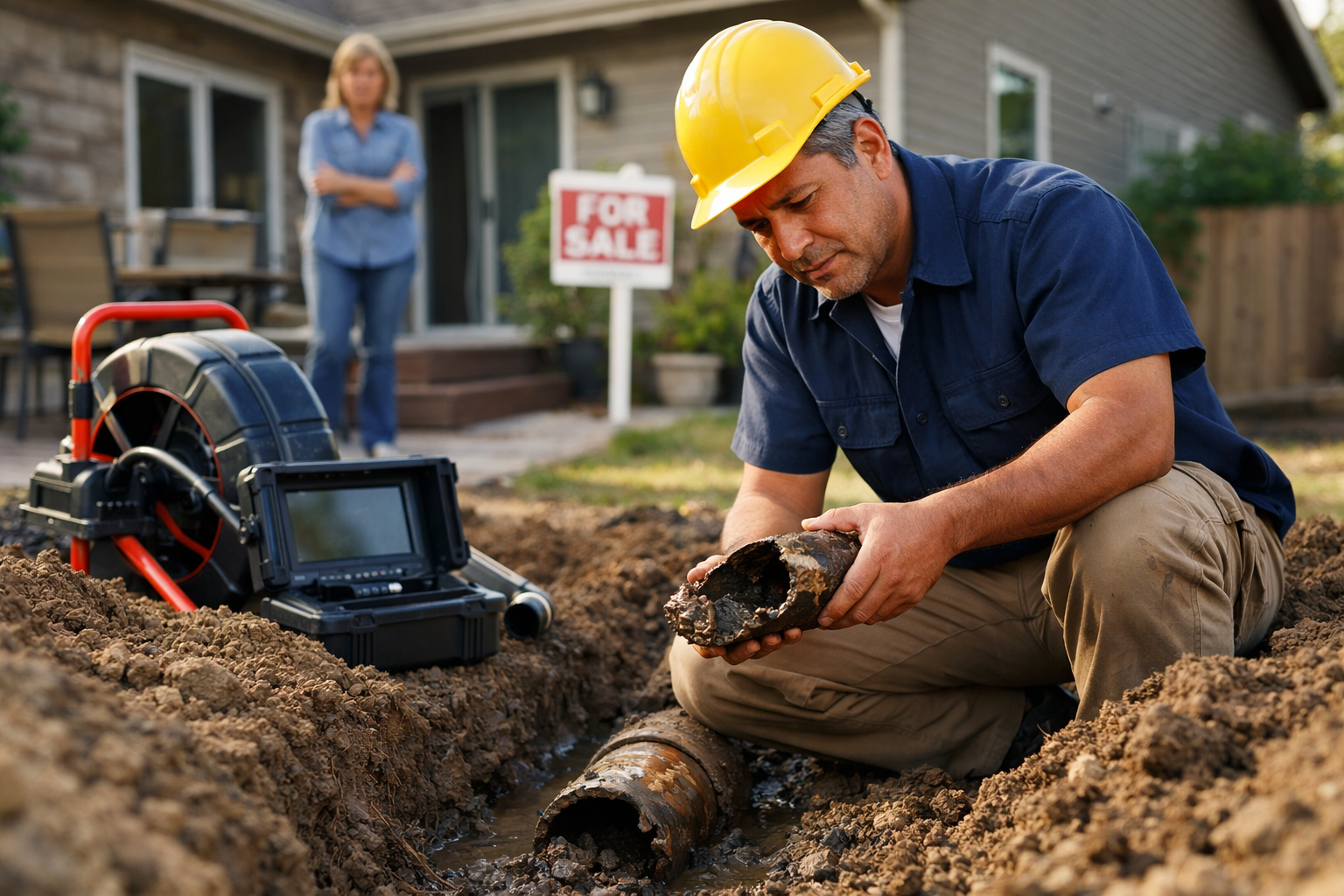
You found the perfect home. You made an offer. Then the inspection comes back with sewer line trouble. Now what?
A sewer line problem during a home sale can feel like a crisis. But it does not have to derail your deal. You have options that keep things moving.
This guide explains what happens when a sewer line fails during a home sale. You will learn how to spot the problem early. You will see what sellers and buyers can do next. You will also find out when to call a pro. With over 25 years serving Denver homeowners, Sewer Experts has seen every scenario. We know how to solve sewer line issues fast so your home sale stays on track.
Table of Contents
- What Is a Sewer Line and Why It Matters
- How Sewer Line Problems Surface During a Sale
- Sewer Disclosure Requirements in Colorado
- Negotiation Options When a Sewer Line Fails
- Should You Repair or Replace the Sewer Line?
- Timeline and Costs for Sewer Line Work
- Conclusion and Next Steps
What Is a Sewer Line and Why It Matters
A sewer line carries waste from your home to the city main. It runs underground from your house to the street. Most people never see it until something goes wrong.
Sewer lines can last decades. But tree roots, shifting soil, and old materials cause failures. When a sewer line fails, waste backs up into the home. That creates health risks and property damage.
Why Sewer Line Condition Affects Home Sales
Buyers want a home that works. A broken sewer line is a red flag. It means costly repairs ahead. That changes the deal terms fast.
In Colorado, sellers must disclose known defects. A sewer line issue when selling a house is a major defect. You cannot hide it. If you do, you risk legal trouble later.
Home inspectors often spot sewer line trouble during the sale process. They may recommend a video inspection to see inside the pipe. That reveals cracks, blockages, and root intrusion.
Common Sewer Line Problems
Here are the issues that show up most often:
- Tree roots growing into pipes
- Cracked or collapsed sections
- Corroded cast iron or clay pipes
- Bellied pipes that sag and trap waste
- Blockages from grease or debris
Each problem has a fix. But the cost and timeline vary. That is why buyers want answers before they close.
Expert Insight from Sewer Experts Team:
“We see sewer line issues delay home sales every week. Most problems are fixable in days. The key is acting fast and choosing the right repair method.”
How Sewer Line Problems Surface During a Sale
Sewer line trouble usually appears during the home inspection. The inspector checks for signs of trouble. Then they may suggest a camera inspection to confirm.
Signs Inspectors Look For
Inspectors watch for these warning signs:
- Slow drains throughout the house
- Gurgling sounds from toilets or sinks
- Sewer odors in the yard or basement
- Soggy spots or greener grass near the sewer line
- Cracks in the foundation near the main line
If any of these show up, the inspector will note them. That triggers a deeper look at the sewer line.
The Role of Video Inspection
A video inspection uses a small camera on a cable. The camera travels through the sewer line. It sends real-time video to a monitor above ground.
This shows exactly what is wrong. You see the cracks, roots, and blockages. You also see where they are located. That helps you plan the repair.
Video inspection costs a few hundred dollars. But it saves thousands by pinpointing the problem. Buyers often request this before closing. The National Association of Certified Home Inspectors recommends sewer scoping for older homes.
What Happens After Discovery
Once a sewer line problem is confirmed, the sale process pauses. Both sides must decide how to move forward. That means negotiating repairs, credits, or price adjustments.
Some buyers walk away if the issue seems too big. Others stay if the seller agrees to fix it. That is why knowing your options matters.
Sewer Disclosure Requirements in Colorado
Colorado law requires sellers to disclose known defects. This includes sewer line problems. If you know about a sewer issue, you must tell the buyer.
What Colorado Law Says
The Colorado Division of Real Estate oversees disclosure rules. Sellers must complete a Seller’s Property Disclosure form. This form asks about plumbing and sewer issues.
If you have had sewer line repairs, you disclose that. If you know roots are a problem, you disclose that too. Failing to disclose can lead to lawsuits after closing.
When to Disclose Sewer Line Issues
You disclose as soon as you know. That means before listing the home if possible. If the issue comes up during inspection, you disclose it then.
Some sellers get a sewer inspection before listing. That way, they know the condition upfront. They can fix problems early or price the home accordingly.
Risks of Not Disclosing
Hiding a sewer line problem is fraud. Buyers can sue for damages. They can also force you to pay for repairs after closing. That costs more than fixing it upfront.
Sewer disclosure in Colorado protects both sides. Sellers avoid legal trouble. Buyers make informed decisions. That keeps the sale moving smoothly.
Negotiation Options When a Sewer Line Fails
When a sewer line issue surfaces, you have choices. Sellers and buyers can negotiate terms that work for both sides. Here are the most common options.
Option 1: Seller Repairs Before Closing
The seller hires a contractor to fix the sewer line. Work is done before closing. The buyer gets a home with a working sewer system.
This option gives buyers peace of mind. They know the problem is solved. But it delays closing until repairs are complete.
Sellers should hire a licensed, insured contractor. Get a warranty on the work. That protects you if issues arise later. Sewer Experts offers a five-year warranty on sewer line repairs.
Option 2: Price Reduction
The seller reduces the sale price. The buyer uses that savings to pay for sewer line repairs after closing. This keeps the sale on schedule.
Buyers prefer this if they want to choose their own contractor. Sellers like it because they do not manage repairs. But buyers take on the risk of higher costs.
Option 3: Closing Credit
The seller gives the buyer a credit at closing. This money goes toward repair costs. The buyer handles the work after they own the home.
Credits are flexible. Buyers can use them for sewer line repairs or other needs. Sellers avoid delays and still offer compensation.
Option 4: Walk Away
If the sewer line problem is too severe, either side can walk away. Buyers lose their earnest money deposit unless the contract allows an inspection contingency.
This is rare. Most sewer line issues are fixable. But if the cost is extreme or the timeline too long, walking away may make sense.
Which Option Works Best?
It depends on the situation. If the sewer line needs a full replacement, repairs before closing may take too long. A credit or price cut works better.
If the fix is minor, like clearing roots or patching a crack, repairs before closing are fast. The buyer gets a clean sewer line with no surprises.
Talk to your real estate agent. They can help you negotiate terms that keep the deal alive. And consult a sewer line pro to understand the scope of work.
Should You Repair or Replace the Sewer Line?
Not all sewer line problems need a full replacement. Some issues can be repaired quickly. Others require new pipe installation. Here is how to decide.
When Repair Makes Sense
Repairs work for localized problems. If one section is cracked or blocked, you can fix just that part. This saves time and money.
Common repairs include:
- Clearing tree roots
- Patching small cracks
- Relining damaged sections
Trenchless methods like pipe lining fix problems without digging up the yard. A resin liner is inserted into the old pipe. It hardens to create a new pipe inside the old one.
This takes one to two days. It costs less than full replacement. And it does not tear up landscaping.
When Replacement Is Necessary
If the entire sewer line is old, corroded, or collapsed, replacement is the better choice. Patching multiple spots only delays the inevitable.
Signs you need sewer line replacement:
- Pipe is over 50 years old
- Multiple cracks or collapses
- Severe root intrusion throughout
- Frequent backups even after repairs
Replacement involves installing new pipe from the house to the street. This can be done with traditional digging or trenchless pipe bursting.
Pipe bursting breaks the old pipe while pulling new pipe into place. This avoids extensive excavation. It is faster and less disruptive than traditional methods.
Trenchless vs. Traditional Methods
Trenchless methods preserve your yard. They are faster and often cheaper. But they do not work in every situation. If the pipe is too damaged or access is limited, traditional digging may be required.
A qualified contractor will assess your sewer line and recommend the best method. They will explain costs, timelines, and benefits of each approach.
Sewer Experts specializes in both trenchless and traditional methods. We evaluate each sewer line individually. Then we recommend the solution that fits your needs and budget.
Expert Insight from Sewer Experts Team:
“Trenchless repairs are game-changers for home sales. We can fix most sewer line problems in one or two days. That keeps closings on track.”
Timeline and Costs for Sewer Line Work
Understanding the timeline and cost helps you plan. Sewer line repairs vary based on the problem and method used. Here are typical ranges.
Timeline for Sewer Line Repairs
Minor repairs take one to two days. This includes clearing blockages or patching small cracks. Trenchless pipe lining also fits this timeline.
Full sewer line replacement takes three to five days. Traditional excavation may take longer if access is difficult or weather delays work.
If you need permits from the city, add a few days. Most sewer line work requires a permit. Your contractor should handle this for you.
Cost Ranges for Sewer Line Work
Costs depend on the scope of work. Here are general estimates for Denver area homes:
- Video inspection: $200 to $500
- Root removal or snaking: $150 to $400
- Trenchless pipe lining: $3,000 to $8,000
- Trenchless pipe bursting: $5,000 to $12,000
- Traditional sewer line replacement: $4,000 to $15,000
These are estimates. Your actual cost depends on pipe length, depth, and access. A contractor should give you a written estimate after inspecting the line.
Factors That Affect Cost
Several factors influence the final price:
- Length of pipe to repair or replace
- Depth of the sewer line
- Accessibility of the line
- Type of pipe material needed
- Permits and inspection fees
Trenchless methods often cost less than traditional digging. They also finish faster. That is a big advantage during a home sale.
Who Pays for Sewer Line Work?
That depends on the negotiation. Sellers may pay upfront. Buyers may accept a credit and handle repairs later. Or both sides split the cost.
Your real estate contract should specify who pays. Make sure everything is in writing before closing.
Conclusion and Next Steps
A sewer line problem during a home sale is stressful. But it is fixable. Most issues can be resolved quickly with the right contractor and approach.
Start with a video inspection. That shows exactly what is wrong. Then decide whether to repair or replace. Work with your real estate agent to negotiate terms that keep the sale moving.
If you are in the Denver metro area, Sewer Experts can help. We offer 24/7 emergency service. We use trenchless methods when possible. And we back our work with a five-year warranty.
Do not let a sewer line issue derail your home sale. Call (720) 663-7473 or visit our contact page to schedule an inspection. We will assess the problem and recommend the fastest, most cost-effective solution.
Your home sale does not have to stop. With the right help, you can fix the sewer line and close on time.
Frequently Asked Questions
What is a sewer line home sale issue?
A sewer line home sale issue happens when a broken or failing pipe is found during the sale process. This can delay closing or change deal terms. Buyers and sellers must negotiate repairs, credits, or price adjustments. Most sewer line problems are fixable in days. The key is acting fast.
How do I know if my sewer line is failing?
Signs include slow drains, gurgling toilets, sewer odors, and soggy yard spots. A video inspection shows the exact problem. Inspectors often recommend this during home sales. If you notice these signs, call a sewer line pro. Early detection saves money and stress.
What are sewer disclosure requirements in Colorado?
Colorado law requires sellers to disclose known defects. This includes sewer line problems. You must complete a Seller’s Property Disclosure form. Failing to disclose can lead to lawsuits. Always tell buyers about past repairs or known issues. Honesty protects you legally.
Should I repair or replace the sewer line?
It depends on the damage. Minor cracks or blockages can be repaired. Old or severely damaged lines need replacement. Trenchless methods like pipe lining fix many problems without digging. A contractor will assess your sewer line and recommend the best option. Get a written estimate before deciding.
Can sewer line issues stop a home sale?
Yes, but most deals continue with negotiation. Sellers can repair the line before closing. Or they can offer a price reduction or credit. Buyers may accept repairs or walk away if the problem is severe. Work with your agent to find a solution that keeps the sale on track.
Step-by-Step Process: How to Handle a Sewer Line Problem During a Home Sale
- Schedule a video inspection to identify the problem and location.
- Get a written estimate from a licensed sewer line contractor.
- Review the estimate with your real estate agent to understand options.
- Decide whether to repair, replace, or negotiate a credit with the buyer.
- If repairing, hire a contractor with a warranty and insurance.
- Obtain necessary permits from your local building department.
- Complete the sewer line work and request a final inspection.
- Provide documentation of repairs to the buyer and their agent.
- Adjust closing terms if needed based on repair costs or delays.
- Close on the home sale with confidence knowing the sewer line is fixed.
Quick Reference: What Is a Sewer Line?
A sewer line is the underground pipe that carries waste from your home to the city sewer main. It runs from your house to the street. Most sewer lines last 30 to 50 years. But tree roots, old materials, and shifting soil can cause failures. When a sewer line fails, waste backs up into the home. That creates health risks and costly damage. Regular inspections catch problems early. Video inspections show the inside of the pipe. This helps you plan repairs before a crisis hits.