You see a puddle in your yard. You smell something foul near your driveway. You wonder who is responsible for sewer line repair when things go wrong. Many homeowners face this question every day. The answer depends on where the problem sits and what your city rules say.
This guide explains who is responsible for sewer line repair in plain terms. You will learn what causes the problem and what to watch for. You will see simple next steps you can take today. You will also learn when a pro visit makes sense. Use this to avoid bigger damage and costly surprises.
Sewer line responsibility splits between you and your city. The split happens at a specific point on your property. Knowing this split saves you time, stress, and money. It also helps you act fast when trouble appears.
Table of Contents
- Who Is Responsible for Sewer Line Repair: The Basics
- Where the Line Splits: Property Line vs Lateral Line
- Common Causes of Sewer Line Damage
- Signs You Need Sewer Line Repair Now
- What to Do When You Find a Sewer Problem
- How to Choose the Right Repair Professional
Who Is Responsible for Sewer Line Repair: The Basics
Most cities own the main sewer line under the street. You own the lateral sewer line from your home to that main line. The lateral line is your responsibility for sewer line repair. The city handles the main line. But the exact split varies by location.
In Denver, the property line often marks the dividing point. Your lateral line runs from your house to the curb or property edge. The city line starts there and connects to the main sewer system. So if a problem occurs on your side, you pay. If it occurs on the city side, they pay.
Understanding Lateral Sewer Line Responsibility
Your lateral sewer line carries waste from your home to the main line. It sits underground and usually runs under your yard or driveway. Tree roots, soil shifts, and age can damage this line. When damage happens, you must arrange and pay for the fix.
Some cities offer cost-share programs or emergency help. But most homeowners bear full lateral sewer responsibility. Check your local rules to know your exact obligation. This clarity helps you budget and plan ahead.
City vs Homeowner: The Key Dividing Line
The city owns and maintains the main sewer line. This line collects waste from many homes and carries it to a treatment plant. If the main line clogs or breaks, the city sends a crew. You do not pay for that work.
But your lateral line is different. You own it. You maintain it. You fix it when trouble strikes. The EPA homeowner guide explains why proper maintenance matters for all sewer systems. Regular care prevents costly emergency repairs later.
Why This Split Matters for Homeowners
Knowing who is responsible for sewer line repair protects your wallet. If you call the city for a lateral line problem, they will redirect you. You will waste time and delay the fix. Fast action prevents sewage backups and property damage.
Also, some insurance policies cover sudden sewer damage. But coverage depends on the cause and location. Understanding your responsibility helps you file claims correctly. It also helps you choose the right coverage when you shop for insurance.
Key Takeaway: You own your lateral sewer line. The city owns the main line. Know the split to act fast.
Where the Line Splits: Property Line vs Lateral Line
The property line is the legal boundary of your land. In most cases, your sewer responsibility ends at this line. The city responsibility starts there. But some cities define the split differently.
For example, some cities say homeowners own the line all the way to the main connection. Others split responsibility at the curb or sidewalk. Always check your city ordinance or call your local public works department. A quick call saves confusion later.
How to Find Your Property Line
Your property survey shows the exact boundary. You received this document when you bought your home. If you cannot find it, contact your county assessor or title company. They can provide a copy.
You can also look for property markers. These small metal stakes sit at corners of your lot. They mark the boundary line. Once you locate them, you know where your lateral line ends. This knowledge guides you when problems arise.
What Happens at the Connection Point
Your lateral line connects to the city main line at a junction. This junction often sits near the curb or under the street. The connection point is critical. Damage here can affect both your line and the city line.
If the problem sits right at the connection, determining who is responsible for sewer line repair gets tricky. The city may inspect to decide. In some cases, you split the cost. In others, the city covers it. Clear documentation and photos help resolve disputes.
Special Cases: Shared Lines and Easements
Some older neighborhoods have shared lateral lines. Two or more homes connect to one lateral before reaching the main line. In this case, all connected homeowners share sewer line responsibility. Repairs require cooperation and cost-sharing.
Easements also complicate matters. An easement allows the city or a utility to use part of your property. If your lateral line runs through an easement, the city may have some responsibility. Review your property deed or consult a local attorney to clarify.
Key Takeaway: The property line usually marks the split. Check your survey and city rules to confirm.
Common Causes of Sewer Line Damage
Tree roots cause many sewer line problems. Roots seek water and nutrients. They grow into small cracks in the pipe. Over time, they expand and block the line. This blockage leads to slow drains and backups.
Age also damages sewer lines. Older clay or cast iron pipes corrode and crack. Modern PVC pipes last longer, but they can still shift or break. Soil movement, freezing, and ground settling stress all pipe materials.
Tree Roots: The Silent Invader
Tree roots can infiltrate a sewer line within a few years. Once inside, they grow rapidly. They form dense mats that trap waste and paper. This buildup reduces flow and causes backups. Root intrusion is a top reason homeowners need sewer line repair.
Preventing root damage requires regular maintenance. The video inspection service spots roots early before they cause major clogs. Annual checks catch small issues before they grow. Cutting roots and sealing cracks extend your line’s life.
Pipe Material and Age
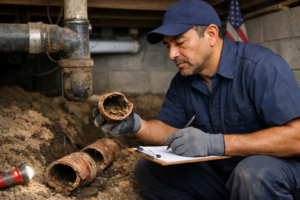
Clay pipes were common in older homes. They last decades but become brittle over time. Cracks form at joints and along the pipe body. Cast iron pipes rust from the inside out. Both materials need replacement eventually.
PVC and ABS pipes resist corrosion. But improper installation or ground shifts can break them. Knowing your pipe material helps you predict future problems. Ask the previous owner or check city records to learn your pipe type.
Soil Movement and Ground Settling
Soil naturally shifts over time. Heavy rain, drought, and freezing cycles cause expansion and contraction. This movement stresses sewer pipes. Cracks and breaks follow. Areas with expansive clay soil see more sewer line damage.
Ground settling also affects pipes. New construction nearby can compact soil. This pressure bends or breaks your lateral line. If you notice sudden drainage issues after nearby work, settling may be the cause. A professional inspection confirms the problem.
Clogs from Improper Use
Flushing the wrong items clogs sewer lines. Paper towels, wipes, and feminine products do not break down like toilet paper. Grease and cooking oil harden in pipes. These clogs build up and block flow. Over time, they cause backups and damage.
Educate your household on proper disposal. Only flush human waste and toilet paper. Dispose of grease in the trash. These simple steps reduce clogs and protect your sewer line. Prevention is easier and cheaper than repair.
Key Takeaway: Tree roots, age, and soil shifts cause most sewer line problems. Proper use and maintenance prevent many issues.
Signs You Need Sewer Line Repair Now
Slow drains signal a possible sewer line problem. If multiple drains run slowly at once, the issue likely sits in the main lateral line. A single slow drain usually means a local clog. But multiple drains point to a deeper problem.
Foul odors near drains or in your yard also indicate trouble. Sewage gas escapes through cracks or breaks. This smell is unmistakable. It warns you to act fast. Ignoring it leads to bigger damage and health risks.
Recognizing Multiple Slow Drains
When your toilet, shower, and sink all drain slowly, the blockage sits downstream. This blockage often occurs in the lateral sewer line. Tree roots or a collapsed section cause this symptom. You need professional help to clear or repair the line.
Try flushing the toilet while running water in the sink. If the sink backs up, the problem is in your lateral line. This simple test confirms a shared blockage. It tells you who is responsible for sewer line repair: you, not the city.
Unexplained Wet Spots or Puddles
A wet spot in your yard with no rain can mean a broken sewer line. Sewage leaks into the soil and creates a damp area. Grass may grow greener there due to extra nutrients. But the smell and health risk outweigh any lawn benefit.
Check for puddles near your driveway or foundation. A cracked pipe can leak sewage that pools on the surface. This visible sign demands immediate attention. A broken sewer line can undermine your foundation or contaminate your soil.
Gurgling Sounds from Drains
Gurgling noises mean air is trapped in your sewer line. A partial blockage or crack allows air to enter. When water flows, the air escapes through the drain. This sound is a clear warning. It tells you to inspect your lateral line soon.
Gurgling can also occur when the city main line has a problem. But if it happens only in your home, the issue is on your side. Contact a sewer line repair specialist to diagnose the exact cause and location.
Sewage Backup in Your Home
A sewage backup is the most urgent sign. Waste water flows back into your tubs, toilets, or floor drains. This means the line is completely blocked or broken. Stop using all water immediately. Call a professional right away.
Sewage backups pose serious health risks. They contaminate your home and require costly cleanup. Acting fast limits the damage. It also helps you determine who is responsible for sewer line repair. If the backup occurs only in your home, the problem is yours to fix.
Key Takeaway: Slow drains, odors, wet spots, gurgling, and backups all signal sewer line trouble. Act fast to limit damage.
What to Do When You Find a Sewer Problem
First, stop using water in your home. Turn off faucets and avoid flushing toilets. This prevents more sewage from entering a blocked or broken line. It also reduces the risk of backups and property damage.
Next, call a licensed plumber or sewer repair company. Explain your symptoms clearly. Ask if they offer emergency service. Many pros respond within hours. Fast action protects your home and keeps repair costs down.
Documenting the Problem
Take photos of any visible damage. Capture wet spots, puddles, or standing water. Note the date and time. This documentation helps if you need to file an insurance claim. It also proves the extent of the damage to your repair company.
Write down all symptoms you noticed. Include when they started and how they progressed. This timeline helps the technician diagnose the problem faster. Clear communication speeds up the repair process.
Contacting Your City or Utility
If you suspect the problem is on the city side, call your local public works department. Describe the issue and your location. They will send an inspector to check the main line. If the problem is theirs, they will fix it at no cost to you.
But if the inspector confirms the problem is on your lateral line, you pay. The city will tell you to hire a private contractor. Knowing who is responsible for sewer line repair before you call saves time and avoids confusion.
Choosing Between Repair and Replacement
Sometimes a simple repair fixes the problem. A plumber can clear roots or patch a small crack. But if your pipe is old or severely damaged, replacement makes more sense. Replacing the line now prevents future emergencies.
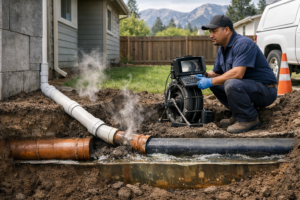
Modern trenchless methods reduce disruption. The trenchless pipe lining service inserts a new liner inside the old pipe. This method avoids digging up your yard. It saves time and restores your line quickly. Ask your contractor about trenchless options.
Understanding Your Insurance Coverage
Check your homeowner’s insurance policy. Some policies cover sudden sewer line damage. But they often exclude damage from neglect or tree roots. Read your policy carefully or call your agent to confirm coverage.
If your damage qualifies, file a claim promptly. Provide all documentation and photos. Follow your insurer’s process exactly. This ensures you receive the maximum benefit. Insurance can offset a large portion of your repair cost.
Key Takeaway: Stop water use, document the problem, and call a pro fast. Check with your city and insurance to confirm who pays.
How to Choose the Right Repair Professional
Look for a licensed and insured sewer repair company. A valid license shows the company meets local standards. Insurance protects you if something goes wrong during the job. Always verify these credentials before you hire.
Read online reviews and ask for references. Past customers share honest feedback about quality and service. A company with many positive reviews and few complaints is a safe choice. Trust matters when you hire someone to fix your sewer line.
Questions to Ask Before You Hire
Ask about their experience with lateral sewer lines. How many repairs have they done? Do they offer video inspection to diagnose the problem accurately? A thorough inspection finds the exact location and cause of the damage.
Request a written estimate before work begins. The estimate should list all costs, materials, and labor. It should also explain who is responsible for sewer line repair in your case. A clear estimate prevents surprise charges later.
Comparing Traditional Dig vs Trenchless Methods
Traditional repair involves digging a trench to access the pipe. This method works well for small sections. But it disrupts your yard and takes longer. It also costs more in landscaping restoration after the job.
Trenchless repair avoids most digging. The crew inserts a liner or bursts the old pipe and pulls in a new one. This method is faster and less invasive. It also lasts as long as traditional methods. Compare both options and choose what fits your budget and timeline.
Checking for Warranties and Guarantees
A reputable company offers a warranty on their work. The warranty should cover both labor and materials. Ask how long the warranty lasts and what it includes. A strong warranty gives you peace of mind.
Also ask about guarantees. Some companies guarantee that the repair will solve the problem. If it does not, they return to fix it at no extra charge. These guarantees show confidence in their work. They also protect you from repeat expenses.
Understanding Denver-Specific Regulations
Denver has specific codes for sewer line repair. Your contractor must follow these rules. Permits may be required for major repairs or replacements. A licensed pro knows these regulations and handles permits for you.
The Denver wastewater management page provides official information on local sewer rules. Review this resource to understand your city’s requirements. Staying informed helps you ask the right questions and avoid compliance issues.
Key Takeaway: Hire a licensed, insured pro with good reviews. Compare repair methods and ask about warranties and local rules.
Quick Reference: Who Is Responsible for Sewer Line Repair?
Who is responsible for sewer line repair depends on where the damage occurs. Homeowners own the lateral sewer line from their house to the property line or curb. The city owns the main sewer line under the street. If a problem sits on your lateral line, you pay for the fix. If it sits on the main line, the city pays. Check your local ordinance to confirm the exact dividing point. This knowledge helps you act fast and avoid confusion when trouble strikes.
Step-by-Step Process: What to Do When You Suspect Sewer Line Damage
- Stop using all water in your home to prevent more sewage from entering the line.
- Check for visible signs like wet spots, odors, or slow drains in multiple fixtures.
- Take photos and notes of all symptoms and their locations for documentation.
- Call a licensed sewer repair professional and explain the problem clearly.
- Ask the pro to perform a video inspection to locate the exact damage.
- Request a written estimate that includes all costs and explains sewer line responsibility.
- Contact your city if you think the problem is on the main line.
- Review your homeowner’s insurance policy to check for coverage.
- Choose between traditional dig repair or trenchless methods based on your budget and yard.
- Schedule the repair promptly to avoid further damage and higher costs.
Conclusion: Take Action to Protect Your Home
Knowing who is responsible for sewer line repair saves you time and money. You own your lateral line. The city owns the main line. The split usually happens at your property line. Understanding this split helps you act fast when problems arise.
Watch for warning signs like slow drains, odors, and wet spots. These symptoms tell you to inspect your line. Stop using water and call a pro right away. Fast action prevents sewage backups and costly damage. It also clarifies who pays for the fix.
Choose a licensed, insured contractor with good reviews. Ask about video inspection and trenchless repair options. Compare estimates and check warranties. Following these steps protects your home and your wallet. You now have the knowledge to handle sewer line problems with confidence.
If you suspect a sewer line issue, contact a sewer line replacement expert in Denver today. Early detection and repair prevent bigger problems down the road. Take action now to keep your home safe and your sewer system working smoothly.
Frequently Asked Questions
What is who is responsible for sewer line repair?
Who is responsible for sewer line repair depends on where the damage sits. Homeowners own the lateral line from the house to the property line. The city owns the main sewer line under the street. If the problem is on your lateral line, you pay. If it is on the main line, the city pays. Check your local rules to confirm.
How do I know if my sewer line problem is my responsibility?
If the problem occurs between your home and the property line, it is your responsibility. Signs include slow drains in multiple fixtures, foul odors, or wet spots in your yard. A video inspection pinpoints the damage location. Once you know where the problem sits, you know who pays for the fix.
Why does sewer line responsibility matter to homeowners?
Sewer line responsibility matters because it determines who pays for repairs. If you own the damaged section, you cover the cost. If the city owns it, they cover it. Knowing this split helps you call the right party fast. It also helps you budget and plan for repairs.
When should I call a professional for sewer line repair?
Call a professional as soon as you notice signs of trouble. Slow drains, foul smells, gurgling sounds, or sewage backups all require immediate attention. Waiting increases damage and repair costs. A pro can inspect your line and recommend the best fix. Early action saves you money and stress.
Can trenchless repair work for my sewer line?
Yes, trenchless repair works for most sewer line problems. This method avoids digging up your yard. A technician inserts a liner or bursts the old pipe and pulls in a new one. Trenchless repair is faster and less disruptive than traditional digging. Ask your contractor if your line qualifies for this method.