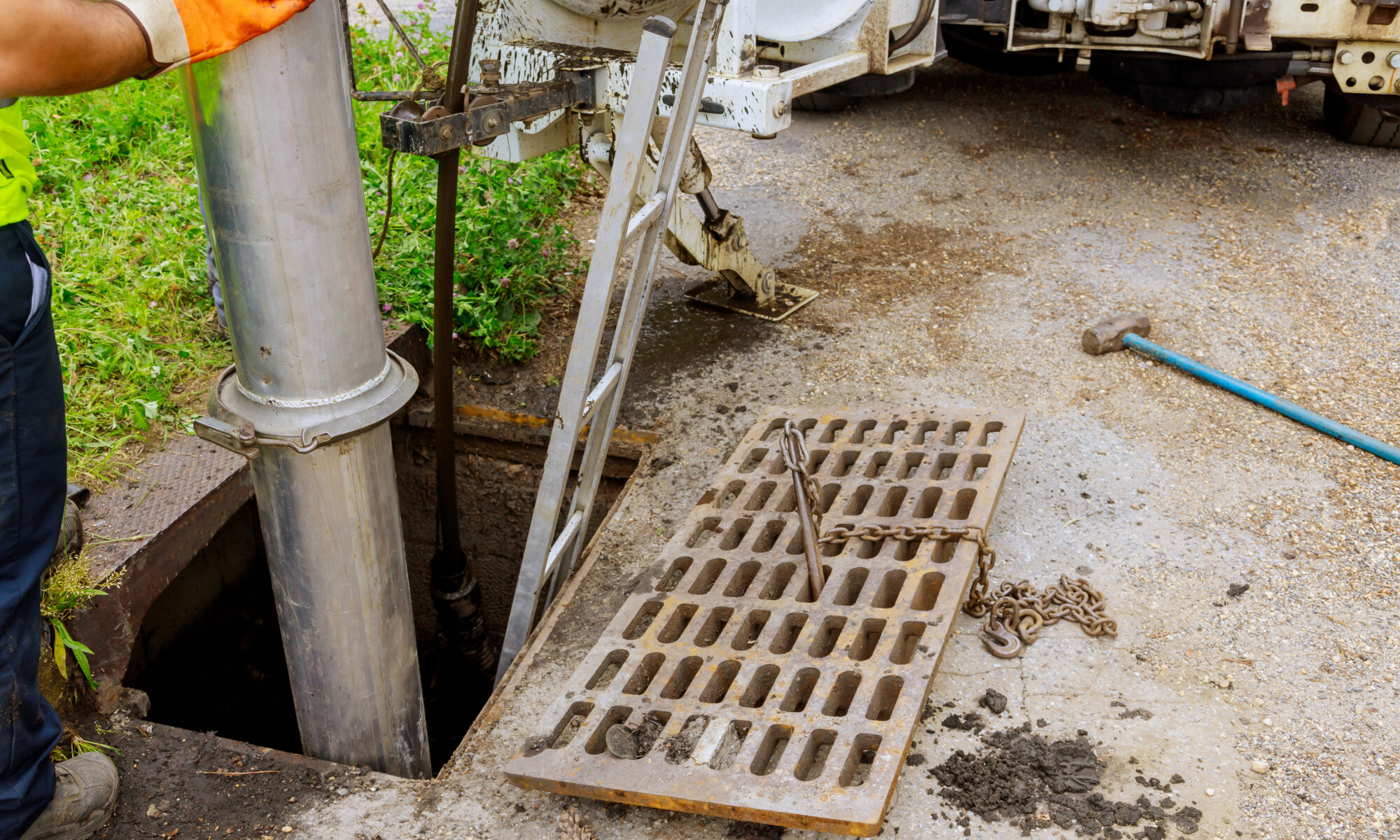
Your sewer line is failing. Now you face a big choice. Do you dig up your yard for a full replacement? Or do you choose CIPP lining? CIPP lining cost savings for Denver sewer repairs are real and significant. Most Denver homeowners save 30–50% by choosing CIPP over traditional replacement. That gap adds up fast when you factor in labor, landscaping, and lost time.
At Sewer Experts (SewerEx), we have spent over 25 years fixing sewer lines across Denver and the Front Range. We have seen both methods up close. Our team offers trenchless pipe lining in Denver that repairs your sewer in days, not weeks. CIPP lining cost savings for Denver sewer jobs are not just about the invoice. They include your lawn, your driveway, your time, and your stress. This guide breaks down every cost so you can make a smart choice.
1. What Is CIPP Lining and How Does It Work?
2. CIPP Lining Cost Savings: Denver Sewer Price Breakdown
3. Hidden Costs of Traditional Sewer Replacement
4. CIPP Lining Durability vs. Traditional Pipe Lifespan
5. When CIPP Lining Is the Right Choice for Denver Homes
6. Step-by-Step CIPP Lining Process and FAQ
What Is CIPP Lining and How Does It Work?
CIPP stands for Cured-In-Place Pipe. It is a trenchless sewer repair method. A flexible liner soaked in resin is inserted into your damaged pipe. Then it is inflated and cured with heat or UV light. The result is a brand-new pipe inside your old one. No digging. No mess. No weeks of disruption.
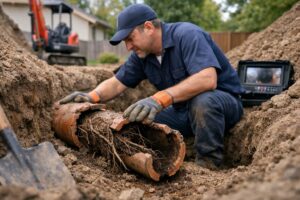
Traditional sewer replacement works differently. Workers dig a trench from your home to the street. They pull out the old pipe and lay a new one. Then they backfill the trench and repair whatever they destroyed. That means your lawn, driveway, sidewalk, or garden may all need work after the job is done.
CIPP lining is the faster, cleaner option. Most CIPP lining jobs in Denver finish in one to two days. Traditional replacement can take five to ten days or more. The EPA’s guide on trenchless technology confirms that trenchless methods reduce surface disruption by up to 90%.
How CIPP Lining Repairs Your Sewer Pipe
The CIPP lining process starts with a sewer camera inspection. A technician sends a high-definition camera through your sewer line. This shows cracks, root intrusion, corrosion, or collapse. Next, the pipe is cleaned with hydro jetting. Then the resin-soaked liner goes in.
Once the liner is in place, it is inflated against the pipe walls. Heat or UV light cures the resin. This creates a hard, smooth, jointless pipe inside your old one. The new CIPP liner bonds tightly to the host pipe. It seals cracks and stops root intrusion. The finished pipe is strong and smooth. Flow rates often improve after CIPP lining because the interior is so clean.
CIPP lining works on clay, cast iron, PVC, and concrete pipes. It handles bends and offsets that traditional methods struggle with. So, most Denver sewer lines are good candidates for CIPP lining.
Traditional Replacement: What the Process Looks Like
Traditional sewer replacement is exactly what it sounds like. Workers dig a trench along the path of your sewer line. In Denver, that trench often runs through your front yard, under your sidewalk, and into the street. The old pipe comes out. A new pipe goes in. Then everything gets backfilled.
The digging alone takes one to two days. Backfilling and compaction take more time. Then you wait for the ground to settle before any surface repairs happen. Landscaping restoration, concrete work, and asphalt patching all come later. Each of those steps costs extra money.
For Denver homeowners, traditional replacement also means permits, traffic control, and sometimes utility conflicts. Clay soil and rocky ground in many Denver neighborhoods make digging harder and slower. So, the total cost and time for traditional replacement in Denver is often higher than in other cities.
CIPP lining repairs your sewer from the inside out. No digging. No yard damage. Most Denver CIPP lining jobs finish in one to two days. Traditional replacement takes five to ten days and leaves a trail of surface damage that costs extra to fix. CIPP lining cost savings for Denver sewer repairs start before the invoice is even written.
CIPP Lining Cost Savings: Denver Sewer Price Breakdown
Let’s talk real numbers. CIPP lining cost savings for Denver sewer repairs depend on pipe length, depth, and condition. But the averages are clear. CIPP lining typically costs $80–$250 per linear foot in Denver. Traditional sewer replacement runs $150–$400 per linear foot. That is before you add surface restoration.
A typical Denver home has 40–60 feet of sewer line from the house to the street. So, CIPP lining might cost $4,000–$12,000 total. Traditional replacement for the same line could run $8,000–$20,000 or more. Add landscaping, concrete, and asphalt repair and that number climbs fast.
The CIPP lining cost savings for Denver sewer jobs are not just in the pipe work itself. They are in everything you do not have to pay for afterward. No new sod. No driveway repair. No sidewalk replacement. No permit fees for street cuts. Those savings add up to thousands of dollars on a typical Denver sewer job. Check out SewerEx Denver reviews to see what real customers paid and saved.
CIPP Lining Cost Factors in Denver
Several things affect CIPP lining cost in Denver. Pipe diameter matters. A 4-inch residential sewer line costs less to line than a 6-inch or 8-inch line. Pipe length matters too. Longer runs cost more. Pipe depth is a factor. Deeper pipes need more prep work.
Pipe condition also plays a role. A pipe with minor cracks is easier to line than one with major root damage or partial collapse. In some cases, a pipe is too far gone for CIPP lining. That is when traditional replacement or pipe bursting makes more sense. But for most Denver sewer lines, CIPP lining is a strong option.
Access point location affects cost too. If your cleanout is easy to reach, setup is fast. If the technician needs to create a new access point, that adds time and cost. Still, even with these variables, CIPP lining cost savings for Denver sewer repairs hold up in almost every scenario.
Traditional Replacement Cost Factors in Denver
Traditional sewer replacement costs in Denver are driven by excavation. Clay and rocky soil in many Denver neighborhoods slows digging. That means more labor hours and higher bills. Pipe depth is a big factor. Denver sewer lines are often buried 6–10 feet deep due to frost depth requirements. Deep trenches need shoring for safety. That adds cost.
Street cuts are another major expense. If your sewer line runs under a city street, you need a permit. You also need traffic control and asphalt patching after the job. Denver city permits for street cuts can cost $500–$2,000 alone. Asphalt patching runs $3–$10 per square foot.
Landscaping restoration is often the biggest surprise cost. Sod replacement in Denver runs $1–$3 per square foot. A 10-foot-wide trench across a 40-foot yard means 400 square feet of sod. That is $400–$1,200 just for grass. Add trees, shrubs, or garden beds and the number grows fast. CIPP lining avoids all of this.
Hidden Costs of Traditional Sewer Replacement Denver Homeowners Miss
The invoice for traditional sewer replacement is just the start. Denver homeowners often discover hidden costs after the job is done. These costs are real. They are common. And they are almost entirely avoidable with CIPP lining.
First, there is the disruption cost. Traditional replacement means no sewer use for several days. That means no toilets, no showers, no dishwasher. Some families rent hotel rooms during the work. Others use portable toilets. Either way, that is money out of your pocket. CIPP lining keeps your sewer working throughout most of the process.
Second, there is the property damage cost. Excavation equipment is heavy. It can crack driveways, damage irrigation systems, and kill mature trees. Root systems of large trees can extend far from the trunk. A trench through that zone can kill a tree worth thousands of dollars. CIPP lining does not touch your yard. According to Colorado State University Extension, mature trees in Denver can take 10–15 years to replace once damaged.
Permit and Inspection Fees Add Up Fast
Denver requires permits for sewer work that involves street cuts or significant excavation. Permit fees vary by project scope. A basic sewer permit runs $200–$500. A street cut permit adds $500–$2,000. Inspections are required at multiple stages. Each inspection means a city inspector must visit your site. If work fails inspection, you pay for re-inspection too.
CIPP lining often requires fewer permits. In many cases, it qualifies as a repair rather than a replacement. That means simpler permitting and lower fees. Your CIPP lining contractor handles the paperwork. At SewerEx, we manage all permits for our Denver customers. So, you do not have to deal with city offices or inspection schedules.
Permit delays are also a hidden cost. Traditional replacement cannot start until permits are approved. In Denver, that can take days or weeks. Meanwhile, your sewer line is still failing. CIPP lining moves faster through the permit process. That means faster repairs and less time with a broken sewer.
Landscaping and Surface Repair Costs After Excavation
Surface restoration after traditional sewer replacement is a major expense. Most sewer contractors do not include landscaping in their base price. They dig, they replace the pipe, and they backfill. What happens to your yard after that is often your problem.
Typical surface restoration costs in Denver include sod replacement at $1–$3 per square foot, concrete repair at $6–$12 per square foot, asphalt patching at $3–$10 per square foot, and irrigation system repair at $500–$2,000. A full sewer replacement job can easily add $3,000–$8,000 in surface restoration costs on top of the pipe work itself.
CIPP lining eliminates nearly all of these costs. The liner goes in through a small access point. Your lawn stays intact. Your driveway stays intact. Your irrigation system stays intact. The CIPP lining cost savings for Denver sewer repairs are most visible in this category. You simply do not pay for damage that never happened.
Always ask for a full cost breakdown before choosing between CIPP lining and traditional replacement. Ask your contractor to itemize surface restoration, permits, and landscaping separately. Many Denver homeowners are surprised to find that CIPP lining cost savings for their sewer repair exceed $5,000 once all hidden costs are counted. Get both quotes in writing before you decide.
CIPP Lining Durability vs. Traditional Pipe Lifespan
Cost is not just about today. It is about how long the repair lasts. CIPP lining delivers a 50+ year lifespan when installed correctly. That is comparable to a brand-new pipe. Traditional replacement with PVC pipe also lasts 50–100 years. So, on durability alone, CIPP lining matches traditional replacement.
But here is the key difference. CIPP lining costs less upfront and causes far less disruption. You get the same long-term result for a lower total investment. The CIPP lining cost savings for Denver sewer repairs are not just short-term. They hold up over the full life of the repair.
CIPP liners are also resistant to root intrusion. The seamless interior gives tree roots no joints to penetrate. Traditional pipe joints can separate over time, especially in Denver’s clay soil where ground movement is common. A separated joint is an open invitation for roots. CIPP lining eliminates that risk entirely. Learn more about trenchless pipe bursting as another durable option when pipes are too damaged for lining.
How CIPP Lining Holds Up in Denver's Climate
Denver’s climate is tough on sewer pipes. Freeze-thaw cycles stress pipe joints. Clay soil expands and contracts with moisture changes. These forces can crack pipes and shift joints over time. CIPP lining handles these conditions well.
The cured resin liner is flexible enough to handle minor ground movement. It does not crack under freeze-thaw stress the way clay or cast iron pipes do. The seamless design means there are no joints to shift or separate. So, CIPP lining is actually better suited to Denver’s soil and climate than many traditional pipe materials.
SewerEx has installed CIPP liners across Denver for over 25 years. We have seen how they perform in Colorado’s conditions. Our CIPP liners come with a 5-year parts and labor warranty. But the liners themselves are built to last 50 years or more. That is a strong return on your sewer repair investment.
Comparing Long-Term Value of Each Method
When you compare long-term value, CIPP lining wins on almost every measure. The upfront cost is lower. The disruption is minimal. The lifespan matches traditional replacement. And the risk of future root intrusion is lower with CIPP lining than with traditional pipe joints.
Traditional replacement does have one advantage. If your pipe has completely collapsed or is severely misaligned, replacement may be the only option. CIPP lining needs a host pipe to bond to. A fully collapsed pipe cannot hold a liner. In those cases, pipe bursting or traditional replacement is the right call.
But for the majority of Denver sewer problems, including cracks, root intrusion, corrosion, and minor offsets, CIPP lining is the smarter long-term investment. You spend less now. You get the same durability. And you avoid years of potential surface damage and permit headaches. The CIPP lining cost savings for Denver sewer repairs are real over the full life of the repair.
Do not assume traditional replacement is always more durable. Many Denver homeowners choose full replacement thinking it will last longer. But a properly installed CIPP liner lasts 50+ years, the same as new PVC pipe. Choosing replacement over CIPP lining without comparing total costs means paying thousands more for the same long-term result.
When CIPP Lining Is the Right Choice for Denver Sewer Repairs
CIPP lining is not right for every situation. But it is right for most. Knowing when to choose CIPP lining versus traditional replacement saves you money and avoids bad outcomes. Here is how to think through the decision.
CIPP lining works best when your pipe has structural integrity but is damaged. Cracks, root intrusion, corrosion, and minor joint offsets are all good candidates. The pipe needs to be intact enough to hold the liner during installation. A sewer camera inspection tells you exactly what condition your pipe is in.
Traditional replacement is better when the pipe has fully collapsed, is severely misaligned, or has major bellies that trap waste. Pipe bursting is another trenchless option for those cases. It breaks the old pipe outward while pulling a new one through. But for the majority of Denver sewer problems, CIPP lining delivers the best combination of cost, speed, and durability. The National Association of Sewer Service Companies reports that trenchless methods now handle over 60% of sewer rehabilitation projects nationwide.
Signs Your Denver Sewer Needs CIPP Lining
Several signs point to a sewer line that is a good candidate for CIPP lining. Slow drains throughout your home are a common sign. So are recurring clogs that keep coming back after cleaning. Sewage odors in your yard or basement suggest a cracked pipe. Wet spots or unusually green patches in your lawn can mean a leaking sewer line.
Root intrusion is one of the most common Denver sewer problems. Denver’s mature trees send roots deep into the soil. Those roots find sewer pipe joints and grow inside the pipe. CIPP lining seals those joints permanently. Roots cannot penetrate the seamless liner.
If your home is more than 30 years old, your sewer line may be clay or cast iron. Both materials degrade over time. A sewer camera inspection from SewerEx will show you exactly what is happening inside your pipe. That inspection is the first step toward understanding your CIPP lining cost savings for your specific Denver sewer situation.
Getting a CIPP Lining Estimate in Denver
Getting an accurate CIPP lining estimate starts with a sewer camera inspection. SewerEx provides high-definition camera inspections for Denver homeowners. The inspection shows pipe condition, damage type, and pipe dimensions. From that data, we build an accurate quote for CIPP lining.
We also provide a comparison quote for traditional replacement when appropriate. That way, you can see the CIPP lining cost savings for your specific Denver sewer line side by side. Most homeowners are surprised by how large the gap is once all costs are included.
SewerEx serves 34 communities across the Denver metro area. We are available 24 hours a day, 7 days a week. Our team is state-certified and CIPP-certified. We carry a 5-year parts and labor warranty on all work. Visit our contact page to schedule your free estimate today. You can also learn more about our full range of services at SewerEx Denver.
If your Denver sewer line is showing signs of damage, you have a real choice to make. CIPP lining cost savings for Denver sewer repairs are not just marketing language. They are real dollars you keep in your pocket. You avoid digging up your yard. You avoid weeks of disruption. You get a 50-year repair for less than the cost of full replacement. The math is clear. For most Denver homeowners, CIPP lining is the smarter, faster, and more affordable path to a working sewer line. Get a camera inspection first. Then compare both quotes. The numbers will tell you what to do.
CIPP lining cost savings for Denver sewer repairs are significant. Most homeowners save 30–50% compared to traditional replacement. That includes lower labor costs, no landscaping bills, fewer permits, and less disruption. CIPP lining finishes in days. It lasts 50+ years. And it leaves your yard exactly as you found it.
Traditional replacement has its place. But for most Denver sewer problems, CIPP lining delivers better value at every level. SewerEx has helped Denver homeowners make this choice for over 25 years. We are CIPP-certified, state-licensed, and available around the clock. Get a free estimate comparing CIPP lining versus full replacement for your Denver sewer line. Call SewerEx at (720) 663-7473 or visit our contact page to schedule your inspection today.
Trenchless rehabilitation methods like CIPP lining now account for more than 60% of all sewer repair projects in the United States. The shift is driven by cost, speed, and minimal surface disruption. For urban and suburban homeowners, trenchless methods consistently deliver lower total project costs when all restoration expenses are included in the comparison.
CIPP lining cost savings for Denver sewer repairs average 30–50% over traditional replacement when all costs are counted. The savings come from lower labor, no surface restoration, fewer permits, and faster completion. For most Denver homeowners with cracked, corroded, or root-damaged sewer lines, CIPP lining is the smarter financial choice with the same 50-year durability as a full pipe replacement.
Frequently Asked Questions
How much does CIPP lining cost compared to sewer replacement in Denver?
CIPP lining costs $80–$250 per linear foot in Denver. Traditional sewer replacement runs $150–$400 per linear foot. Add surface restoration and the gap grows. CIPP lining cost savings for Denver sewer repairs typically reach 30–50% of total project cost. Most homeowners save $4,000–$10,000 by choosing CIPP lining over full replacement.
How long does CIPP lining last on a Denver sewer line?
CIPP lining lasts 50 years or more when installed correctly. The cured resin liner is seamless and resistant to root intrusion. It handles Denver’s freeze-thaw cycles well. CIPP lining durability matches that of new PVC pipe. SewerEx backs all CIPP lining work with a 5-year parts and labor warranty.
Is CIPP lining right for my Denver sewer line?
CIPP lining works for most Denver sewer problems. Cracks, root intrusion, corrosion, and minor joint offsets are all good candidates. The pipe must have enough structure to hold the liner. A sewer camera inspection confirms whether CIPP lining is the right repair. SewerEx provides free estimates for Denver homeowners.
How long does a CIPP lining job take in Denver?
Most CIPP lining jobs in Denver finish in one to two days. Traditional sewer replacement takes five to ten days or more. CIPP lining is faster because there is no digging or surface restoration. Your sewer stays functional during most of the CIPP lining process. That means less disruption to your daily life.
What are the biggest CIPP lining cost savings for Denver sewer repairs?
The biggest CIPP lining cost savings for Denver sewer repairs come from avoided surface restoration. No sod replacement. No driveway repair. No street cut permits. No landscaping bills. CIPP lining also saves time and reduces permit costs. Total savings often reach $4,000–$10,000 compared to traditional sewer replacement on a typical Denver home.
Step-by-Step Process
Step-by-Step CIPP Lining Process for Denver Sewer Repair
1. Schedule a sewer camera inspection with SewerEx
2. Review the camera footage and pipe condition report
3. Get a written CIPP lining cost estimate for your Denver sewer
4. Compare CIPP lining cost savings versus traditional replacement quote
5. Approve the CIPP lining repair and confirm the schedule
6. SewerEx cleans the pipe with hydro jetting before lining
7. The resin-soaked CIPP liner is inserted into your sewer pipe
8. The liner is inflated and cured with heat or UV light
9. A final camera inspection confirms the CIPP lining is complete
10. SewerEx provides your 5-year warranty documentation
Quick Reference: What Is CIPP Lining Cost Savings Denver Sewer?
CIPP lining cost savings for Denver sewer repairs refer to the total money saved by choosing trenchless pipe lining over traditional sewer replacement. CIPP lining inserts a resin-soaked liner into your existing sewer pipe. The liner cures in place to form a new pipe inside the old one. No digging is required. So, you avoid excavation costs, surface restoration bills, and permit fees. CIPP lining costs $80–$250 per linear foot in Denver. Traditional replacement costs $150–$400 per linear foot, plus surface repair. The total CIPP lining cost savings for a Denver sewer repair typically range from 30–50% of the full project cost. CIPP liners last 50 years or more. They resist root intrusion and handle Denver’s freeze-thaw cycles well. Most CIPP lining jobs finish in one to two days. Traditional replacement takes five to ten days or more. For most Denver homeowners, CIPP lining delivers the same long-term result at a significantly lower total cost.
Additional Resources
• Trenchless Pipe Lining Denver — Learn how CIPP lining works, what pipes qualify, and what Denver homeowners can expect during the repair process.
• Trenchless Pipe Bursting Denver — Explore pipe bursting as an alternative trenchless option for severely damaged Denver sewer lines that cannot be lined.
• Sewer Experts Denver Reviews — Read real customer reviews from Denver homeowners who chose SewerEx for CIPP lining and sewer repair services.
• Contact SewerEx Denver — Schedule your free sewer camera inspection and get a written CIPP lining cost estimate for your Denver sewer line.