Temporary sewer line fixes sound like a smart short-term plan. But most of them fail within months. And when they fail, the damage is worse than before. If you’re dealing with a cracked, leaking, or slow sewer line in Denver, you need to know which temporary sewer line fixes actually buy you time. You also need to know when a temporary fix is just delaying the real problem.
At Sewer Experts Denver, we’ve seen every type of temporary sewer line fix. Some work. Most don’t. Over 25 years of sewer repair in Colorado, we’ve learned exactly which methods hold up and which ones fall apart fast. This guide gives you the honest truth about temporary sewer line fixes. So you can make a smart decision before a small problem turns into a full sewer replacement.
1. What Temporary Sewer Line Fixes Actually Are
2. Temporary Sewer Fixes That Can Buy You Time
3. Temporary Sewer Line Fixes That Fail Fast
4. When Temporary Sewer Fixes Stop Being an Option
5. Permanent Sewer Line Repair vs. Temporary Fixes
What Temporary Sewer Line Fixes Actually Are
A temporary sewer line fix is any repair that stops a problem short-term. It does not restore the pipe to full working condition. It buys time. That’s it. Temporary sewer line fixes are not permanent solutions. They are stop-gap measures used when a full repair isn’t possible right away.
So why do people use them? Cost is one reason. Timing is another. Sometimes a homeowner needs a few weeks before a full repair can be scheduled. Sometimes a business can’t shut down for a full sewer replacement. In those cases, a temporary sewer fix makes sense. But only if you choose the right one.
Common Reasons for Temporary Sewer Repairs
There are a few situations where temporary sewer line fixes are the right call. First, you may have a small crack that isn’t causing a backup yet. Second, you may be waiting on permits for a full sewer repair. Third, you may need to sell a home and want to pass inspection first.
In each case, a temporary sewer fix can help. But you need to be honest about what it is. It is not a cure. It is a patch. And patches on sewer lines have a short life. According to the U.S. Environmental Protection Agency, aging sewer infrastructure is one of the top causes of sanitary sewer overflows in the country. Temporary fixes do not change the age of your pipe.
How Sewer Line Damage Starts
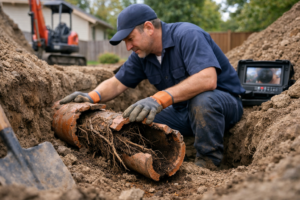
Sewer line damage rarely happens overnight. It builds up over years. Tree roots grow into joints. Clay pipes crack from soil movement. Cast iron pipes corrode from the inside. PVC pipes can shift or separate at connections.
By the time you notice a slow drain or a sewage smell, the damage is already significant. That’s why temporary sewer line fixes only work on early-stage problems. If the pipe has collapsed or has major root intrusion, no temporary fix will hold. You need a real repair.
Temporary sewer line fixes work only on early-stage damage. They buy time, not a permanent solution. If your sewer line has major cracks, root intrusion, or collapse, a temporary fix will fail fast. Always get a camera inspection before choosing any sewer repair method.
Temporary Sewer Fixes That Can Buy You Time
Not all temporary sewer line fixes are equal. Some actually work for a few months. Others fail in days. Here are the temporary sewer fixes that have the best track record for buying real time before a permanent repair.
The key is matching the fix to the type of damage. A temporary sewer fix for a small joint leak is different from one for a cracked pipe. Using the wrong method wastes money and makes the damage worse. So let’s go through each option honestly.
Pipe Repair Clamps and Couplings
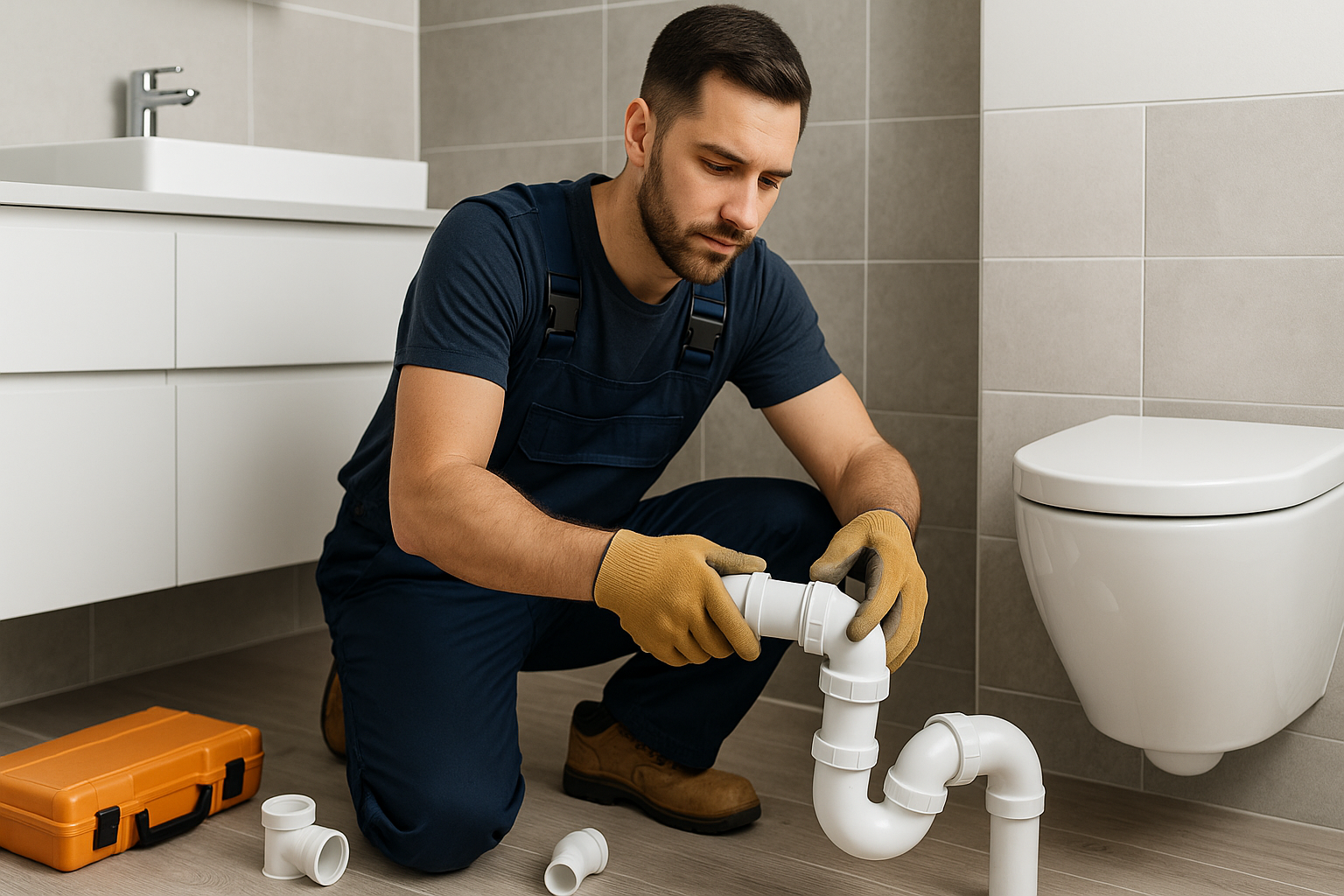
Pipe repair clamps are one of the most reliable temporary sewer line fixes for accessible pipes. A clamp wraps around a cracked section and seals it with a rubber gasket. This works well on exposed pipes in basements or crawl spaces. It does not work on buried sewer lines without excavation.
Couplings work similarly. They connect two pipe sections when a joint has separated. Both clamps and couplings are solid temporary sewer fixes for above-ground or easily accessible pipe sections. They can hold for 6 to 18 months if installed correctly. But they are not a permanent sewer repair. Soil pressure, temperature changes, and water flow will eventually break the seal.
Hydro Jetting as a Short-Term Sewer Fix
Hydro jetting is a powerful drain cleaning method. It blasts water at high pressure through the sewer line. This clears root intrusion, grease buildup, and debris. It is not a permanent sewer repair. But it is one of the best temporary sewer line fixes for restoring flow.
After hydro jetting, a slow or blocked sewer line often flows normally for 6 to 24 months. The roots grow back. The grease builds up again. But you get real time before a full repair is needed. This is a smart temporary sewer fix when combined with a camera inspection to confirm the pipe structure is still intact.
For Denver homeowners dealing with root intrusion, hydro jetting buys meaningful time. But it only works if the pipe walls are still solid. If the pipe has cracks or collapse, hydro jetting can make things worse.
Temporary Sewer Line Fixes That Fail Fast
Some temporary sewer line fixes are sold as quick solutions. But they fail fast. Knowing which ones to avoid saves you money and prevents more damage. These are the methods we see fail most often in Denver sewer repairs.
The problem with bad temporary sewer fixes is that they give you false confidence. You think the problem is handled. Then three weeks later, you have raw sewage in your yard. That’s worse than the original crack. So let’s be direct about what doesn’t work.
Epoxy Putty on Buried Sewer Lines
Epoxy putty is marketed as a fast pipe fix. You press it onto a crack and it hardens. On a water pipe inside your home, it can work short-term. On a buried sewer line, it fails almost immediately.
Here’s why. Buried sewer lines carry solid waste and water. The flow pressure, soil movement, and moisture all work against epoxy putty. It can’t bond properly to a wet pipe surface underground. Most epoxy putty temporary sewer fixes fail within days on buried lines. This is one of the most common mistakes we see Denver homeowners make. They spend $20 on putty and end up needing a $4,000 repair two weeks later.
Chemical Root Killers as Sewer Fixes
Chemical root killers are poured down the drain to kill tree roots inside sewer lines. They do kill roots. But they don’t remove them. Dead roots stay in the pipe. They still block flow. And the dead root mass can actually trap more debris over time.
Chemical root killers are a weak temporary sewer fix at best. They may slow root regrowth for a few months. But they do nothing for the cracks the roots created. And they don’t restore flow if the roots are already causing a blockage. According to Colorado State University Extension, tree root intrusion is one of the leading causes of residential sewer line failure in Colorado. Chemical treatments alone are not enough.
For a real temporary sewer fix involving roots, hydro jetting is far more effective. Chemical treatments are a supplement, not a solution.
Before trying any temporary sewer line fix, get a camera inspection first. A sewer camera shows exactly what type of damage you have. This tells you which temporary fix will actually work and how long it will last. Skipping the inspection is the most expensive mistake Denver homeowners make.
When Temporary Sewer Fixes Stop Being an Option

There are situations where no temporary sewer line fix will work. The damage is too severe. The pipe structure is gone. At that point, a temporary fix doesn’t buy time. It just delays the inevitable and makes the final repair more expensive.
Knowing these situations helps you avoid wasting money on temporary sewer fixes that have no chance of working. Here are the clear signs that you need a permanent sewer repair right now.
Collapsed Sewer Pipes Need Real Repair
A collapsed sewer pipe cannot be patched. There is no temporary sewer fix for a pipe that has caved in. The pipe needs to be replaced or relined. Full stop. Trying a temporary sewer fix on a collapsed pipe is like putting a bandage on a broken bone.
Collapsed sewer lines are more common in Denver than people think. Older clay pipes from the 1950s and 1960s are especially prone to collapse. Soil shifting from Colorado’s freeze-thaw cycles accelerates the damage. If your camera inspection shows a collapsed section, you need trenchless pipe bursting or full replacement. No temporary fix applies here.
Severe Root Intrusion Beyond Temporary Repair
When roots have grown through multiple joints and filled a section of pipe, temporary sewer line fixes won’t hold. Hydro jetting can clear the roots. But if the pipe walls are cracked at every joint, the roots come back within weeks. The pipe is structurally compromised.
In this case, the right answer is trenchless pipe lining. A CIPP liner is installed inside the damaged pipe. It creates a new pipe within the old one. This is a permanent sewer repair that lasts 50 or more years. It is not a temporary sewer fix. But it is far less disruptive than digging up your yard. For Denver homeowners with mature trees near their sewer line, this is often the best path forward.
Don’t stack multiple temporary sewer line fixes on top of each other. We see this often. A homeowner tries epoxy putty, then chemical root killer, then a clamp. Each failed fix makes the next repair harder and more expensive. One camera inspection upfront saves you from this cycle entirely.
Permanent Sewer Line Repair vs. Temporary Fixes

Temporary sewer line fixes have their place. But permanent sewer repair is almost always the better investment. Here’s a direct comparison so you can see the real cost difference over time.
A temporary sewer fix might cost $200 to $800. It lasts 6 to 18 months. Then you pay again. A permanent sewer repair costs more upfront. But it lasts decades. And it comes with a real warranty. At Sewer Experts Denver, every permanent repair includes a 5-year parts and labor warranty. No temporary sewer fix comes with that.
Trenchless Pipe Lining as a Permanent Fix
Trenchless pipe lining is the most popular permanent sewer repair we do in Denver. It uses CIPP technology. A flexible liner coated in resin is inserted into the damaged pipe. It cures in place and forms a new pipe inside the old one. No digging. No yard damage. No disruption to your driveway or landscaping.
Compared to any temporary sewer line fix, trenchless pipe lining is a completely different category. It solves the problem instead of delaying it. The new liner lasts 50 or more years. It seals cracks, stops root intrusion, and restores full flow capacity. For most Denver homeowners, this is the right answer once a temporary fix has run its course.
Sewer Camera Inspection Before Any Repair
Whether you’re considering a temporary sewer fix or a permanent repair, a camera inspection comes first. Always. A sewer camera shows the exact type and location of damage. It tells you if a temporary sewer line fix is even possible. And it tells you which permanent repair method fits your situation.
At Sewer Experts Denver, we use high-definition sewer cameras on every inspection. We show you the footage. You see exactly what we see. No guessing. No upselling repairs you don’t need. According to the American Society of Civil Engineers, the average U.S. sewer pipe is over 30 years old. Most Denver sewer lines are in that same age range. A camera inspection tells you where your pipe actually stands.
After the inspection, you’ll know if a temporary sewer fix makes sense or if it’s time for a permanent repair. That’s the honest answer. And it’s the only way to make a smart decision about your sewer line.
If you’re in Denver and dealing with a sewer problem, here’s what this means for you. Temporary sewer line fixes work in specific situations. They don’t work on collapsed pipes, severe root intrusion, or pipes with multiple cracks. The only way to know which category you’re in is a camera inspection. Once you know the real condition of your sewer line, you can choose the right fix. A temporary sewer fix when appropriate. A permanent repair when necessary. Either way, you’re making a decision based on facts, not guesses. That saves you money and prevents bigger problems down the road.
Temporary sewer line fixes are not all created equal. Some buy you real time. Others fail in days and make your sewer problem worse. The difference comes down to the type of damage, the method you choose, and whether you got a camera inspection first. Pipe clamps and hydro jetting can work as temporary sewer fixes on the right problems. Epoxy putty and chemical root killers almost never work on buried sewer lines.
When the damage is too severe, no temporary sewer line fix will help. Collapsed pipes and heavy root intrusion need permanent repair. At Sewer Experts Denver, we’ve handled thousands of sewer repairs across the Denver metro area. We give you the honest assessment every time. Schedule a free inspection today to find out the true condition of your sewer line and which repair option is right for you.
The average age of a sewer pipe in the United States is over 30 years. Many systems were built in the mid-20th century and are now well past their design life. Temporary repairs on aging infrastructure delay the inevitable. They do not address the root cause of pipe failure. Permanent rehabilitation is the only long-term answer for deteriorating sewer systems.
Temporary sewer line fixes work only when the pipe structure is still intact. Always start with a camera inspection. Match the fix to the damage type. And know when a temporary sewer fix has run its course. Permanent repair is almost always the better long-term investment for Denver homeowners.
Frequently Asked Questions
How long do temporary sewer line fixes actually last?
Most temporary sewer line fixes last 6 to 18 months. Pipe clamps and hydro jetting tend to last longer. Epoxy putty on buried sewer lines often fails within days. The lifespan of any temporary sewer fix depends on the damage type and pipe condition.
Can I use a temporary sewer fix to pass a home inspection?
A temporary sewer fix may restore flow enough to pass a basic inspection. But a sewer camera inspection will reveal the underlying damage. Buyers who request a sewer scope will see the real condition. Temporary sewer repairs do not hide structural pipe problems from a camera.
What is the best temporary sewer line fix for root intrusion?
Hydro jetting is the best temporary sewer fix for root intrusion. It physically removes roots from the pipe. This restores flow for 6 to 24 months. Chemical root killers are a weaker option. They kill roots but don’t remove them. Hydro jetting combined with a camera inspection gives you the best temporary sewer result.
When do temporary sewer line fixes stop working entirely?
Temporary sewer line fixes stop working when the pipe has collapsed, has multiple cracks, or has severe root damage at every joint. At that point, no temporary sewer fix can hold. Permanent repair through pipe lining or pipe bursting is the only real option left.
How much do temporary sewer line fixes cost in Denver?
Temporary sewer line fixes in Denver typically cost $200 to $800. Hydro jetting runs $300 to $600. Pipe clamps cost less but require accessible pipe. Permanent sewer repairs cost more upfront but last decades. Most Denver homeowners find permanent repair is the better value over time.
Step-by-Step Process
Step-by-Step: Evaluating Temporary Sewer Line Fixes
1. Notice the warning signs: slow drains, sewage smell, or wet spots in yard
2. Schedule a sewer camera inspection before any repair attempt
3. Review camera footage to identify damage type and location
4. Determine if pipe structure is still intact for a temporary fix
5. Choose the right temporary sewer fix for your damage type
6. Have a licensed plumber install the temporary sewer repair
7. Monitor the repair for signs of failure over the next 30 days
8. Get a follow-up camera inspection after 6 months
9. Plan and budget for permanent sewer repair based on inspection results
10. Schedule permanent sewer line repair before the temporary fix fails
Quick Reference: What Are Temporary Sewer Line Fixes?
Temporary sewer line fixes are short-term repairs. They stop a sewer problem for a limited time. They do not restore the pipe to full condition. Common temporary sewer fixes include pipe clamps, hydro jetting, and repair couplings. So they work best on early-stage damage. They do not work on collapsed pipes or severe root intrusion. A temporary sewer fix buys time. It is not a permanent solution. Always follow a temporary sewer repair with a plan for permanent repair.
Additional Resources
• Trenchless Pipe Lining Denver — Learn how CIPP lining creates a permanent pipe inside your damaged sewer line without digging up your yard.
• Trenchless Pipe Bursting Denver — Explore how pipe bursting replaces a collapsed or severely damaged sewer line with minimal excavation.
• Sewer Experts Denver Reviews — Read what Denver homeowners say about their sewer repair experience with Sewer Experts.
• Contact Sewer Experts Denver — Schedule your free sewer inspection and get an honest assessment of your sewer line’s condition.