
As of August 21, 2026, the U.S. Environmental Protection Agency has released new EPA lead drinking water guidance for water systems nationwide. The agency announced the update in its official news release, which reports EPA is directing utilities to identify and reduce lead risks faster. The focus is protecting children, who face the highest health risk from lead in tap water.
This matters most for owners of older homes. Many older properties still connect to the main through a lead service line. If your home was built before 1986, the new guidance could affect you directly, and our Denver water and sewer line team has already started fielding questions about it.
1. What Changed in the EPA Guidance
2. Who Is Affected by Lead Rules
3. What To Do Now About Service Lines
4. How Sewer Experts Can Help
5. What This Means for Denver Homes
6. Frequently Asked Questions
What Changed in the EPA Lead Drinking Water Guidance
EPA’s new guidance tells water systems how to find and reduce lead exposure faster. The release does not list a specific compliance date in the public summary. The exact timeline for utilities still needs confirmation from EPA’s full guidance document.
The update pushes water systems toward quicker lead service line testing. It also encourages utilities to speed up replacement work where lead lines are confirmed. For background, EPA’s own lead drinking water resource page explains how lead gets into tap water through old pipes and fixtures. The source has not specified exact fee changes, new forms, or numeric thresholds tied to this guidance.
Lead Service Line Testing
Under the new EPA lead drinking water guidance, utilities are expected to identify lead lines faster. This means more homeowners may get a notice asking about their service line. Testing timelines depend on each local utility, since EPA’s release does not set one national deadline.
What the Guidance Has Not Specified
EPA’s release does not name specific fees, forms, or penalty amounts tied to this update. We won’t guess at numbers the agency has not published. If your utility sends a notice, read it closely for your local deadline.
Key Takeaway: EPA’s new guidance directs water systems to find and fix lead risks faster, but the release does not set one national deadline. Your local utility decides its own testing pace. The real timeline for your home depends on where you live and your system’s current lead line count.
Who Is Affected by the Lead Drinking Water Guidance
This guidance touches more than city water departments. Homeowners with older houses are the group most likely to feel it first. If your home was built before lead was banned from plumbing in 1986, you may have a lead service line.
Contractors who replace water lines are affected too. As utilities move faster on lead line testing, demand for replacement work tends to rise. The Centers for Disease Control and Prevention (CDC) guidance on lead exposure explains why children in older homes face the highest risk. Plumbers and line replacement crews may see more calls once local notices go out.
Homeowners With Older Service Lines
Owners of homes built before 1986 face the biggest question mark. Your utility may already know if your line is lead, copper, or another material. But many records are incomplete, so a physical check still matters.
Water Utilities and Contractors
Utilities now carry more pressure to update their lead line records. Meanwhile, contractors who handle service line replacement should expect more inspection and replacement requests this year.
What To Do Now About Your Lead Service Line
You don’t have to wait on a letter from your utility. Call them now and ask directly if your home’s service line contains lead. Most utilities keep at least partial records by address.
If your utility can’t confirm the material, a physical inspection settles it. Homes built before 1986 are the highest priority. Scheduling a proactive check now beats waiting for a mandatory notice later.
Ask Your Utility First
Start with a phone call or online request to your water utility. Ask specifically about your service line material and any planned lead testing in your area.
Consider a Proactive Line Check
If records are unclear, a physical check settles the question fast. Acting early also gives you more control over scheduling and cost than waiting for a utility notice.
Pro Tip: Ask your utility for your service line material in writing, not just over the phone. A written record protects you later if replacement becomes necessary. Keep a copy with your home’s paperwork, and bring it along if you schedule an inspection or replacement estimate.
How Sewer Experts Can Help With Line Replacement
Finding out your line’s material is only step one. If it turns out to be lead, replacement is the next move, and that’s where our crew comes in.
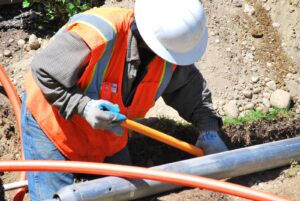
We handle water line and sewer line replacement across the Denver area, including trenchless options that avoid tearing up your yard. Our team can inspect, confirm the material, and walk you through replacement options the same visit in many cases.
Line Locating and Inspection
We locate and inspect service lines before any digging starts. This confirms the material and the exact path of your line.
Trenchless Replacement Options
Our trenchless pipe bursting method replaces old lines without full excavation. It saves your landscaping and usually finishes faster than tearing out the full line.
Common Mistake to Avoid: Don’t assume a newer looking home means a newer service line. Some properties kept their original line through multiple remodels. Also, don’t wait for a utility notice if you already have doubts about your line’s age. A quick check now costs far less than an emergency replacement later.
What This Means for Denver Homeowners
Denver has plenty of homes built well before 1986, so this guidance carries real weight locally. Your utility will likely move at its own pace on testing and outreach.
In the meantime, you can act on your own timeline. Checking your line now means you’re not caught off guard by a future notice or a sudden plumbing issue.
Older Denver Neighborhoods
Homes in older Denver neighborhoods are more likely to have lead or galvanized service lines still in place.
Local Timelines May Vary
Denver Water and surrounding districts set their own testing schedules. Check directly with your provider for local specifics.
What This Means for You: If you own an older Denver home, this guidance is a good reason to stop guessing about your service line. Call your utility, ask about your line material, and schedule an inspection if records are unclear. Acting now gives you time to plan and budget, instead of reacting to a surprise notice or an emergency repair down the road.
EPA’s new lead drinking water guidance pushes water systems to find and fix lead risks faster, though the agency hasn’t published a single national deadline yet. For now, the clearest facts are simple: older homes may have lead service lines, and utilities are under more pressure to check.
If you own a home built before 1986 in the Denver area, don’t wait for a notice in the mail. Schedule a line inspection with Sewer Experts, and get a straight answer about your water line before the EPA lead drinking water guidance turns into a mandatory local deadline.
Expert Insight from Sewer Experts: We’ve seen Denver homeowners ask more questions about their water lines every time federal guidance like this gets attention. Most people don’t know their line material until someone checks it. A simple inspection answers that question fast, and it’s a lot less stressful than waiting on a utility notice to find out. We always recommend confirming the material before assuming the worst.
Key Takeaway: EPA’s lead drinking water guidance tells utilities to test and fix lead risks faster, but it does not set one fixed deadline. If your home was built before 1986, confirm your service line material now. A proactive check costs less than waiting for a utility notice or an emergency repair.
Frequently Asked Questions
What does the new EPA lead drinking water guidance actually require?
The EPA lead drinking water guidance directs water systems to identify and reduce lead risks faster. It doesn’t set one fixed national deadline. Your local utility decides its own testing pace under this new EPA guidance, based on how many lead lines it still has on record.
Does the EPA lead drinking water guidance affect older homes specifically?
Yes. Homes built before 1986 are most likely to have a lead service line. This EPA lead drinking water guidance pushes utilities to find those lines faster. If you own an older home, ask your utility about your line material soon, since records aren’t always complete.
How do I know if my service line is covered by this guidance?
Call your water utility and ask directly about your line material. Many utilities keep partial records tied to this guidance. If they can’t confirm it, a physical inspection settles the question. Older homes carry the highest chance of having a lead line still in place.
Will the EPA guidance set a replacement deadline for lead lines?
The source covering this EPA guidance has not specified a fixed replacement deadline. Utilities are expected to move faster, but timelines will vary by system. Check with your local water provider for its specific plan, since EPA’s release doesn’t name one national date.
What should I do first after hearing about the EPA guidance?
Start by contacting your water utility and asking about your service line material. This simple step tells you whether this EPA guidance applies directly to your home. If your line turns out to be lead, schedule an inspection before scheduling any replacement work.
Step-by-Step Process
Step-by-Step: Checking for a Lead Service Line in Your Home
1. Call your water utility about your service line material.
2. Ask if lead testing guidance has reached your neighborhood yet.
3. Request written confirmation of your line’s material type.
4. Check your home’s build date against the 1986 lead ban.
5. Schedule a physical inspection if records are unclear.
6. Ask your utility about current lead line replacement priorities.
7. Get a replacement estimate if your line tests as lead.
8. Compare trenchless and traditional replacement options for your yard.
9. Confirm permits and timeline before replacement work begins.
10. Keep your line material records for future home sales.
Quick Reference: What Is EPA Lead Drinking Water Guidance?
EPA lead drinking water guidance is federal direction telling water systems how to find and cut lead in tap water. It pushes utilities to test service lines faster. That means more utilities may contact homeowners about their line material soon. Also, this guidance does not set one fixed national deadline. Instead, each water system sets its own pace for testing and replacement.
Additional Resources
• Learn more about Sewer Experts and how our Denver crews handle water and sewer line projects across the metro area.
• Read real customer reviews from Denver homeowners who went through line inspections and replacements with our team.
• Check our service area and location details to see if your Denver neighborhood falls within our coverage zone.
Reviewed by Marisa Beaver, Owner · Updated

About the author
Marisa Beaver
Owner · Demolition license (Colorado); 27 drain-layer's licenses (Colorado)
Marisa Beaver is the owner of Sewer Experts, a locally owned sewer, drain, and water line company based in Commerce City, Colorado, serving Denver and the Front Range including Aurora, Lakewood, Thornton, and Boulder. She oversees client relations and business operations, working directly with customers on sewer line repair, drain cleaning, and water line services, and personally answers client calls and coordinates technical consultations. Beaver holds a demolition license and 27 drain-layer's licenses in Colorado. Sewer Experts is licensed, insured, and bonded with state-certified technicians, and generated over $2 million in revenue in 2020. A woman- and minority-owned business, Sewer Experts has held an on-call Denver Housing Authority contract and been featured on the cover of Dig Different magazine.