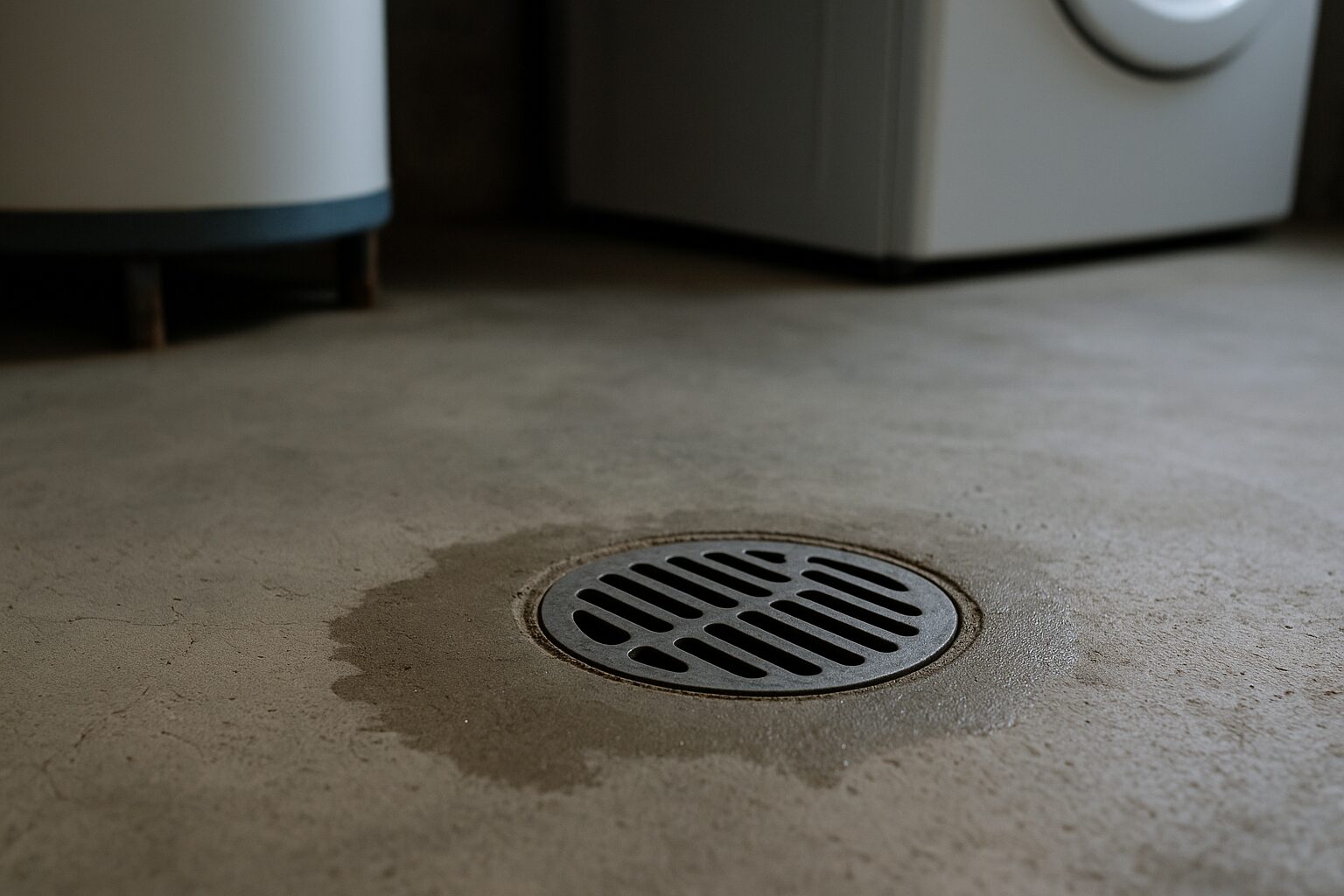
When water pools near your washer and slowly creeps toward the wall, most Denver homeowners suddenly remember their basement floor drain. The basement floor drains Denver homes rely on quietly move water out during storms and appliance leaks, so it’s easy to forget they’re there until something goes wrong. But when basement floor drains Denver systems fail, the damage can spread fast, which is exactly why it helps to understand how they work. Most drains use a simple trap and pipe design, yet age, clogs, and dry traps often cause the basement floor drains Denver families depend on to stop working right. Our team works on drain and sewer systems throughout the Front Range, so we know the common failure points firsthand. If you’re already dealing with a backup, you can review the full Denver metro drain cleaning services we offer. Below, we’ll walk through how these drains work and when it’s time to call a pro.
1. How Basement Floor Drains Denver Systems Work
2. Common Signs Your Floor Drain Is Failing
3. Why Floor Drain Traps Run Dry
4. Mistakes That Cause Basement Drain Backups
5. What Drain Failure Means for Your Home
6. When to Call a Basement Drain Expert
How Basement Floor Drains Denver Systems Work
A basement floor drain sits at the lowest point of your slab. It connects to the main sewer or storm line below. Water flows into the drain. Then it moves through a trap and out through a pipe. This basic setup protects your home from water damage.
The trap is the key part. It holds a small pool of water at all times. This pool blocks sewer gas from entering your home. Without it, smells and gas can rise into your basement.
Denver homes often use cast iron or PVC piping for this system. Older homes may still have clay pipe sections. Because of this, basement floor drains Denver inspectors check often show wear tied to pipe age and soil shifts common across the Front Range.
The Drain Trap and Its Job
The trap is a curved pipe section under the drain. It stays filled with water. That water seal stops sewer gas from backing up. Most floor drain problems start when this trap goes dry.
Where the Drain Line Connects
Your floor drain ties into the main sewer lateral. That line runs from your home to the city connection. So, a clog anywhere in that path can push water back into your basement drain.
Key Takeaway: Basement floor drains Denver homes use rely on a water-filled trap and a clear pipe path. Both parts must work together. If either fails, water or gas problems follow fast.
Common Signs Your Floor Drain Is Failing
Most basement drain problems show warning signs early. You just need to know what to watch. A floor drain not draining is one of the clearest red flags. Water sits in the basin instead of flowing out.
Basement drain smells are another common sign. That smell often means your trap ran dry. Sewer gas then rises straight into your living space. Gurgling sounds from nearby pipes also point to a blockage forming.
In fact, many homeowners in Aurora, Lakewood, and Thornton report these exact issues each spring. Snowmelt and heavy rain push more water through aging drain systems. According to the EPA’s home water damage guide, early leak detection saves homeowners real repair costs.
Slow Drainage After Storms
If water drains slowly after rain, your line may have a partial clog. This often gets worse with each storm. Most importantly, don’t ignore repeat slow drains.
Standing Water Near the Drain
Standing water means the drain cannot keep up. This often signals a basement floor drain backup below the surface. Then, water has nowhere else to go but your floor.
Expert Insight from Sewer Experts, Denver Sewer and Drain Specialists: Basement drain smells almost always trace back to a dry trap or a hidden blockage further down the line. Rather than guess at the cause, we recommend a camera inspection, which saves homeowners both time and money.
Why Floor Drain Traps Run Dry
A floor drain trap dry issue is one of the most common basement drain problems. Traps lose water through slow evaporation. This happens most in drains that rarely get used.
Denver’s dry climate makes this worse. Low humidity speeds up evaporation from unused drains. So, a trap can run dry in just a few weeks during hot months.
Once the trap dries out, sewer gas moves freely into your basement. This creates that sharp, rotten smell many homeowners notice. The fix is often simple. But the cause needs checking first.
How Evaporation Empties the Trap
Drains used only during storms sit dry most of the year. Heat and airflow pull water from the trap. After that, gas has a clear path inside.
Refilling the Trap Safely
Pouring a quart of water down the drain refills most traps. Do this every few weeks. Adding mineral oil on top slows future evaporation.
Pro Tip: Mark a reminder to pour water into rarely used basement drains regularly. This simple step takes only seconds and costs nothing, yet it stops most basement drain smells before they start.
Mistakes That Cause Basement Drain Backups
Many basement flooding drain issues trace back to avoidable mistakes. Homeowners often pour grease or debris down floor drains. This builds up over time and blocks flow.
Tree roots also cause major basement floor drain backup events. Roots seek out moisture in older clay pipes. Once inside, they grow and trap solid waste.
Another mistake is ignoring small clogs. A slow drain today can become a full backup after the next storm. Because of this, early action always costs less than emergency repair.
Grease and Debris Buildup
Grease hardens inside pipes over time. It traps hair, dirt, and other debris. This narrows the pipe until water can no longer pass.
Root Intrusion in Older Pipes
Roots find tiny pipe cracks and grow inside. This is common in older Denver neighborhoods. A trenchless pipe lining repair often fixes this without digging up your yard.
Common Mistake to Avoid: As a rule, avoid pouring grease, paint, or chemicals down a basement floor drain. These substances can harden or corrode pipes over time, and that slow buildup is behind many avoidable backups each year.
What Drain Failure Means for Your Home
A failed basement drain puts more than your floor at risk. Water damage can spread into walls, flooring, and stored items fast. Mold growth often follows within 48 hours of standing water.
According to FEMA’s flood mitigation guidance, quick water removal limits long-term structural harm. So, a working basement floor drain protects your home’s value.
Most Denver basements sit below grade. That means gravity alone won’t clear water without a working drain system. Regular checks catch small issues before they turn into big repairs.
Water Damage Spreads Fast
Standing water soaks into drywall within hours. Then, mold can start growing in as little as two days. Fast drain repair limits this damage.
Below-Grade Basements Need Working Drains
Gravity cannot push water out of a below-grade space alone. Your drain system does that job. Without it, water has nowhere to go.
What This Means for You: If your basement floor drain backs up or smells bad, don’t wait. Small signs today can mean bigger repairs later. Most importantly, a quick inspection tells you exactly what’s wrong. This protects your home, your health, and your budget over time.
Basement floor drains Denver homes depend on do more than move water. They block sewer gas, protect your slab, and stop flooding before it starts. But traps run dry, roots invade pipes, and grease builds up over time. Watching for slow drains, smells, and gurgling sounds helps you catch basement floor drains Denver problems early.
Don’t wait for a backup to force your hand. Schedule a drain inspection with Sewer Experts to assess your basement drain system today. Our team checks your full setup, including trenchless pipe bursting options for damaged lines. Catching a problem early is far cheaper than cleaning up after a flood.
Key Takeaway: Basement floor drains fail from dry traps, root intrusion, and buildup. Regular checks and fast repairs protect your Denver home from costly water damage.
Frequently Asked Questions
Why do basement floor drains Denver homes have smell bad?
Basement drain smells usually mean the trap ran dry. Sewer gas then rises into your home. Pour water down the drain monthly. This keeps the trap full and blocks the smell.
What causes a basement floor drain backup?
A basement floor drain backup often comes from clogs, grease, or root intrusion. These block normal flow. Water then has nowhere to go but back into your basement floor.
Why is my floor drain not draining at all?
A floor drain not draining usually points to a blockage in the line. Debris, roots, or grease can cause this. A camera inspection finds the exact clog location fast.
How do I fix a floor drain trap dry issue?
Pour a quart of water into the drain to refill the trap. Add mineral oil on top. This slows evaporation. Repeat monthly for drains you rarely use.
When should I call a pro for basement floor drains Denver homes use?
Call a pro if smells, backups, or slow drainage continue. Basement floor drains Denver experts can inspect with cameras. This finds hidden clogs or pipe damage fast.
Step-by-Step Basement Floor Drains Denver Check
Step-by-Step Basement Floor Drains Denver Check
1. Locate your basement floor drain and clear surface debris.
2. Check for standing water around the drain basin.
3. Smell for sewer gas near the drain opening.
4. Pour a quart of water into the drain trap.
5. Watch how fast the water drains away.
6. Listen for gurgling sounds in nearby pipes.
7. Check nearby fixtures for slow drainage too.
8. Look for cracks or rust around the drain cover.
9. Note any past flooding near the drain area.
10. Call a drain expert if problems continue.
Quick Reference: What Is Basement Floor Drains Denver?
Basement floor drains Denver homes use sit at the lowest slab point. They move water into the main sewer line. A trap inside holds water at all times. This blocks sewer gas from entering. So, the drain protects both your home and your air quality. Most failures trace back to dry traps or blocked pipes.
Additional Resources
Learn how to find your sewer line fast using our sewer line locator guide for Denver properties.
That gurgling sound from your drain is not random. Gurgling drains and airlock problems are your pipes telling you something is wrong. The noise happens when air gets trapped in your drain system. So instead of water flowing freely, air bubbles push back up through the water. You hear that familiar gurgle.
Gurgling drains and airlock issues show up in sinks, toilets, showers, and floor drains. They can start small and get worse fast. At Sewer Experts Denver, our team has over 25 years of experience diagnosing gurgling drains and airlock problems across Denver and the Front Range. We have seen every cause and every fix. This guide explains exactly what causes gurgling drains and airlock issues, what you can do right now, and when to call a pro. Do not ignore the gurgle. It is a warning sign your drain system needs attention.
1. What Causes Gurgling Drains and Airlock
2. How Airlock Forms in Your Drain Pipes
3. Gurgling Drains in Specific Fixtures
4. How to Fix Gurgling Drains and Airlock
5. When Gurgling Drains Signal a Bigger Problem
6. FAQ: Gurgling Drains and Airlock Answers
What Causes Gurgling Drains and Airlock Problems
Gurgling drains and airlock issues have a few root causes. All of them involve air moving through your drain system the wrong way. Water should flow down and out. Air should vent up and out through your roof vent stack. When that system breaks down, you get gurgling drains and airlock symptoms.
The most common cause is a blocked or partially blocked vent pipe. Your drain system needs air to work. Without proper airflow, a vacuum forms. Water pulls air from the nearest source, which is usually a drain trap. That pull creates the gurgling sound you hear. So the gurgle is actually air being sucked through standing water in your trap.
A second common cause is a partial clog in the drain line itself. Grease, hair, soap scum, and debris slow water flow. Slow water traps air pockets. Those air pockets cause gurgling drains. The airlock gets worse as the clog grows.
Blocked Vent Pipes and Gurgling
Your home’s plumbing vent stack runs from the drain pipes up through the roof. It lets sewer gases escape and lets fresh air in. When leaves, debris, or even a bird nest blocks the vent, air cannot enter properly. So your drains pull air from traps instead. That is what causes the gurgling sound.
A blocked vent is one of the top reasons for gurgling drains and airlock issues in Denver homes. Colorado winters can freeze vent openings too. Ice buildup at the top of the vent stack cuts off airflow just as effectively as a physical blockage. The result is the same: gurgling drains and airlock pressure building in your pipes.
You can sometimes spot a blocked vent by checking your roof. But clearing a vent stack is a job for a professional. Working on a roof near plumbing vents carries real risk.
Partial Clogs That Trap Air
Partial clogs are sneaky. Your drain still works, just slowly. But that slow drain creates the perfect condition for gurgling drains and airlock buildup. Water moving past a partial clog compresses air ahead of it. That compressed air has nowhere to go except back up through your drain.
In kitchens, grease is the main culprit. Grease coats pipe walls and narrows the opening over time. In bathrooms, hair and soap combine into a sticky mass. Both cause the same result: gurgling drains and airlock symptoms that get louder as the clog grows.
According to the U.S. Environmental Protection Agency, proper drain maintenance prevents most common plumbing problems. Regular drain cleaning stops partial clogs before they cause gurgling drains and airlock issues.
Gurgling drains and airlock problems almost always trace back to two things: blocked vents or partial clogs. Both prevent proper airflow in your drain system. Fix the airflow and you fix the gurgle. Ignoring it lets the problem grow into a full blockage or sewer backup.
How Airlock Forms Inside Your Drain Pipes
Airlock in drain pipes is a specific condition. It happens when a bubble of air gets completely sealed inside a section of pipe. Water cannot push past it. The drain slows to a stop or backs up entirely. Gurgling drains and airlock go hand in hand because the same conditions that cause gurgling can lead to a full airlock.
Airlock forms most often in pipes with low spots or improper slope. Drain pipes need a consistent downward slope to work. When a pipe sags or was installed at the wrong angle, water pools in the low spot. Air gets trapped above the pooled water. Now you have an airlock. The drain gurgles, slows, and eventually stops.
Airlock also forms after plumbing work. If a plumber drains a section of pipe and does not properly purge the air before closing the system, an airlock can develop. So gurgling drains after recent plumbing repairs are a red flag worth checking.
Signs You Have a Drain Airlock
Airlock symptoms are distinct from a simple slow drain. With a true airlock, the drain may work fine for a moment and then stop completely. You might hear gurgling drains sounds followed by silence. Water may back up into a nearby fixture. For example, flushing the toilet causes the shower drain to gurgle. That cross-fixture gurgling is a strong sign of airlock or a shared vent problem.
Another sign is gurgling that happens after the water stops running. You turn off the faucet and the drain keeps gurgling for several seconds. That is trapped air escaping through the trap water. It is a clear sign of airlock pressure in the drain line.
You might also notice slow drains in multiple fixtures at once. When gurgling drains and airlock affect more than one drain, the problem is likely in the main line or the main vent stack, not just one fixture.
Pipe Slope and Airlock Connection
Proper pipe slope is critical. The standard slope for drain pipes is one quarter inch of drop per foot of pipe. At that slope, water carries waste along without leaving pools. When the slope is wrong, water sits in the pipe. Air gets trapped. Gurgling drains and airlock become regular problems.
Older Denver homes sometimes have pipes that have shifted over time. Soil movement, tree roots, and freeze-thaw cycles all affect pipe position. A pipe that was installed correctly 30 years ago may now have a belly or sag. That belly holds water and traps air. The result is persistent gurgling drains and airlock that no amount of drain cleaner will fix.
A sewer camera inspection is the only reliable way to see pipe slope problems. The camera shows exactly where the belly is and how severe the airlock risk has become.
Gurgling Drains in Sinks, Toilets, and Showers
Gurgling drains and airlock issues show up differently depending on which fixture is affected. Each fixture connects to the drain system in a slightly different way. So the gurgling sound and its cause can vary. Knowing which fixture is gurgling helps narrow down the problem fast.
A gurgling kitchen sink usually points to a grease clog or a blocked vent serving that drain branch. A gurgling bathroom sink often means a hair clog near the drain or a shared vent issue. A gurgling toilet is more serious. Toilets connect directly to the main drain line. Gurgling drains in a toilet often mean a problem in the main sewer line or the main vent stack.
Shower drains that gurgle are usually dealing with hair clogs, soap buildup, or a low vent. But if your shower gurgles when you flush the toilet, that is a shared system problem. Gurgling drains and airlock in multiple fixtures at once always point to a main line or main vent issue.
Toilet Gurgling and Airlock Warning Signs
A gurgling toilet is one of the most urgent signs of gurgling drains and airlock problems. The toilet drain is large, usually three to four inches in diameter. For it to gurgle, something significant is blocking airflow. That usually means a main line clog, a main vent blockage, or a sewer line problem.
If your toilet gurgles and then slowly fills back up after flushing, you likely have a partial main line blockage. Water is draining, but slowly. Air is getting pushed back up through the toilet trap. That gurgling sound is the air escaping. Left alone, this becomes a full backup.
According to the Centers for Disease Control and Prevention, sewer backups pose real health risks from exposure to raw sewage. So gurgling drains in your toilet are not just a nuisance. They are a health warning. Call a professional drain service when your toilet gurgles.
Floor Drains and Basement Gurgling
Floor drains in basements and utility rooms are often the first place gurgling drains and airlock problems appear. That is because floor drains sit at the lowest point of your home’s drain system. When the main line backs up, floor drains show it first.
A gurgling floor drain often means the main sewer line is partially blocked. Water from upper fixtures is draining slowly and pushing air back through the floor drain. You might also notice a sewer smell along with the gurgling. That smell means the trap in the floor drain has dried out or the airlock is pulling sewer gas back into your home.
Pour water into a gurgling floor drain to refill the trap. If the gurgling continues or the smell persists, the problem is deeper in the drain system. A professional drain inspection is the next step.
Run water into rarely used floor drains every month. Dry traps let sewer gas into your home and make gurgling drains and airlock symptoms worse. A simple cup of water every 30 days keeps the trap sealed and blocks gas from entering. It takes 10 seconds and prevents a real problem.
How to Fix Gurgling Drains and Airlock at Home
Some gurgling drains and airlock fixes are simple DIY jobs. Others need a professional. Start with the easy fixes first. If they do not work, stop and call a drain specialist. Trying to force a fix on a serious airlock or main line problem can make things worse.
The first step is always to identify which drain is gurgling and whether it is one fixture or multiple. One gurgling drain usually means a local clog or vent issue. Multiple gurgling drains mean a main line or main vent problem. That distinction tells you how serious the situation is.
For a single gurgling drain, try a plunger first. A good plunger can break up a partial clog and release trapped air. Use a cup plunger for sinks and a flange plunger for toilets. Plunge firmly and consistently. If the gurgling stops after plunging, you had a simple clog. If it comes back within a few days, the clog is deeper.
DIY Steps for Single Drain Gurgling
Start with a plunger on the affected drain. Cover the overflow opening on sinks with a wet rag first. This forces the plunger pressure down into the drain instead of escaping through the overflow. Plunge 10 to 15 times with firm strokes. Then run hot water to see if the gurgling drains and airlock symptoms clear.
Next, try a drain snake or hand auger. Feed it into the drain until you feel resistance. That is the clog. Rotate the snake to break it up or pull it out. A drain snake reaches clogs that a plunger cannot. For bathroom sinks, the clog is usually in the P-trap or just past it.
For kitchen sinks, check the P-trap under the sink. Unscrew it and clear any grease buildup. Grease clogs in the P-trap are a top cause of gurgling drains in kitchens. Clean the trap and reinstall it. Run water and check if the gurgling drains and airlock issue is resolved.
When DIY Does Not Fix the Gurgling
If plunging and snaking do not stop the gurgling drains and airlock symptoms, the problem is beyond the fixture. You likely have a main line clog, a blocked vent stack, or a pipe slope issue. None of these are DIY fixes. Trying to clear a main line without the right equipment can push the clog deeper or damage old pipes.
Hydro jetting is the professional solution for stubborn clogs. High-pressure water blasts through grease, roots, and debris. It clears the entire pipe, not just a small opening. Hydro jetting stops gurgling drains and airlock problems caused by buildup in the main line.
For vent stack blockages, a professional uses a sewer camera to confirm the blockage location. Then they clear it safely from the roof or through a cleanout. Check out our drain cleaning and sewer services to schedule a professional evaluation of your gurgling drains and airlock problem today.
Do not pour chemical drain cleaners into a gurgling drain repeatedly. Chemical cleaners dissolve soft clogs but do nothing for airlock or vent blockages. Worse, they sit in your pipes and corrode them over time. If one treatment does not fix the gurgling drains and airlock issue, stop using chemicals and call a professional.
When Gurgling Drains Signal a Serious Sewer Problem
Gurgling drains and airlock issues are not always minor. Sometimes they are the first sign of a serious sewer line problem. Tree root intrusion, collapsed pipes, and main line blockages all cause gurgling drains. And all of them get worse if ignored.
Tree roots are a major cause of gurgling drains in Denver. Roots seek out moisture and find their way into small cracks in sewer pipes. Once inside, they grow and block flow. Water backs up. Air gets trapped. Gurgling drains and airlock symptoms appear. Over time, roots can completely block or collapse a pipe.
A collapsed or cracked sewer pipe also causes persistent gurgling drains and airlock problems. Older clay or cast iron pipes in Denver homes are especially vulnerable. They crack, shift, and collapse. When they do, water and air cannot move properly. The result is gurgling drains that no amount of plunging will fix. Only pipe repair or replacement solves the problem.
Sewer Camera Inspection for Gurgling Drains
A sewer camera inspection is the fastest way to diagnose persistent gurgling drains and airlock issues. A high-definition camera goes into the pipe and shows exactly what is happening. You see roots, cracks, bellies, and blockages in real time. No guessing. No digging up the yard to look.
At Sewer Experts Denver, we use camera inspections to find the exact cause of gurgling drains and airlock problems. The camera shows us the pipe condition, the location of any blockage, and whether the pipe needs cleaning, lining, or replacement. That information saves you money because we fix the right problem the first time.
According to Colorado State University Extension, tree root management around utility lines is an ongoing concern for homeowners. Regular sewer camera inspections catch root intrusion early, before it causes major gurgling drains and airlock damage.
Trenchless Repair Options for Damaged Pipes
When a camera inspection reveals a damaged pipe causing gurgling drains and airlock issues, trenchless repair is often the best option. Trenchless methods fix the pipe without digging up your yard, driveway, or landscaping. Two main methods work well for Denver homes.
CIPP pipe lining inserts a resin-coated liner into the damaged pipe. The liner hardens and forms a new pipe inside the old one. It seals cracks, blocks root entry, and restores proper flow. Gurgling drains and airlock problems caused by cracked or root-invaded pipes stop immediately after lining. The repair lasts 50 or more years.
Pipe bursting replaces the old pipe entirely. A bursting head breaks the old pipe outward while pulling a new pipe into place. It works well for collapsed or severely damaged pipes. Both methods stop gurgling drains and airlock issues at the source. Learn more about trenchless pipe bursting as a solution for serious drain and sewer problems.
Gurgling drains and airlock issues in your Denver home are not something to wait on. The gurgling sound is your drain system asking for help. It might be a simple clog you can clear yourself. Or it might be a cracked sewer pipe that needs professional repair. Either way, the sooner you act, the less damage you face. A professional drain evaluation gives you a clear answer fast. You know exactly what is wrong and exactly what it costs to fix. That is far better than guessing and hoping the gurgling drains and airlock problem goes away on its own. It will not.
Gurgling drains and airlock problems are your plumbing system’s way of signaling trouble. The gurgle means air is moving through your drain the wrong way. That happens because of blocked vents, partial clogs, pipe bellies, or damaged sewer lines. Each cause has a fix. But the fix depends on knowing the real cause.
Start with simple DIY steps for a single gurgling drain. If the problem involves multiple drains, comes back quickly, or includes a gurgling toilet, call a professional. Sewer Experts Denver has over 25 years of experience solving gurgling drains and airlock issues across Denver and the Front Range. We use camera inspections, hydro jetting, and trenchless repair to fix the problem right the first time. Do not let a gurgling drain turn into a sewer backup. Contact Sewer Experts Denver today and schedule your professional drain evaluation.
Gurgling sounds in residential drain systems are almost always tied to airflow disruption. When vent pipes are blocked or drain lines have improper slope, the resulting negative pressure pulls air through trap seals. This creates the characteristic gurgling noise and, over time, allows sewer gases to enter living spaces. Early diagnosis prevents both structural pipe damage and indoor air quality problems.
Gurgling drains and airlock issues are warning signs, not minor annoyances. Blocked vents, partial clogs, pipe bellies, and damaged sewer lines all cause gurgling. A professional camera inspection finds the exact cause. Fix it early and you avoid a full sewer backup, which costs far more to repair.
Frequently Asked Questions
What causes gurgling drains and airlock in my home?
Gurgling drains and airlock happen when air gets trapped in your drain system. Blocked vent pipes, partial clogs, and pipe bellies are the main causes. The gurgling sound is air pushing back through drain traps. Fix the airflow and the gurgling drains stop.
Is a gurgling drain an airlock or just a clog?
Both cause gurgling drains. A clog slows water and traps air pockets. An airlock is a sealed air bubble that stops flow completely. Gurgling drains from a clog drain slowly. Gurgling drains from a true airlock stop draining. A camera inspection tells you which problem you have.
Why do multiple drains gurgle at the same time?
Multiple gurgling drains at once point to a main line or main vent problem. When the main sewer line is partially blocked, air backs up through all connected drains. Gurgling drains in several fixtures at once need professional attention. This is not a DIY fix.
Can I fix gurgling drains and airlock myself?
You can fix gurgling drains from a single fixture clog using a plunger or drain snake. But airlock from a blocked vent or main line clog needs professional tools. Do not use chemical drain cleaners repeatedly. They damage pipes and do not fix airlock or vent blockages.
When should I call a pro for gurgling drains?
Call a professional when gurgling drains affect multiple fixtures, when a toilet gurgles, or when DIY fixes do not last. Also call if you smell sewer gas with the gurgling. These signs mean the airlock or blockage is in the main line or sewer pipe.
Step-by-Step Process
Step-by-Step: How to Diagnose and Fix Gurgling Drains Airlock
1. Identify which drain is gurgling and how many fixtures are affected
2. Check if the gurgling drains happen in one spot or multiple areas
3. Try a plunger on the affected drain to release trapped air
4. Use a drain snake to reach and break up any partial clog
5. Check and clean the P-trap under sinks for grease or hair buildup
6. Inspect the roof vent stack for leaves, debris, or ice blockage
7. Pour water into floor drains to refill dry traps and stop gurgling
8. Run water in all fixtures to test if gurgling drains and airlock persist
9. Schedule a sewer camera inspection if multiple drains still gurgle
10. Call Sewer Experts Denver for hydro jetting or trenchless pipe repair
Quick Reference: What Is Gurgling Drains Airlock?
Gurgling drains airlock is a plumbing condition. It happens when air gets trapped inside drain pipes. The air cannot escape through the vent system. So it pushes back up through drain traps. That movement creates a gurgling sound. You hear it in sinks, toilets, showers, and floor drains.
Airlock forms when vent pipes are blocked. It also forms when pipes have the wrong slope. Partial clogs trap air too. So gurgling drains and airlock share the same root cause: air moving the wrong way through your drain system.
Gurgling drains are a warning sign. They mean your drain system is not working right. The fix depends on the cause. Simple clogs clear with a plunger. Blocked vents and pipe damage need a professional. A sewer camera inspection finds the exact problem fast.
Additional Resources
• Trenchless Pipe Lining Denver — Learn how CIPP lining fixes cracked and root-invaded pipes that cause persistent gurgling drains and airlock issues without digging up your yard.
• Trenchless Pipe Bursting Denver — Explore pipe bursting as a solution when collapsed sewer lines are the root cause of your gurgling drain and airlock problems.
• Sewer Experts Denver Reviews — Read what Denver homeowners say about our drain and sewer repair services, including gurgling drain and airlock fixes across the Front Range.
• Contact Sewer Experts Denver — Schedule your professional drain evaluation today and get a clear diagnosis of your gurgling drains and airlock issue from our certified team.
Toilet drains vs floor drains — most homeowners treat them the same. They do not work the same way. Each drain has a different job. Each one fails in a different way. And fixing the wrong one wastes time and money.
At Sewer Experts, we have handled drain problems across Denver for over 25 years. We see the same confusion every week. A homeowner notices a slow drain. They assume it is one problem. But toilet drains and floor drains have separate designs, separate clogs, and separate fixes. The Environmental Protection Agency confirms that water waste from drain issues adds up fast. So does the damage. This guide breaks down toilet drains vs floor drains clearly. You will know exactly what each drain does. You will spot problems faster. And you will call the right help at the right time.
1. What Are Toilet Drains and Floor Drains?
2. How Toilet Drains Work and Why They Fail
3. How Floor Drains Work and Common Problems
4. Toilet Drains vs Floor Drains: Side-by-Side Comparison
5. When to Call a Professional for Drain Issues
What Are Toilet Drains and Floor Drains?
Toilet drains and floor drains both move water out of your home. But that is where the similarity ends. Toilet drains connect directly to your toilet. Floor drains sit flat in the floor. Each drain serves a specific purpose in your plumbing system.
Understanding toilet drains vs floor drains starts with knowing what each one is built to do. A toilet drain handles waste and water from a single fixture. A floor drain handles overflow, spills, and water that lands on the floor. They look different. They connect differently. And they clog for different reasons.
Toilet Drain Basics Explained
A toilet drain is a vertical pipe. It runs from the base of your toilet down into the main sewer line. The pipe is typically 3 to 4 inches wide. That size handles solid waste and water together.
The toilet drain uses a wax ring seal at the base. This seal keeps sewer gases out of your bathroom. It also keeps water from leaking onto the floor. When the wax ring fails, you get leaks and odors. Toilet drains also connect to a P-trap or S-trap. This trap holds water. The water blocks sewer gas from rising back up.
Toilet drains move waste fast. Each flush sends 1.28 to 1.6 gallons of water through the pipe. That force clears the drain quickly. But it also means clogs hit hard when they happen.
Floor Drain Basics Explained
A floor drain is a horizontal drain set into the floor surface. You find floor drains in basements, laundry rooms, garages, and utility areas. They catch water that spills or pools on the floor.
Floor drains connect to the main drain line too. But they work passively. Water flows in by gravity. There is no flush force. Floor drains also have a trap. This trap can dry out over time. A dry trap lets sewer gas into your home. That is a common problem many homeowners miss.
Floor drains often have a strainer on top. The strainer catches debris. But debris still builds up inside the drain over time. So, floor drains need regular cleaning to stay clear.
Toilet drains and floor drains both connect to your sewer line. But toilet drains handle pressurized waste flow from a single fixture. Floor drains handle passive overflow from the surrounding floor area. Knowing this difference helps you spot the right problem fast and avoid costly misdiagnosis.
How Toilet Drains Work and Why They Fail
Toilet drains work under pressure. Each flush creates a surge of water. That surge pushes waste through the toilet drain and into the main sewer line. The design is simple. But toilet drains fail in very specific ways.
When comparing toilet drains vs floor drains, toilet drain failures are usually more urgent. A clogged toilet drain backs up fast. It can overflow within minutes. Floor drain failures tend to be slower. But both need attention. Ignoring a toilet drain problem leads to water damage and sewer gas exposure.
Common Toilet Drain Clogs
Toilet drain clogs happen for a few clear reasons. The most common cause is flushing items that do not break down. Wipes, paper towels, and hygiene products all cause toilet drain blockages. Even so-called flushable wipes do not dissolve well.
Hard water buildup is another cause. Mineral deposits narrow the toilet drain pipe over time. This slows flow and leads to partial clogs. Tree roots are a third cause. Roots find cracks in the sewer line near the toilet drain connection. They grow inside the pipe and block flow.
A slow-flushing toilet is the first sign of a toilet drain problem. Water rises high in the bowl after flushing. Or the toilet gurgles. These signs mean the toilet drain needs attention now.
Toilet Drain Seal and Trap Failures
The wax ring under your toilet is part of the toilet drain system. It seals the toilet drain to the floor flange. When the wax ring fails, water leaks at the base of the toilet. You may see water pooling around the toilet base. You may smell sewer gas in the bathroom.
The toilet drain trap can also fail. A cracked trap lets sewer gas bypass the water seal. This is less common than wax ring failure. But it does happen in older homes.
Both problems need a plumber. You cannot fix a failed toilet drain seal with a plunger. The toilet must come off the floor. The drain flange must be inspected. Then a new wax ring goes in. Our team at Sewer Experts handles these repairs daily across Denver.
How Floor Drains Work and Common Problems
Floor drains work by gravity alone. Water flows across the floor and into the drain opening. The drain connects to the main sewer line or a dry well. Floor drains are passive. They do not flush. They just collect.
In the toilet drains vs floor drains comparison, floor drains are often overlooked. Homeowners forget about them until there is a problem. But floor drains protect your home from flooding. A working floor drain in your basement can save thousands in water damage costs.
According to FEMA’s flood damage guidelines, water damage is the most common and costly home disaster. A clear floor drain is your first line of defense.
Why Floor Drains Clog and Smell
Floor drains clog slowly. Dirt, hair, soap scum, and debris build up in the drain over months. The strainer catches large items. But fine particles pass through and collect in the pipe below.
The bigger problem is the dry trap. Floor drains have a P-trap just like other drains. But floor drains are used rarely. The water in the trap evaporates. When the trap dries out, sewer gas rises through the floor drain into your home. You smell a rotten egg or sewage odor. This is the most common floor drain complaint we hear.
The fix is simple. Pour a gallon of water into the floor drain every few months. This refills the trap. It blocks sewer gas. It takes 30 seconds and costs nothing.
Floor Drain Backup and Overflow
A floor drain that backs up is a serious sign. Water coming up through a floor drain means the main sewer line is blocked. The floor drain is the lowest drain in your home. So, it overflows first when the main line backs up.
This is different from a toilet drain backup. A toilet drain backup usually means a clog in that specific toilet drain. A floor drain backup usually means a problem deeper in the system. It could be a main line clog. It could be a collapsed pipe. It could be tree root intrusion.
When your floor drain backs up, do not use any water in the house. Every flush, every sink, every shower adds more water to the blocked line. Call a drain professional right away. Our trenchless pipe lining service can fix main line damage without digging up your yard.
Pour a gallon of water into every floor drain in your home every 90 days. This simple habit keeps the trap full. A full trap blocks sewer gas. It also keeps the drain pipe from drying out and cracking. Set a phone reminder so you never forget this quick maintenance step.
Toilet Drains vs Floor Drains: Side-by-Side Comparison
Now let us put toilet drains vs floor drains side by side. This comparison makes the differences clear. It also shows you why troubleshooting each drain requires a different approach.
Both toilet drains and floor drains connect to your main sewer line. Both have traps. Both can clog. But the causes, symptoms, and fixes are different for each. Knowing these differences saves you time. It also helps you describe the problem accurately when you call a plumber.
Toilet drains are vertical. They drop straight down from the toilet base. They are 3 to 4 inches in diameter. They sit under the toilet and are not visible during normal use.
Floor drains are horizontal. They sit flush with the floor surface. They are typically 2 to 4 inches in diameter. You can see them in the floor. They have a visible strainer or grate on top.
Toilet drains are in bathrooms only. Floor drains appear in basements, laundry rooms, utility rooms, garages, and commercial kitchens. So, location tells you a lot. If the drain is in the floor and visible, it is a floor drain. If it is under a toilet, it is a toilet drain.
Failure Signs for Each Drain Type
Toilet drain failure signs include slow flushing, gurgling sounds, water rising high in the bowl, and leaks at the toilet base. You may also smell sewer gas near the toilet. These signs point to the toilet drain specifically.
Floor drain failure signs include sewer odors from the floor, slow drainage after a spill, water backing up through the drain, and visible debris in the strainer. A floor drain that backs up during heavy rain or when other drains run is a main line signal.
So, the key difference is this. Toilet drain problems stay local to the toilet. Floor drain problems often signal a bigger issue in the main sewer line. This is why toilet drains vs floor drains is not just a design question. It is a diagnostic question. Our drain cleaning service addresses both types with the right tools.
Do not use a plunger on a floor drain that is backing up. Plunging a floor drain during a main line backup pushes sewage further into your pipes. It does not fix the blockage. It can make the backup worse. Call a professional for a camera inspection first to find the real cause.
When to Call a Professional for Drain Issues
Some drain problems are DIY fixes. A dry floor drain trap needs only water. A minor toilet drain clog may clear with a plunger. But many drain problems need a professional. Knowing when to call saves you from bigger damage.
At Sewer Experts, we serve Denver and 34 surrounding communities 24 hours a day, 7 days a week. We have seen every type of toilet drain and floor drain problem. And we know that waiting too long always costs more. So, use this section as your guide for when to pick up the phone.
Signs Your Toilet Drain Needs a Pro
Call a professional for your toilet drain when the plunger does not work after two or three tries. Also call when you see water leaking at the toilet base. A soft or rocking toilet base means the floor flange may be damaged. That is a toilet drain problem that needs immediate attention.
If multiple toilets in your home are slow at the same time, the problem is not in the toilet drain. It is in the main sewer line. That needs a camera inspection. Our team uses high-definition sewer cameras to find the exact location and cause of the blockage.
Sewer gas smell near the toilet is also a professional call. Sewer gas contains hydrogen sulfide. It is harmful at high levels. Do not ignore that smell. Open windows and call us right away.
Signs Your Floor Drain Needs a Pro
Call a professional for your floor drain when water backs up through it. This almost always means a main line problem. Also call when the sewer odor does not go away after you refill the trap with water. A persistent smell means the trap is cracked or the drain pipe is damaged.
If your floor drain is in a basement and you see sewage or dark water coming up, stop using all water in the home. Call immediately. This is a main sewer line backup. It is a health hazard.
Regular floor drain maintenance also benefits from professional cleaning. Hydro jetting clears years of buildup from floor drain pipes. It is faster and more thorough than any DIY method. Check our customer reviews to see what Denver homeowners say about our drain work.
Understanding toilet drains vs floor drains means you can act faster when something goes wrong. You will not waste money on the wrong fix. You will not ignore a floor drain backup that signals a main line collapse. And you will not plunge a toilet drain when the real problem is 20 feet down the sewer line. This knowledge puts you in control. When you call Sewer Experts, you can describe the problem clearly. That means faster diagnosis and faster repair. Our team is ready 24/7 across Denver and the Front Range.
Toilet drains vs floor drains is not a complicated topic once you see the differences clearly. Toilet drains handle waste from a single fixture under pressure. Floor drains collect overflow passively from the surrounding floor. Each drain fails differently. Each drain needs a different fix.
The most important thing is to act fast when either drain shows a problem. A slow toilet drain becomes a full backup. A dry floor drain lets sewer gas into your home. Neither problem fixes itself. Sewer Experts has served Denver homeowners for over 25 years with honest, fast drain service. Call us today for a professional drain evaluation. Our team is available around the clock. Contact Sewer Experts and get the right answer for your drain problem today.
Floor drains and toilet drains are governed by separate code requirements because they handle fundamentally different types of drainage loads. Toilet drains must handle intermittent high-volume waste flow. Floor drains must handle continuous low-volume surface water. Treating them as interchangeable leads to code violations and system failures. Always identify the drain type before selecting a repair method.
Toilet drains and floor drains connect to the same sewer system but work in completely different ways. Toilet drains use flush pressure to move waste. Floor drains use gravity to collect surface water. Misidentifying the drain type leads to wrong repairs and bigger problems. Know the difference and call the right help fast.
Frequently Asked Questions
What is the main difference between toilet drains and floor drains?
Toilet drains connect directly to the toilet and move waste under flush pressure. Floor drains sit in the floor and collect surface water by gravity. Toilet drains are vertical pipes. Floor drains are horizontal. Each drain handles a different type of water flow and fails for different reasons.
Why does my floor drain smell like sewer gas?
A floor drain smells like sewer gas when the trap dries out. The floor drain trap holds water to block gas. When the floor drain is not used often, that water evaporates. Pour one gallon of water into the floor drain to refill the trap and stop the odor fast.
Can a toilet drain and floor drain share the same pipe?
Yes. Both toilet drains and floor drains connect to the main sewer line. They share the main pipe but have separate branch connections. A blockage in the main line affects both drain types. That is why a floor drain backup often signals a main sewer line problem, not just a floor drain clog.
How do I know if my toilet drain or floor drain is clogged?
A clogged toilet drain shows slow flushing, gurgling, or water rising high in the bowl. A clogged floor drain shows slow water drainage after a spill or water backing up through the drain opening. If both happen at once, the main sewer line is likely blocked, not just one drain.
When should I call a professional for toilet drains vs floor drains?
Call a professional when a plunger does not clear the toilet drain after two tries. Call immediately when the floor drain backs up with sewage. Both situations can signal main sewer line damage. A camera inspection finds the exact problem fast. Do not wait, as drain backups cause serious water and health damage.
Step-by-Step Process
Step-by-Step: How to Diagnose Toilet Drains vs Floor Drains
1. Identify the drain type by location and appearance
2. Check if the toilet drain flushes slowly or gurgles
3. Look for water pooling at the toilet base
4. Pour water into the floor drain to test flow speed
5. Smell near each drain for sewer gas odors
6. Run water in sinks and check if floor drain backs up
7. Inspect the floor drain strainer for visible debris
8. Try a plunger on the toilet drain if clogged
9. Refill the floor drain trap with one gallon of water
10. Call Sewer Experts if problems persist after basic steps
Quick Reference: What Is Toilet Drains vs Floor Drains?
Toilet drains vs floor drains refers to two different drain types in your home plumbing system. A toilet drain is a vertical pipe under the toilet. It moves waste and water into the main sewer line using flush pressure. It is 3 to 4 inches wide. It has a wax ring seal at the base.
A floor drain is a horizontal drain set into the floor surface. It collects water that spills or pools on the floor. It works by gravity alone. It has a trap that must stay filled with water to block sewer gas.
Both drain types connect to the main sewer line. But they fail differently. Toilet drains clog from waste and wipes. Floor drains clog from debris and dry traps. Knowing the difference helps you fix the right problem fast.
Additional Resources
• Trenchless Pipe Lining Denver — Learn how trenchless pipe lining repairs damaged sewer lines connected to your toilet drains and floor drains without digging up your yard.
• Sewer Experts Denver Reviews — Read what Denver homeowners say about our drain cleaning and sewer repair work across the Front Range.
• About Sewer Experts — Learn about our 25-plus years of drain and sewer expertise serving Denver and surrounding Colorado communities.
Multiple drains failing same time is one of the most alarming things a homeowner can face. You flush the toilet and water backs up in the tub. You run the washing machine and the kitchen sink gurgles. These are not random events. They point to one shared problem.
When multiple drains fail at the same time, the issue is almost never in the individual fixtures. It is in your main sewer line. At Sewer Experts Denver, our team has over 25 years of experience diagnosing exactly this problem across Denver and the Front Range. We see it every week. Multiple drains backing up together is a clear signal that something is blocking or damaging the main line that all your drains share. The U.S. Environmental Protection Agency confirms that plumbing failures left untreated cause serious water damage and health risks. So when multiple drains fail at the same time, act fast.
1. What Causes Multiple Drains Failing Same Time
2. How Your Main Sewer Line Connects All Drains
3. Warning Signs of Multiple Drains Failing
4. How a Sewer Scope Finds the Problem Fast
5. How to Fix Multiple Drains Failing Same Time
6. Preventing Multiple Drains From Failing Again
What Causes Multiple Drains Failing Same Time
Multiple drains failing same time almost always traces back to one root cause. Your home has one main sewer line. Every drain in your house connects to it. When that main line gets blocked or damaged, all drains stop working together.
So what blocks a main sewer line? Several things. Tree roots are the most common cause in Denver. Roots grow toward moisture. They find tiny cracks in older pipes and push inside. Over time, they form a dense mass. That mass catches grease, paper, and debris. Then multiple drains start failing at the same time.
Grease buildup is another big cause. Grease poured down kitchen drains cools and hardens inside pipes. It coats the walls of your main line. The opening gets smaller and smaller. Eventually, multiple drains back up because nothing can pass through.
Pipe Collapse and Sagging Lines
Older homes in Denver often have clay or cast iron pipes. These pipes crack and collapse over decades. When a section of pipe collapses, waste cannot flow past it. Multiple drains fail at the same time because the blockage affects every fixture upstream.
Sagging pipes are also a problem. A pipe that sags in the middle creates a low spot. Waste collects there instead of flowing out. Over time, that low spot fills up. Then multiple drains start backing up together. This is called a belly in the line. You cannot see it without a camera inspection.
Flushed Items That Block Main Lines
Wipes, paper towels, and hygiene products do not break down in pipes. Even products labeled flushable do not dissolve fast enough. They catch on rough pipe walls or root intrusions. Then they build up into a solid mass.
When that mass forms in the main line, multiple drains fail at the same time. The toilet, tub, and sink all back up because they all share the same blocked pipe. This is why what you flush matters. But once the blockage is there, you need professional help to clear it.
Multiple drains failing same time is almost never a coincidence. It means your main sewer line is blocked or damaged. Tree roots, grease, collapsed pipes, and flushed debris are the top causes. Fixing one drain will not solve the problem. The main line needs attention.
How Your Main Sewer Line Connects All Drains
Understanding your plumbing layout helps explain why multiple drains fail at the same time. Every drain in your home, including toilets, sinks, tubs, and appliances, connects to a single main sewer line. That main line runs from your home to the city sewer or your septic system.
Think of it like a tree. Each drain is a branch. The main sewer line is the trunk. When the trunk is blocked, every branch stops draining. That is why multiple drains fail at the same time instead of just one fixture.
Lower drains in your home show symptoms first. Toilets are the lowest drain in most homes. So when multiple drains fail at the same time, the toilet often backs up first. Then the tub. Then the sinks. The higher the drain, the longer it takes to show symptoms.
Why Toilets Back Up First
Toilets sit at the lowest point in your drain system. They connect directly to the main sewer line with a large pipe. When the main line is blocked, water has nowhere to go. It backs up into the lowest available opening, which is usually the toilet.
So if your toilet gurgles when you run the washing machine, that is a major warning sign. Multiple drains are failing at the same time. The gurgling sound is air being pushed back through the system. It means the main line is under pressure from a blockage.
How Appliances Trigger Drain Backups
Washing machines and dishwashers push large volumes of water through your drains at once. When the main line is partially blocked, normal use might not cause problems. But when an appliance dumps 20 gallons at once, the blocked line cannot handle it.
That is when multiple drains fail at the same time. The water has to go somewhere. It backs up into the tub, the toilet, or the floor drain. This is a clear sign the main sewer line needs inspection. Running appliances is often what reveals a slow-developing blockage.
For a full picture of how Denver sewer systems work, the Colorado Department of Public Health and Environment provides guidance on wastewater system standards and homeowner responsibilities.
Warning Signs of Multiple Drains Failing Same Time
Catching multiple drains failing same time early saves you money. The signs are clear if you know what to look for. Most homeowners miss them until the problem gets serious. Do not wait for sewage to back up into your home.
The most obvious sign is two or more drains backing up at once. If your tub and toilet both have standing water, multiple drains are failing at the same time. That is not a clog in one fixture. That is a main line problem.
Gurgling sounds are another early warning. When you flush the toilet and hear gurgling from the sink, air is being pushed back through the system. Multiple drains are connected to the same blocked main line. The air has to escape somewhere.
Slow Drains Across Multiple Fixtures
One slow drain is usually a local clog. But when multiple drains are slow at the same time, the main line is the problem. Water drains slowly from the tub, the sink takes forever to empty, and the toilet flushes weakly.
This pattern means the main sewer line is partially blocked. Waste is still getting through, but barely. Multiple drains are failing at the same time in a slow way. If you ignore it, the partial blockage will become a full blockage. Then you have sewage backup inside your home.
Check our verified customer reviews to see how Denver homeowners describe this exact situation before calling us.
Sewage Smells and Wet Spots in Yard
A sewage smell inside your home is a serious warning. It means sewer gas is coming back through your drains. This happens when a blockage traps gas in the line. Multiple drains may start to smell at the same time.
Wet spots or unusually green patches in your yard are also warning signs. A cracked or broken main sewer line leaks sewage into the soil. The grass above it grows faster because of the nutrients. But the soil is contaminated. This is a health risk and needs immediate attention.
If you notice any of these signs, do not wait. Multiple drains failing at the same time with sewage smells means the problem is advanced.
Run water in multiple fixtures at the same time to test your main line. Turn on the washing machine and watch the toilet. If the toilet gurgles or water rises in the tub, multiple drains are failing at the same time. This simple test reveals main line problems before they become emergencies.
How a Sewer Scope Finds the Problem Fast
When multiple drains fail at the same time, guessing the cause wastes time and money. A sewer scope inspection gives you the exact answer. Our team at Sewer Experts Denver uses high-definition cameras to see inside your main line.
The camera goes into your main sewer line through a cleanout access point. It travels the full length of the pipe. Our technician watches the live feed on a monitor. We can see tree roots, grease buildup, cracks, collapses, and belly sections in real time.
A sewer scope inspection takes about an hour. You get a clear diagnosis of why multiple drains are failing at the same time. No digging. No guessing. Just a direct look at the problem.
What the Camera Reveals in Main Lines
The camera shows us exactly what is causing multiple drains to fail at the same time. We see the location of the blockage, how severe it is, and what caused it. Tree root intrusions look like a mass of white fibers filling the pipe. Grease buildup looks like a thick coating on the pipe walls.
We also see the condition of the pipe itself. Cracks, offset joints, and collapsed sections are all visible. This matters because the fix for a blockage is different from the fix for a collapsed pipe. A sewer scope inspection tells us which problem we are dealing with before we start any work.
Why Guessing Costs More Than Scoping
Some plumbers snake a drain and call it done. But if multiple drains are failing at the same time, snaking one drain does not fix the main line. The problem comes back in days or weeks. You pay twice.
A sewer scope inspection costs less than a repeat service call. It gives you a permanent record of your pipe condition. You know exactly what is wrong and exactly what fix is needed. For multiple drains failing at the same time, a scope is always the right first step.
Do not pour chemical drain cleaners down multiple drains when they all back up at once. Chemical cleaners work on local clogs in individual pipes. They do nothing for a main sewer line blockage. Worse, they can damage older pipes. When multiple drains fail at the same time, call a professional with a camera.
How to Fix Multiple Drains Failing Same Time
Once the sewer scope shows us why multiple drains are failing at the same time, we choose the right fix. The repair method depends on what the camera found. There are several proven options.
Hydro jetting is the first choice for blockages. A high-pressure water jet blasts through tree roots, grease, and debris. It clears the full diameter of the main line. Multiple drains start flowing normally again right away. Hydro jetting is more thorough than snaking and lasts longer.
For damaged pipes, we use trenchless repair methods. These fix the main line without digging up your yard. Two main trenchless options exist: pipe lining and pipe bursting. Both are faster and less disruptive than traditional excavation.
Trenchless Pipe Lining for Damaged Lines
Trenchless pipe lining, also called CIPP lining, creates a new pipe inside your old one. We insert a resin-coated liner into the damaged main line. The liner is inflated and cured in place. It hardens into a smooth, seamless pipe.
This fix works for cracked pipes, root-damaged pipes, and pipes with minor collapses. The new liner lasts 50 or more years. Multiple drains stop failing at the same time because the main line is fully restored. Learn more about this option on our trenchless pipe lining service page.
The repair takes one day in most cases. No digging. No landscape damage. Your yard stays intact.
Pipe Bursting for Severely Damaged Lines
When the main line is too damaged for lining, pipe bursting is the answer. A bursting head is pulled through the old pipe. It breaks the old pipe outward while pulling a new pipe in behind it. The result is a brand new main sewer line.
Pipe bursting fixes the root cause of multiple drains failing at the same time. The new pipe is smooth, seamless, and resistant to root intrusion. It requires only two small access holes instead of a full trench. Our trenchless pipe bursting service covers the full process for Denver homeowners.
All our repairs come with a 5-year parts and labor warranty. You get peace of mind along with a working sewer line.
Multiple drains failing at the same time means your main sewer line needs professional attention. The good news is that modern repair methods are fast, affordable, and minimally disruptive. You do not have to tear up your yard or spend weeks without plumbing. A sewer scope inspection gives you the diagnosis. Hydro jetting, pipe lining, or pipe bursting gives you the fix. Sewer Experts Denver handles all of it with 25 years of experience and a 5-year warranty on every job. You get your drains back and your home protected.
Multiple drains failing same time is a clear signal from your plumbing system. It is telling you the main sewer line is blocked or damaged. Individual drain cleaners and snaking will not solve it. The fix has to address the main line directly.
Sewer Experts Denver has diagnosed and repaired multiple drains failing at the same time for over 25 years across Denver and the Front Range. We use high-definition sewer cameras, hydro jetting, and trenchless repair methods to fix the real problem fast. Do not wait for sewage to back up into your home. Contact our team today to schedule a sewer scope inspection and get a clear answer about what is happening in your main line.
When multiple drains back up at the same time, it almost always indicates a shared drainage problem rather than individual fixture clogs. Homeowners should treat simultaneous drain failures as a main sewer line issue until a camera inspection proves otherwise. Delaying diagnosis increases the risk of sewage backup, soil contamination, and costly structural damage to the sewer line and surrounding property.
Multiple drains failing same time means one shared problem in your main sewer line. Tree roots, grease, collapsed pipes, and flushed debris are the top causes. A sewer scope inspection finds the exact problem. Hydro jetting or trenchless repair fixes it fast. Act before a partial blockage becomes a full sewage backup.
Frequently Asked Questions
Why are multiple drains failing at the same time in my home?
Multiple drains failing at the same time almost always means your main sewer line is blocked or damaged. All drains in your home connect to one main line. When that main line is blocked, multiple drains back up together. Tree roots, grease, and collapsed pipes are the most common causes.
Can I fix multiple drains failing same time with a plunger?
No. A plunger works on individual drain clogs. When multiple drains fail at the same time, the blockage is in the main sewer line. A plunger cannot reach the main line. You need professional hydro jetting or a sewer scope inspection to find and fix the real problem.
How much does it cost to fix multiple drains failing same time?
The cost depends on the cause. A hydro jetting service to clear a main line blockage costs less than a full pipe repair. Multiple drains failing at the same time due to a collapsed pipe require trenchless repair, which costs more but avoids excavation. A sewer scope inspection gives you an exact quote.
How long does it take to repair multiple drains failing same time?
Most main line repairs that cause multiple drains to fail at the same time are completed in one day. Hydro jetting takes a few hours. Trenchless pipe lining and pipe bursting typically take one full day. Multiple drains return to normal function the same day the main line repair is complete.
What is the first step when multiple drains fail at the same time?
Stop using water in your home right away. Running more water makes the backup worse. Then call a sewer professional to schedule a sewer scope inspection. The camera inspection shows exactly why multiple drains are failing at the same time. That diagnosis drives the right repair decision.
Step-by-Step Process
Step-by-Step: Diagnosing and Fixing Multiple Drains Failing Same Time
1. Stop using water in your home immediately
2. Check which drains are backing up or slow
3. Listen for gurgling sounds from toilets and sinks
4. Note if appliances trigger backups in other drains
5. Call a sewer professional for a scope inspection
6. Schedule a sewer camera inspection of the main line
7. Review the camera footage with your technician
8. Get a written diagnosis and repair recommendation
9. Choose hydro jetting, pipe lining, or pipe bursting
10. Confirm the repair and schedule follow-up inspection
Quick Reference: What Is Multiple Drains Failing Same Time?
Multiple drains failing same time means two or more drains in your home back up or drain slowly at once. This happens when the main sewer line is blocked or damaged. All drains share one main line. So when that main line fails, multiple drains stop working together. It is not a problem with individual fixtures. It is a main line problem. Common causes include tree root intrusion, grease buildup, collapsed pipes, and flushed debris. A sewer scope inspection identifies the exact cause. Then hydro jetting or trenchless repair fixes the main line. Multiple drains return to normal once the main line is clear.
Additional Resources
• Trenchless Pipe Lining Denver — Learn how CIPP lining repairs a damaged main sewer line without digging up your yard. Repairs last 50 or more years.
• Trenchless Pipe Bursting Denver — Find out how pipe bursting replaces a severely damaged main line using only two small access points.
• Contact Sewer Experts Denver — Schedule a sewer scope inspection today. Available 24 hours a day, 7 days a week across Denver and the Front Range.
• Sewer Experts Reviews — Read what Denver homeowners say about diagnosing and fixing multiple drains failing at the same time.