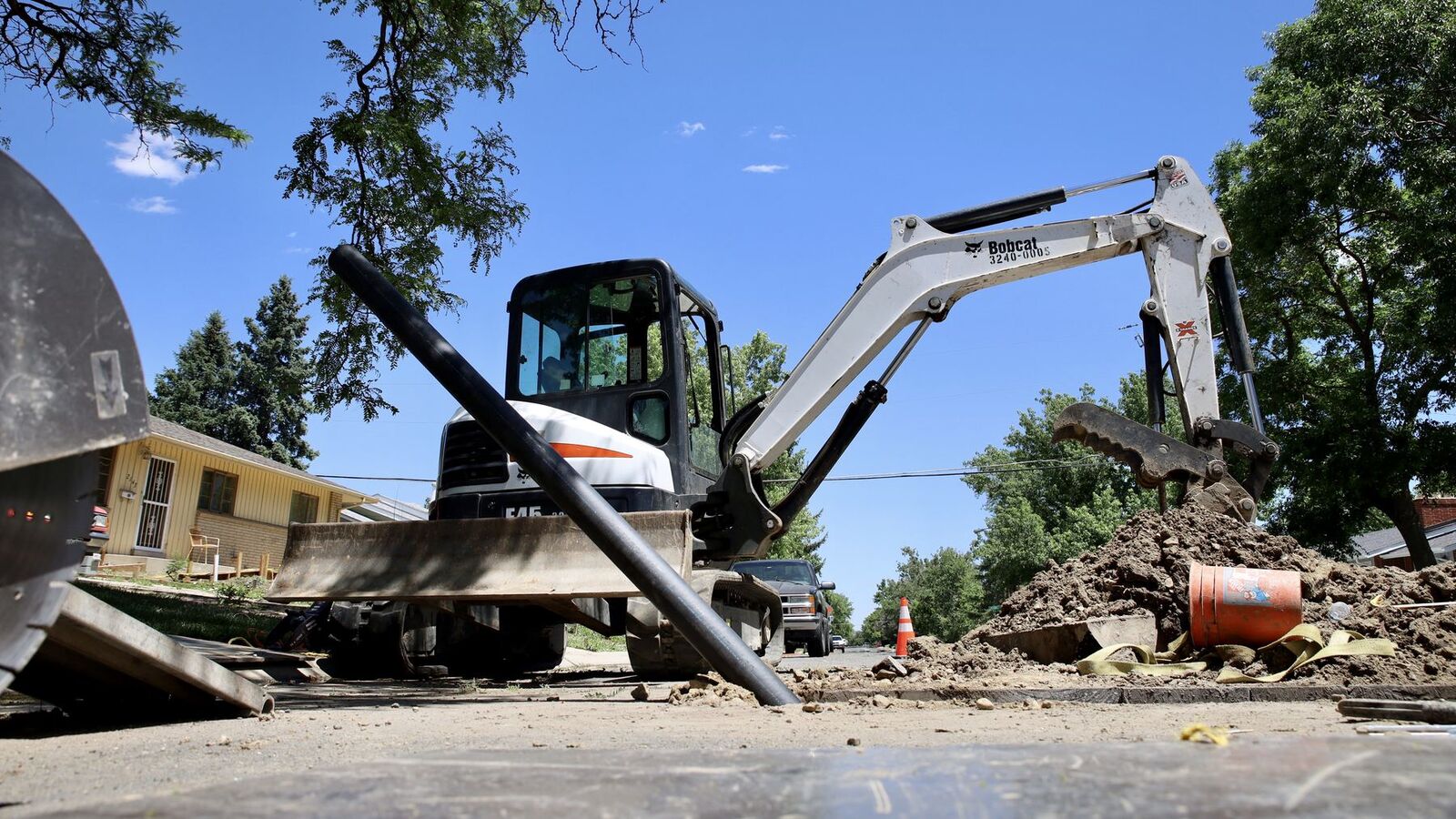

Sewer Experts is a Denver excavation contractor for sewer and water line work. We open the ground with the right-sized machine, make the repair, then backfill, compact and restore the surface so your yard, driveway or street looks like we were never there.
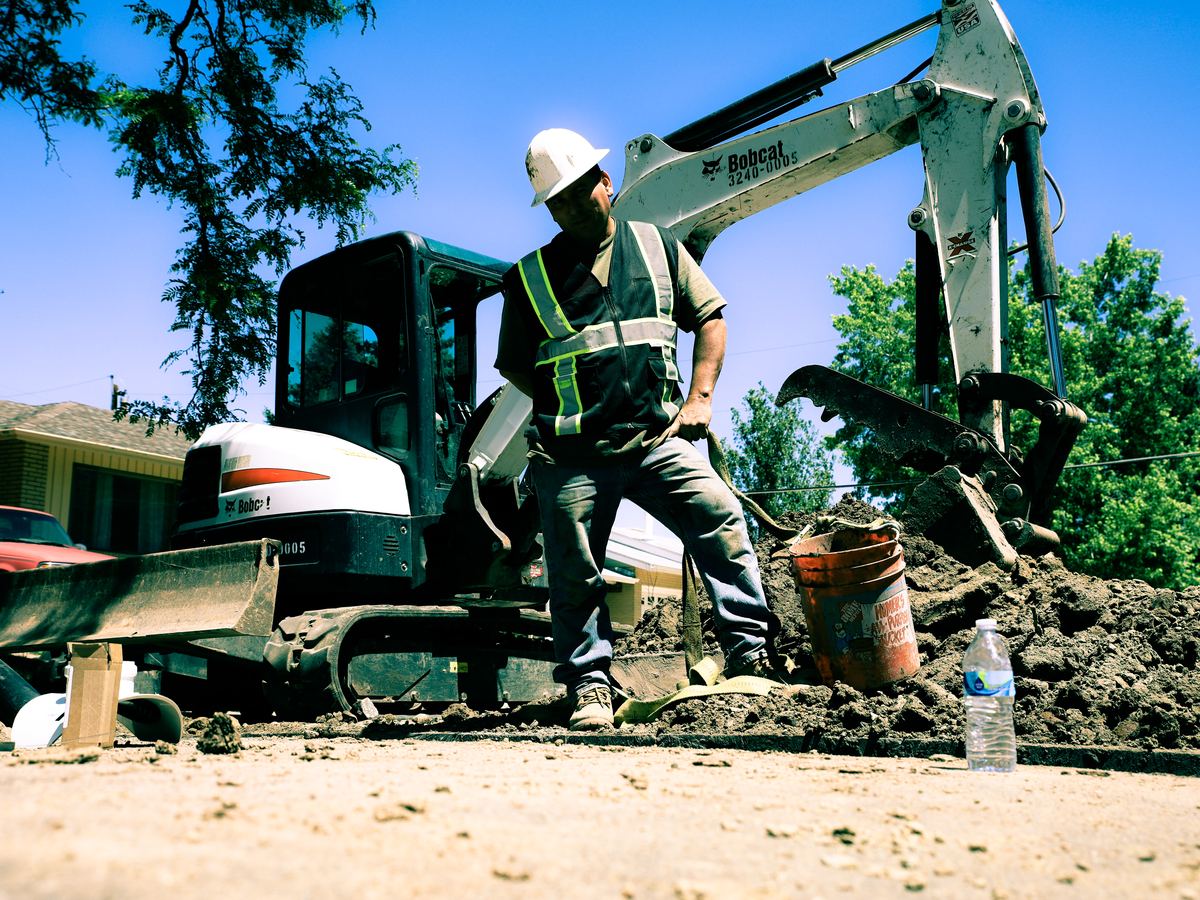
Most excavation companies in Denver do a bit of everything. We do one thing: excavation for sewer line repair, water line replacement and new taps. We open the ground for the pipe, fix or replace the line, and close it up properly. Emergency sewer excavation is most of what we do, so a backed-up line gets a crew fast. Since 2017 our crews have dug in tight Denver backyards, under driveways and sidewalks, and in the middle of busy streets.
You get one company for the camera inspection, the digging, the pipe work and the restoration. No sub-contractor to chase, and one person to call if you have a question.
Most residential sewer and water line digs take one to two days on site. Here is what happens on each one.
 1
1
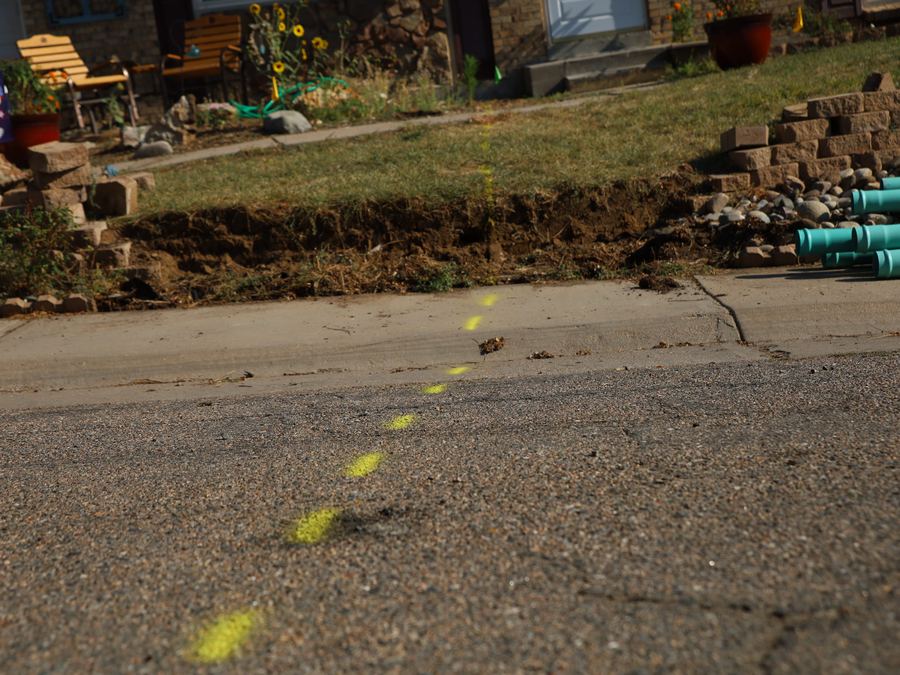
We scope the line, find the exact break and mark it above ground. Then we file the Colorado 811 request so gas, electric and other utilities are marked before anyone digs.
 2
2
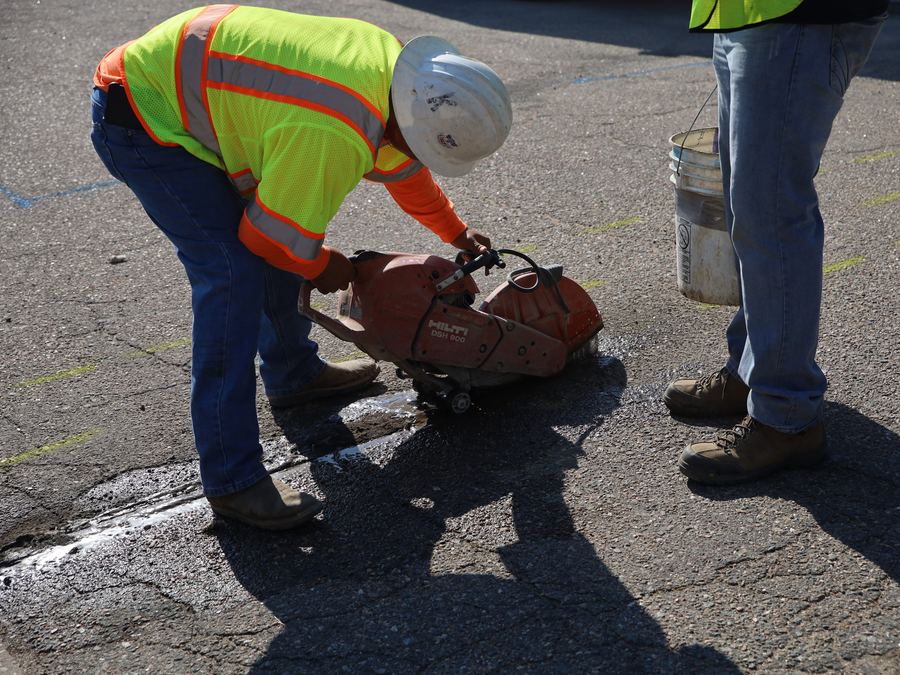
If the dig reaches the sidewalk or street, we pull the street cut permit and set up traffic control. Concrete and asphalt are saw-cut in straight lines so the patch is neat.
 3
3
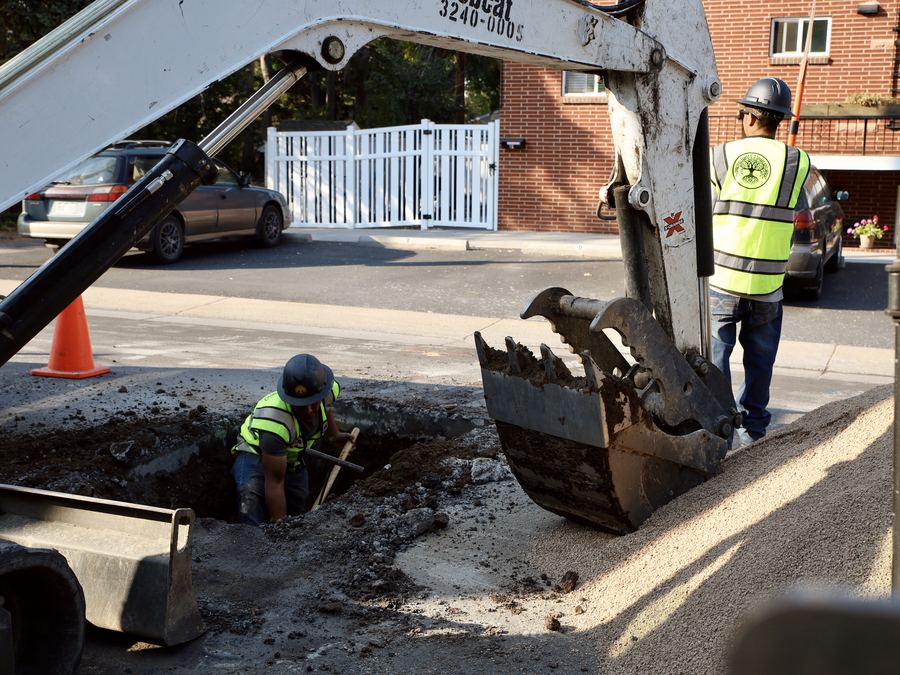
We pick the smallest machine that can do the job so we tear up less ground. Deep trenches get shoring or a trench box. Near foundations and other lines, we hand dig.
 4
4
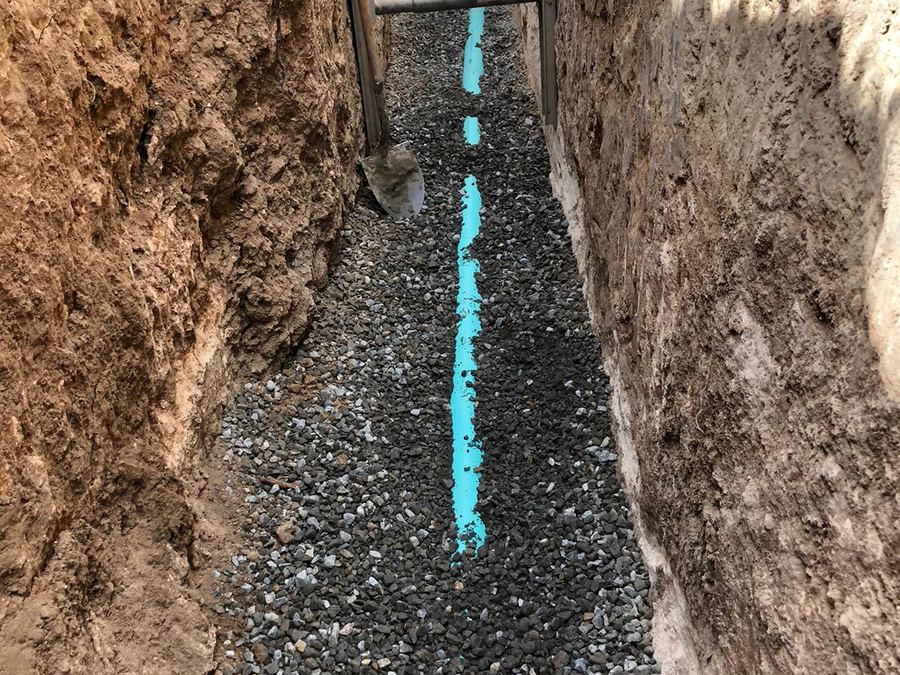
New pipe goes in on a bed of gravel at the correct slope. The line is inspected before it is covered, so nothing gets buried that should not be.
 5
5
We fill the trench in layers and compact each one. This is what keeps your lawn or driveway from sinking six months later.
 6
6
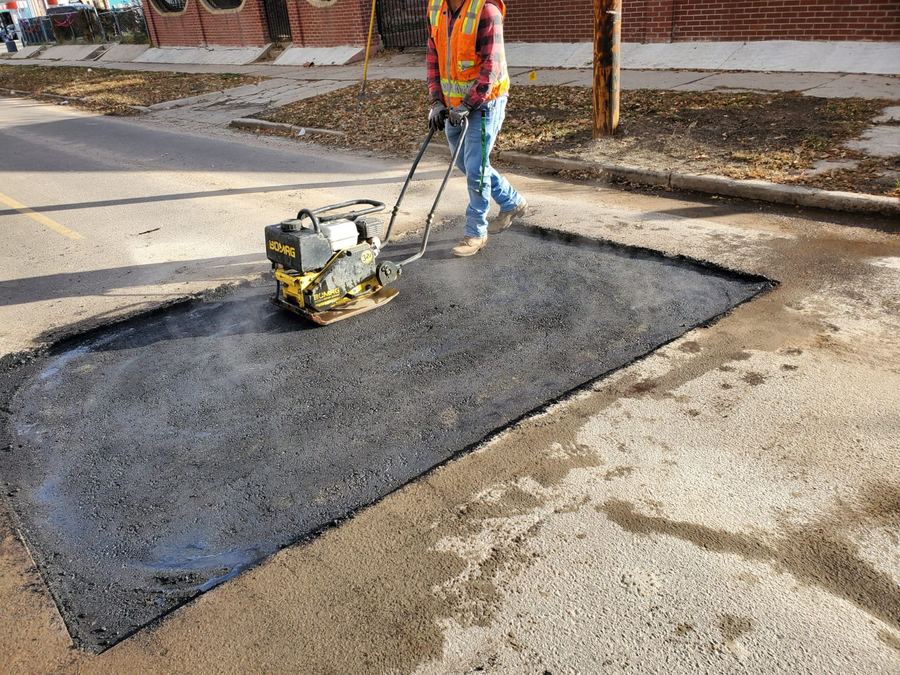
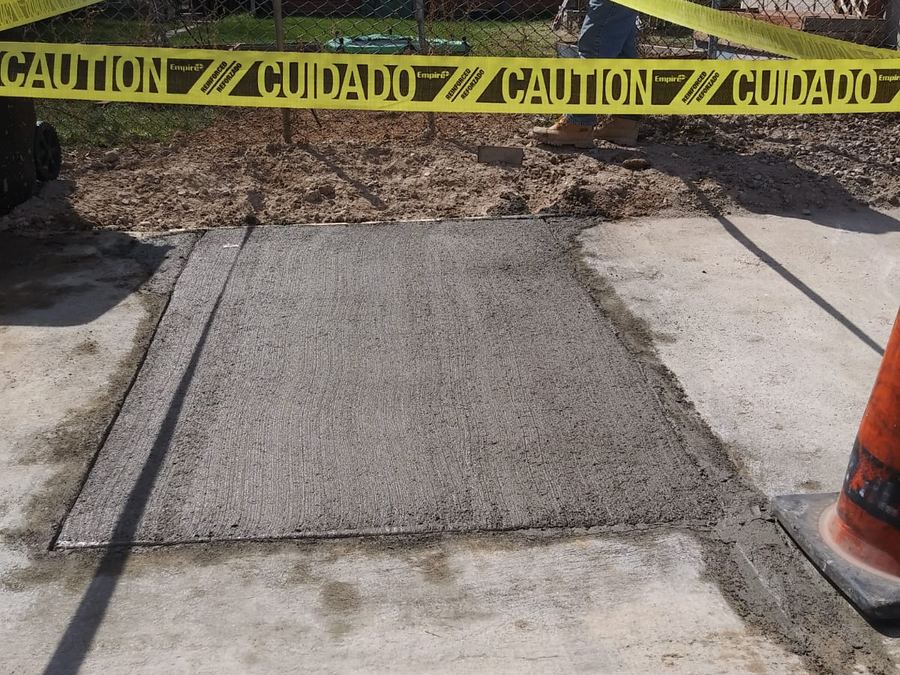
Concrete and asphalt are patched, topsoil goes back, and extra dirt leaves with us. We sweep up and walk the site with you before we go.
Safety on every dig. Utilities are marked before we break ground, deep trenches are shored, and the site is fenced or coned off whenever we leave it open. Your family and your neighbors stay safe while the work is going on.
We do both, so we have no reason to push one over the other. After the camera inspection we will tell you which method fits your line, your yard and your budget.
| Compare | Excavation | Trenchless |
|---|---|---|
| Best for | Collapsed or crushed pipe, bellies and sags, shallow lines, short spot repairs, new taps and cleanouts | Long runs of cracked or root-filled pipe that still hold their shape |
| Yard impact | A trench along the repair. We keep it as narrow as the machine allows and restore it | Two small access pits at each end |
| Time on site | Usually one to two days for a typical home | Usually one day |
| Cost | Often the lower-cost fix for short or shallow repairs | Often the lower-cost fix for long, deep runs under concrete |
| Our call | A camera inspection decides it. Sags, crushed pipe and offsets need a dig. Straight pipe with cracks or roots is a good trenchless candidate. | |
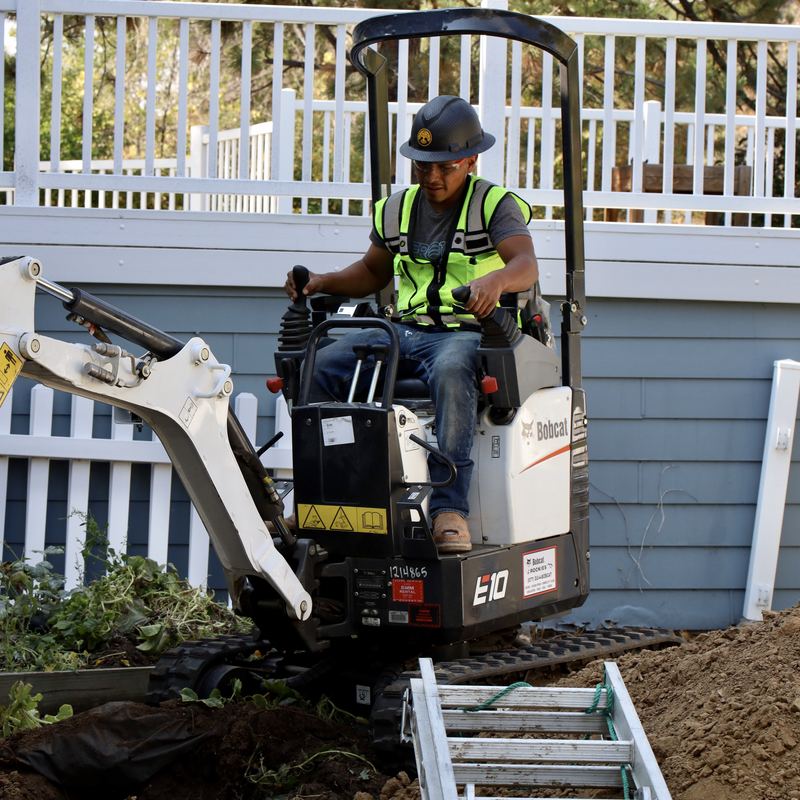
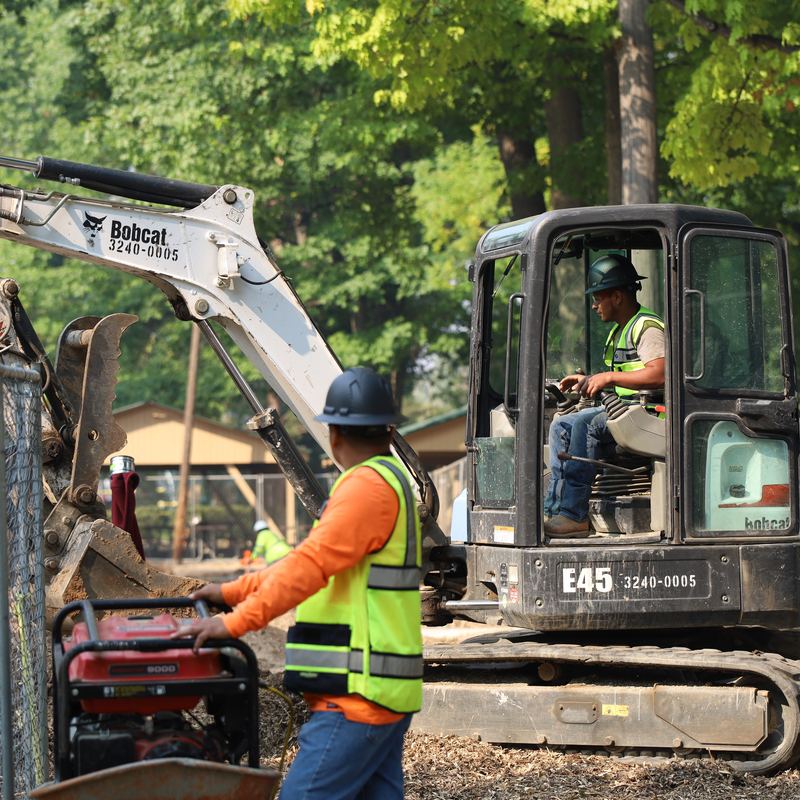
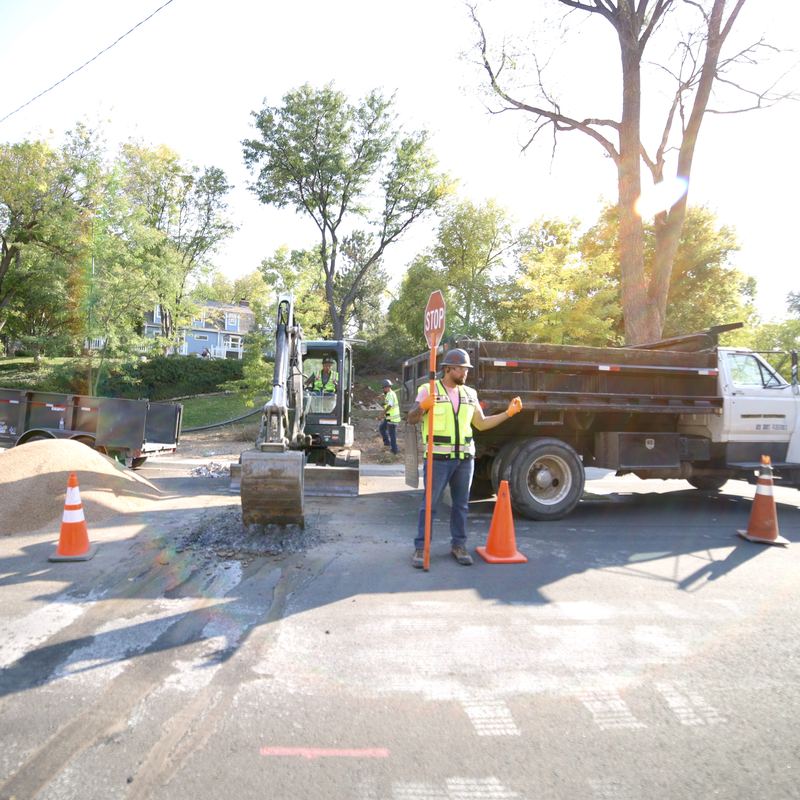
A big excavator on a small lot wrecks fences, sprinklers and lawns. We match the machine to the job, from a compact mini excavator to a full crew with a dump truck.
Every excavation quote is a mix of the same six things. Once we have seen your line on camera, we can put a firm number on each of them.
Water lines around Denver sit about four and a half feet down to stay below the frost line. Sewer lines can be shallower or much deeper. Deeper trenches need shoring and more time.
A spot repair opens a few feet of ground. A full replacement runs from the house to the main. Length drives labor, pipe and backfill.
Grass is the cheapest surface to open and restore. Concrete, asphalt, pavers and decks add cutting, hauling and patching.
A wide side yard takes a machine. A three-foot gap between houses means a smaller machine or hand digging, which takes longer.
Gas, electric, fiber and irrigation lines that cross the trench have to be exposed by hand and protected. The 811 marks tell us this before we quote.
Work in the street or sidewalk needs a city permit, an inspection and sometimes cones, signs and a flagger. Backyard work usually does not.
Colorado law requires a locate request through Colorado 811 before excavation starts, with a waiting period for utilities to mark their lines. We file the request and schedule the dig around the marks, so you never have to.
Any work in the public right of way in Denver needs a street cut permit from the city, and the backfill and pavement repair are inspected. We pull the permit, meet the inspector and build the patch to the city spec.
Water lines in the Denver area are buried around four and a half feet deep so they do not freeze. When we replace a line, it goes back at the right depth on proper bedding, not just where the old one happened to be.
Sources: Colorado 811 and the City and County of Denver Right-of-Way Services. Rules change, so we confirm requirements for every job.
My property is in downtown Denver with many tough logistical issues. The team did a spectacular job, interfaced with the City to make sure the necessary inspection took place, and by far they were the most price competitive. They had to hand dig to get to the break right next to my building. When they were done, they cleaned up nicely and did a great job re-cementing, with the two new clean-outs that are required by code.
He arrived the next day on time and quickly started a video inspection of my sewer line. Through his equipment screen, he showed me the issues and advised me about the best solution. The crew arrived the following day and started replacing the sewer pipe. Within 10 hours the sewer pipe was replaced and the area was cleaned. I will absolutely be calling them again.
Our crews leave from Commerce City every morning, so most of the metro area is under 40 minutes away. We also work along the Front Range from Fort Collins to Castle Rock.
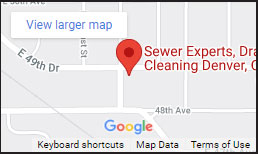
Sewer Experts6510 E. 49th Ave. Ste A, Commerce City, CO 80022 · (720) 663-7473
Most residential digs take one to two days on site. A spot repair can be done in a day. A full replacement under a driveway or into the street can take two to three days once permits are in hand.
Yes. We file the Colorado 811 request, wait for the utility marks, and pull any street cut or right-of-way permit the city requires. You do not have to call anyone.
Not if the backfill is done right. We fill the trench in layers and compact each layer instead of dumping the dirt back in one pile. That is the difference between a flat lawn and a dip that shows up next spring.
Usually. Our smallest excavator fits through a standard backyard gate. If the gap is too tight for any machine, we hand dig the section and use the machine where it fits.
Clean soil goes back in the trench. Extra spoils, old pipe, broken concrete and roots leave on our truck the same day. We do not leave a pile in your yard.
Yes. Frozen ground and snow slow things down a little, but sewer breaks do not wait for spring. We dig year-round across the Denver metro.
Yes. Concrete and asphalt patches are part of the job. Work in the public right of way is patched to the city’s spec and inspected. Landscaping beyond topsoil and seed, like sod or plantings, is quoted separately.
Only a camera inspection can answer that. Crushed pipe, sags and offsets need a dig. Cracked or root-filled pipe that still holds its shape is often a candidate for pipe bursting or a patch. We offer both, so we will recommend the one that fits.
Tell us the address and what you are seeing. We will schedule a camera inspection and give you a written price for the dig, the pipe and the restoration.
Fill in the form and we will call you back.
 6510 E. 49th Ave. Ste A,
Commerce City, CO 80022
6510 E. 49th Ave. Ste A,
Commerce City, CO 80022