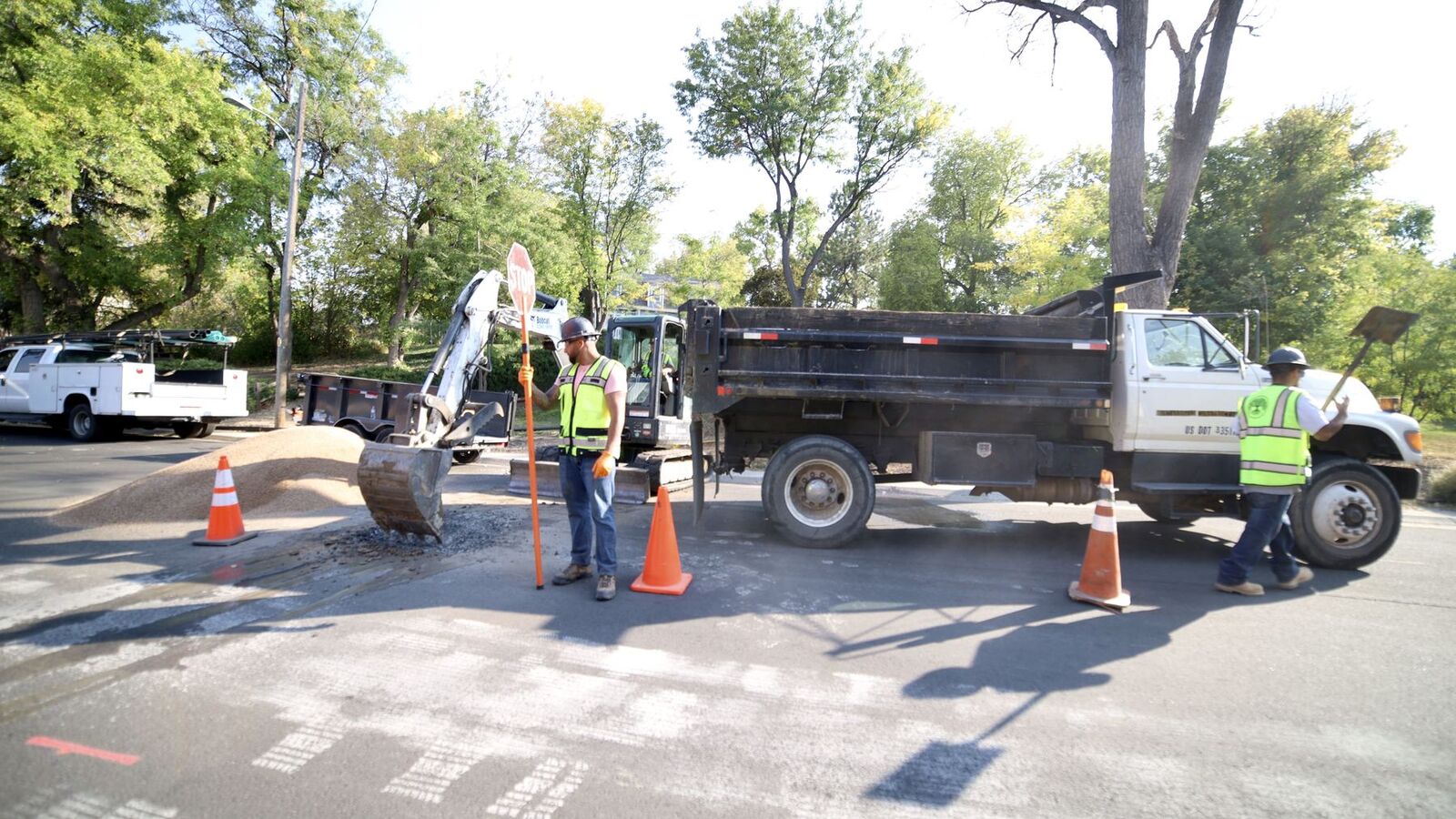

Sewer Experts installs, repairs and rebuilds storm drains, catch basins, culverts and manholes across the Denver metro. One crew handles the excavation, the structure, the pipe and the pavement, on commercial lots, HOA streets and residential properties.
Denver runs two separate underground systems, and they fail in different ways. We work on both, so you get the right fix instead of a plumber guessing at a drainage problem.
Carries rain and snowmelt from roofs, streets and parking lots through inlets, catch basins and storm pipe to a creek, a detention pond or the South Platte. No treatment. When it clogs, sinks or collapses, water pools on the surface, pavement washes out and basements flood.
Carries wastewater from sinks, toilets and floor drains through your private sewer line to the city main and on to treatment. When it fails you get backups in the house, sewer smell and soggy spots over the line. That work lives on our sewer line repair pages.
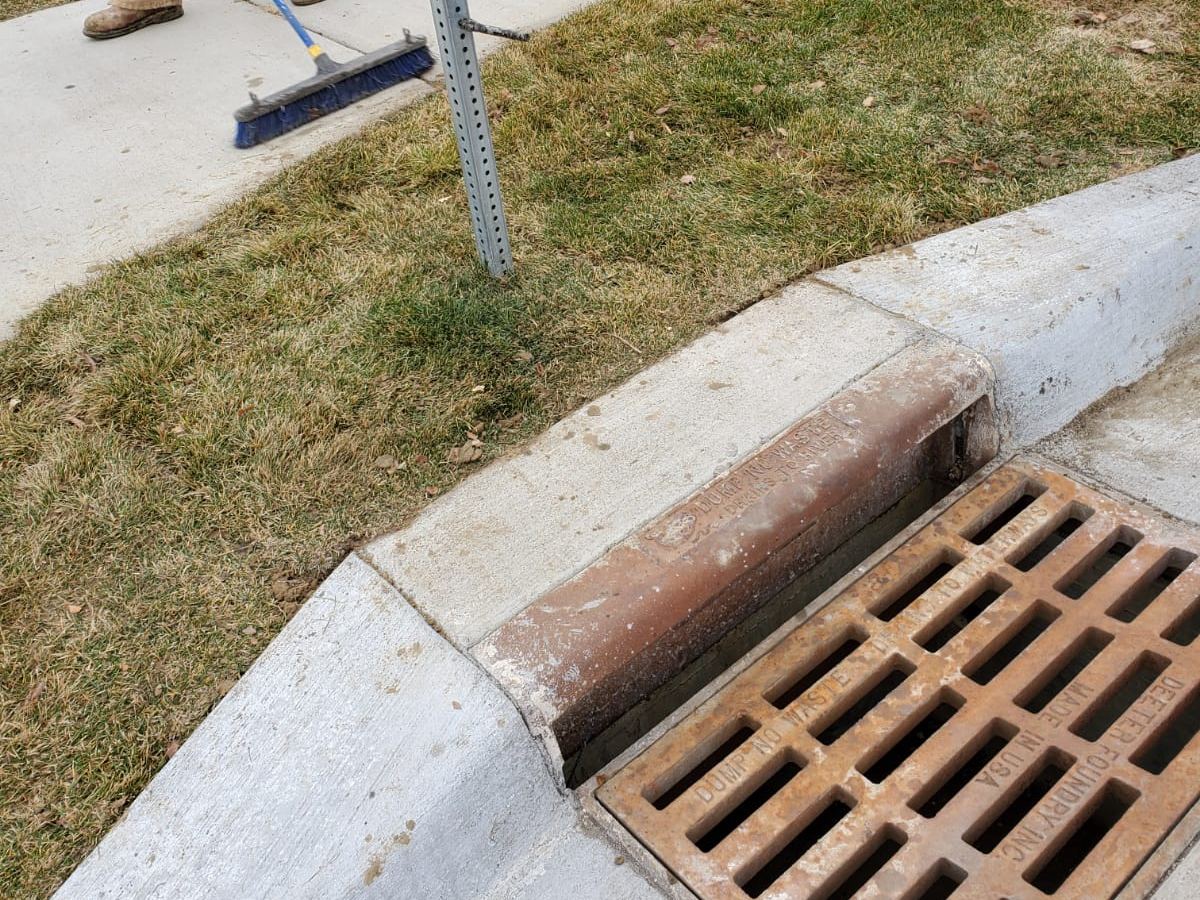
The concrete boxes under street grates and parking lot drains that collect runoff and trap sediment before it reaches the pipe. We install new catch basins, replace crushed or rusted-out ones, reset grates and frames, rebuild cracked walls, and clean out basins packed with silt, leaves and debris.
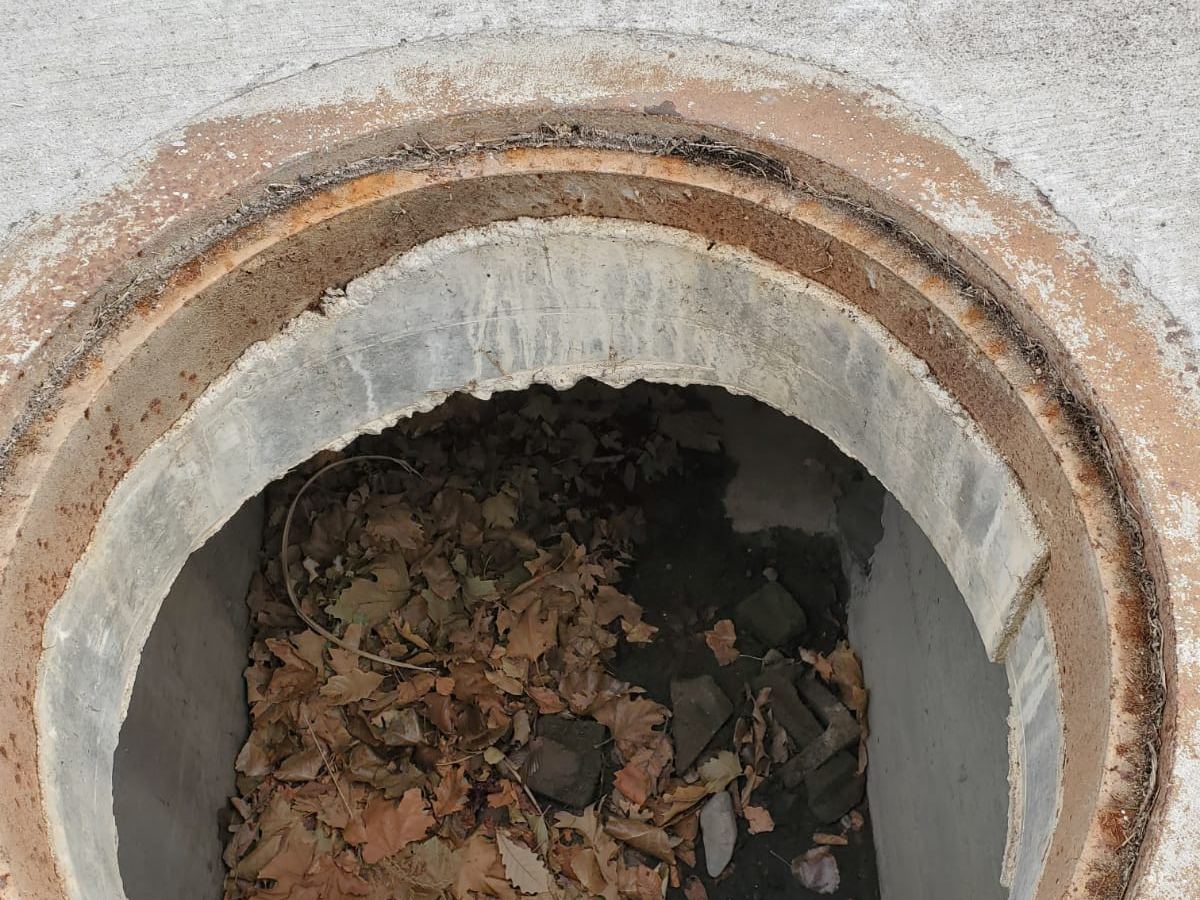
New precast manholes on new sewer and storm lines, and rehabilitation of old ones: replacing failed rings and lids, raising manholes to a new pavement grade, sealing leaking joints and rebuilding the cone and barrel when the structure has shifted. A manhole that rocks under traffic or sits below the asphalt is a road failure waiting to happen.
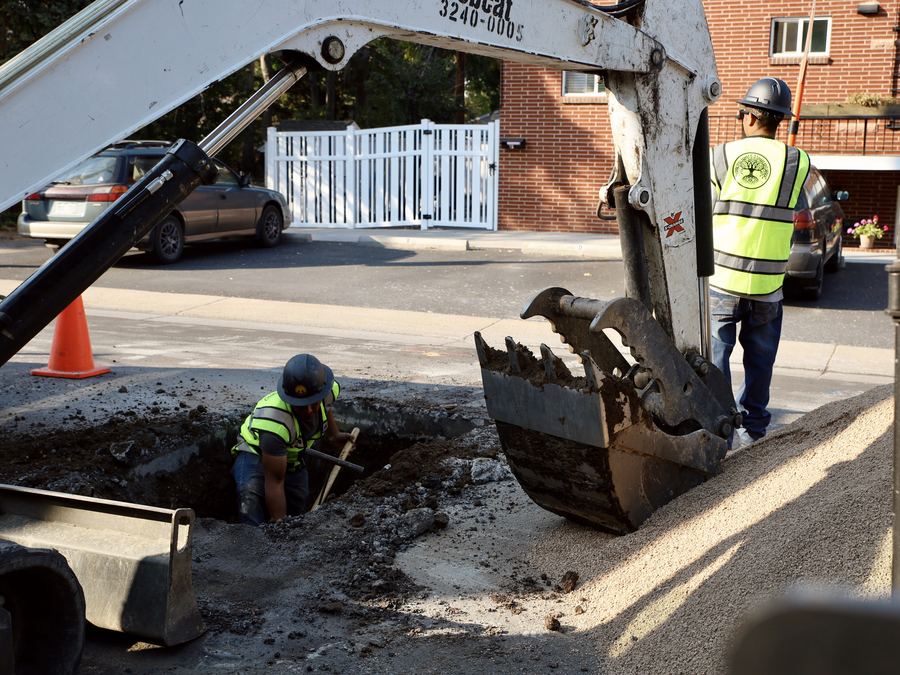
The pipe that connects inlets to the outfall, and the culverts that carry water under driveways, roads and ditches. We install new runs, replace collapsed or undersized sections, and repair joints that have separated and let soil wash into the line. Pipe is set on bedding at the right slope and backfilled in compacted lifts, the same way we build sewer lines.
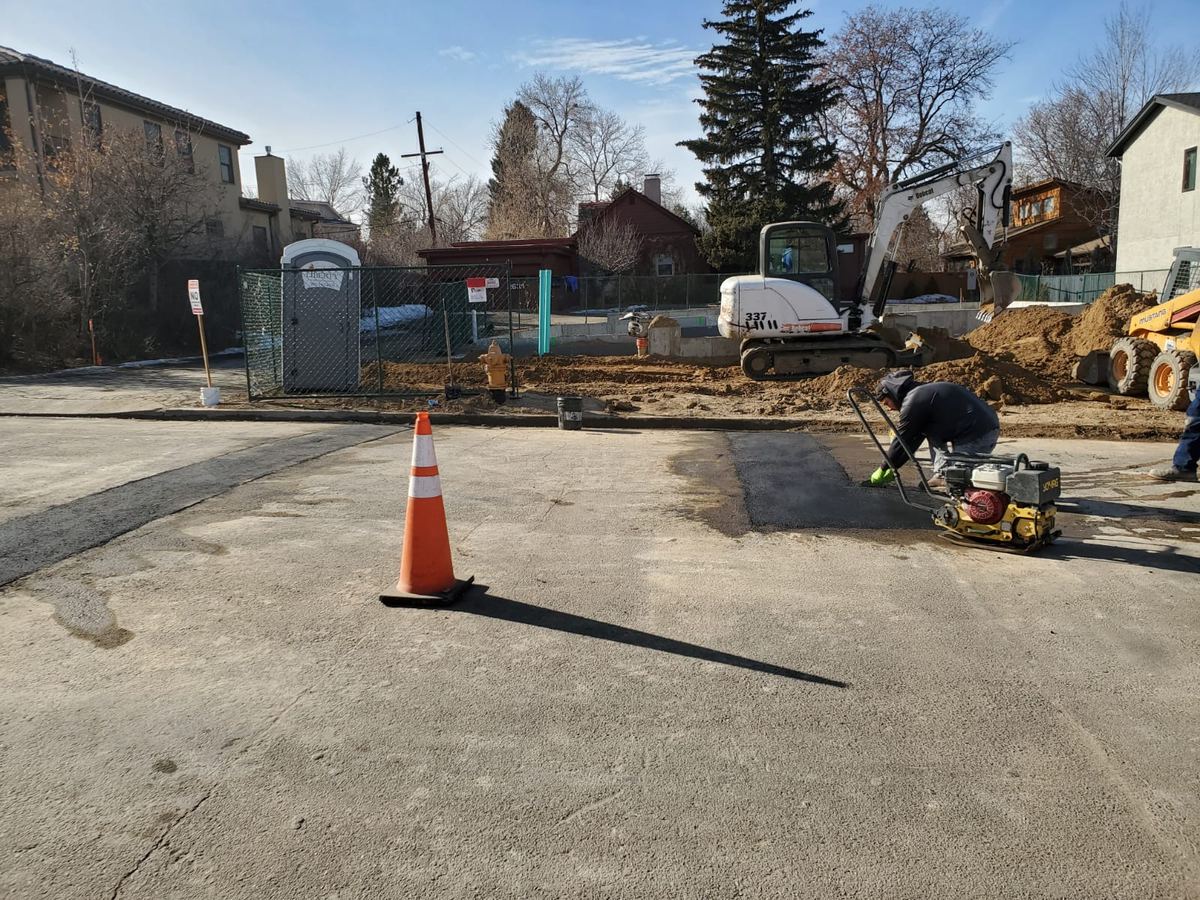
Smaller systems that keep water away from buildings. Trench drains across driveways and loading docks, area drains in low spots, underground downspout lines, sump pump discharge lines that reach the street or a dry well, and dry wells themselves. Done properly the first time, with the pavement or lawn put back.
A puddle that sits for hours next to an inlet means the basin or the pipe below is blocked, crushed or too small.
A dip or sinkhole forming beside a catch basin or manhole usually means a leaking joint is washing soil into the pipe.
A lid that clanks under tires or sits below the asphalt has a failed ring or a sunken cone. Traffic will finish the job.
Freeze and thaw cycles in Colorado break up old concrete basins. Once the walls go, the frame and grate follow.
Water coming in at the floor or the window wells during storms points to surface drainage, not the sanitary sewer.
A catch basin full to the outlet cannot hold sediment. Cleaning it is cheap. Replacing a pipe packed with sand is not.
Storm drain work happens under streets, parking lots and lawns that have to go back the way they were. We plan for that from the first visit.
We walk the site, open the structures and run a camera through the pipe, so the estimate is based on what is actually down there.
Structure, pipe, excavation and restoration listed as separate lines. For HOAs and property managers we include what the board needs to approve it.
Colorado 811 locate request, plus the street cut or wastewater permit when the work touches the public right of way or connects to the city system.
Right-sized machine for the site, shoring where the trench is deep, precast structures set level on a prepared base, pipe on bedding at the designed slope.
Backfill in compacted lifts so nothing settles, then asphalt or concrete patched to spec and inspected. Lawns get topsoil and seed.
Parking lot drains, catch basin cleaning and manhole repairs across a portfolio, with scopes written for owner approval.
Private streets, shared drainage and detention outlets that the city does not maintain. We help boards plan and budget.
Storm and sanitary structures on new builds and additions, coordinated with your schedule and your inspector.
Grease trap and drainage work on tight lots, scheduled around business hours, with the lot open again fast.
Flooded window wells, a driveway that ponds, a downspout that dumps at the foundation. Small systems that stop big damage.
Storm drain work almost always touches something the city cares about: the public right of way, a connection to the public storm or sanitary system, or stormwater quality on a commercial site. We deal with the city so you do not have to.
Work in a street or sidewalk in Denver needs a street cut permit, and the city inspects the backfill and pavement repair. Connections to the public system need a wastewater permit and an inspection before the trench closes. Colorado law requires a locate request through Colorado 811 before any digging. Requirements differ in Aurora, Lakewood, Arvada and the other metro cities, and we confirm them for each job.
Storm drains in a public street belong to the city. Drains and pipe on private property, including most parking lots, HOA streets and everything on a residential lot, belong to the property owner or the association. If the city does not maintain it, it is yours to repair, and that is the work we do.
A camera inspection answers that in minutes. If the basin is full of silt but the walls and pipe are sound, cleaning restores it. If the pipe is crushed, offset at a joint or full of roots, cleaning only buys a few months and a repair is the real fix.
It depends on the size of the structure, the depth and length of pipe, what is on top, and whether the work is in a street that needs traffic control and a permit. We quote from a site visit and a camera inspection, with the structure, pipe, excavation and restoration priced separately so you can see where the money goes.
Often, yes. If the barrel is sound, we can replace the ring and lid, rebuild the cone, seal leaking joints and raise the manhole to grade. If the barrel has shifted or cracked through, replacement with a new precast manhole is the safer long-term fix.
Yes. Frozen ground slows excavation but does not stop it, and many drainage repairs are best done before spring runoff. Asphalt and concrete patching depend on plant availability and temperature, so a temporary patch is sometimes used until the permanent one can be placed.
In many Denver metro cities, yes, but only to the storm system, never to the sanitary sewer, and only with the city’s approval and a proper connection. Where a connection is not allowed, a dry well or a discharge line to a safe surface point is the alternative. We check the rule for your address before we quote.
Culvert size depends on the drainage area, the slope and the county or city standard for your road. Undersized culverts wash out. We size them to the standard, set them on bedding at the right grade, and protect the ends so they last.
A single catch basin with a short pipe run is typically one to two days on site, plus the permit lead time if it is in a street. Manhole rebuilds are usually one day. Larger storm sewer runs are scheduled in phases so the lot or street stays usable.
Tell us the address and what you are seeing. We will schedule a site visit, inspect the structures and pipe, and send a written scope and price.
Fill in the form and we will call you back.
 6510 E. 49th Ave. Ste A,
Commerce City, CO 80022
6510 E. 49th Ave. Ste A,
Commerce City, CO 80022