
Sewer Experts finds where your sewer, water and drain lines run underground and marks them on the surface, so nobody digs blind. Private utility locating with camera and sonde, electromagnetic line tracing, and clear paint and flag marks across the Denver metro.
We locate the buried pipes that carry water in and waste out. If it is a pipe you own, we can usually find it, mark it, and tell you how deep it sits.
The private sewer line from your house to the city main, including bends, offsets and the exact spot of a break shown on camera.
The line from the meter or curb stop to the house, so a repair, a fence post or a new driveway does not hit it.
Tank lids, inlet and outlet pipes, the distribution box and the drain field, found without digging up half the yard.
Buried or paved-over cleanouts that a plumber needs to reach your line. We find them, and we can raise or install one if you have none.
Downspout lines, French drains, area drains and the pipes that carry them to the street or a dry well.
Old lines from a previous addition, a removed garage or a former septic system that still sit in the ground and show up when you dig.
Colorado law requires a locate request through Colorado 811 before you dig, and that service is free. But 811 only marks the utility company’s lines. Everything on your side of the meter or property line is yours to locate.
Utility companies that belong to Colorado 811 send locators to mark the lines they own, up to the point where the line becomes yours. Request it online at colorado811.org or by dialing 811, and allow the required waiting period before digging.
Anything on your side of the meter or property line is a private line. Utility locators skip it, even if you asked for the 811 locate. We find it with a camera sonde or a line tracer and mark it on the surface.
Locators across the United States use the same color code, set by the American Public Works Association. Our marks follow it too, so a plumber, landscaper or excavator can read them at a glance.
Pink marks are temporary survey marks. Flags carry the same colors as paint. Marks are only valid for a limited time, so a locate should happen shortly before the dig.
A locate visit takes about an hour for a typical Denver home. Here is how we do it.
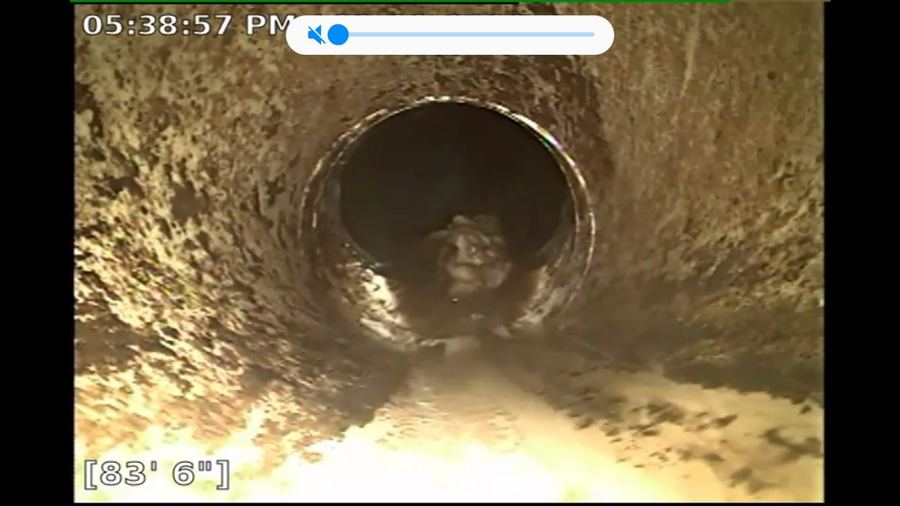
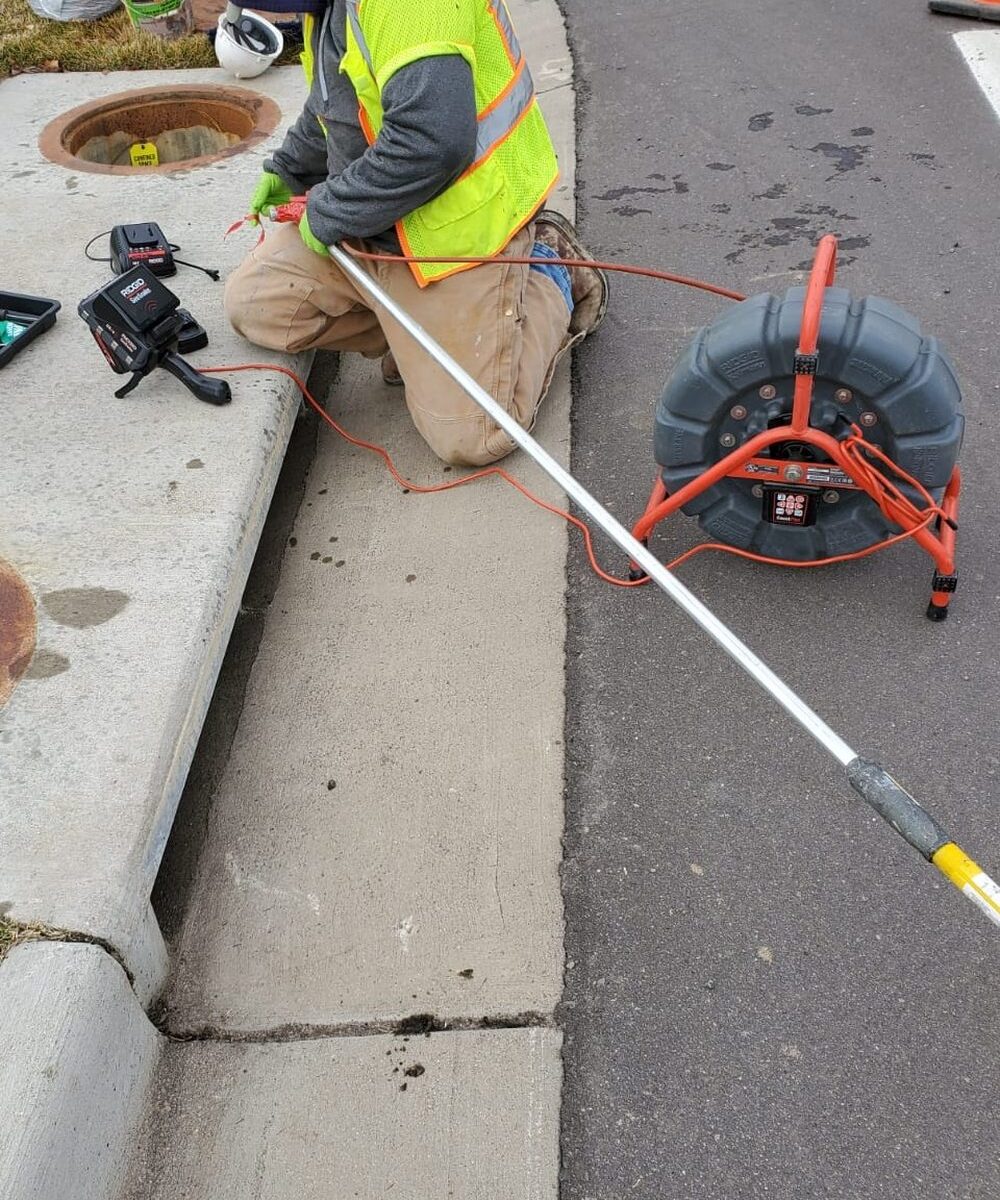
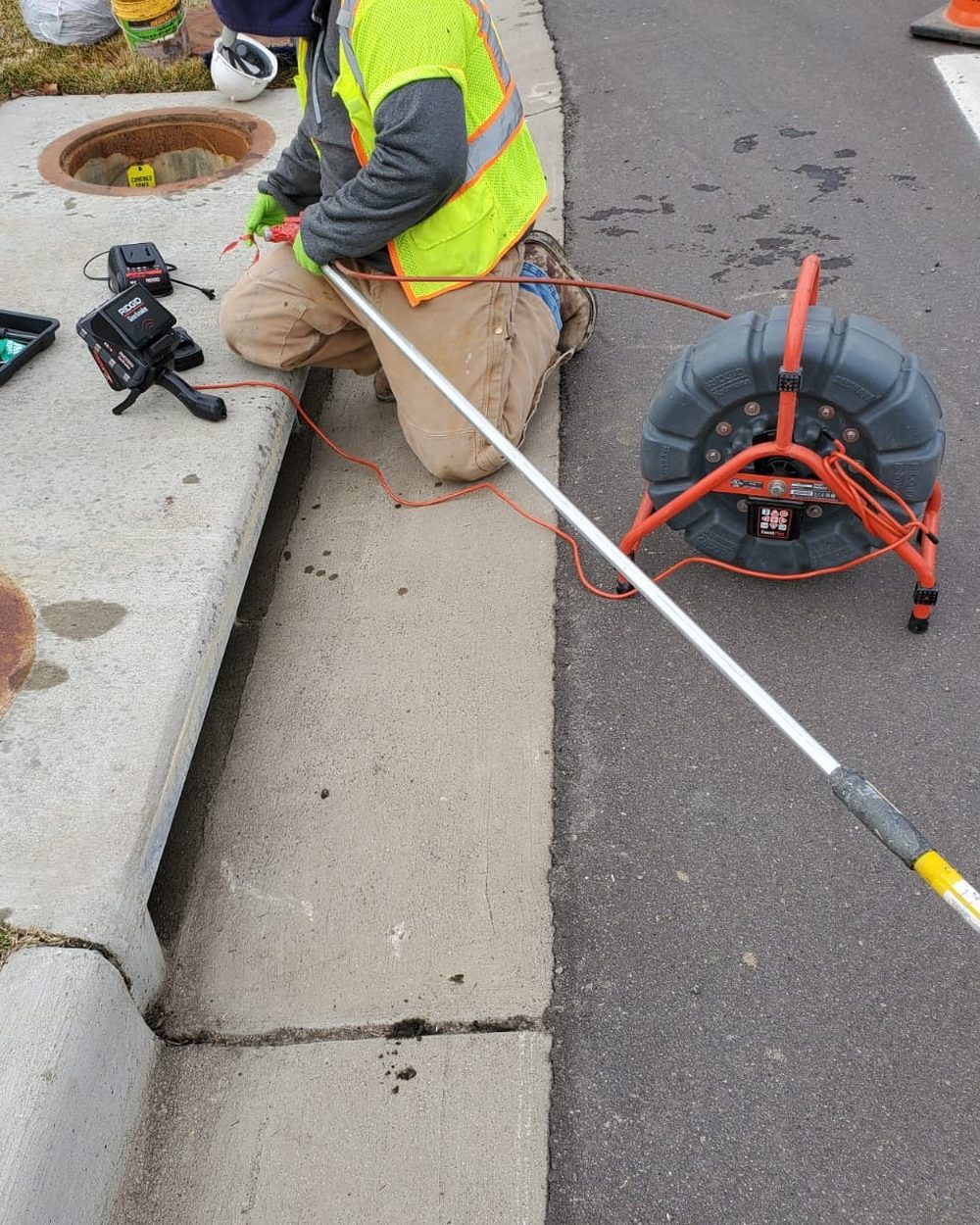
We push a sewer camera through the cleanout, a roof vent or a pulled toilet. The screen shows the pipe, every fitting and any damage, with the distance counted in feet.
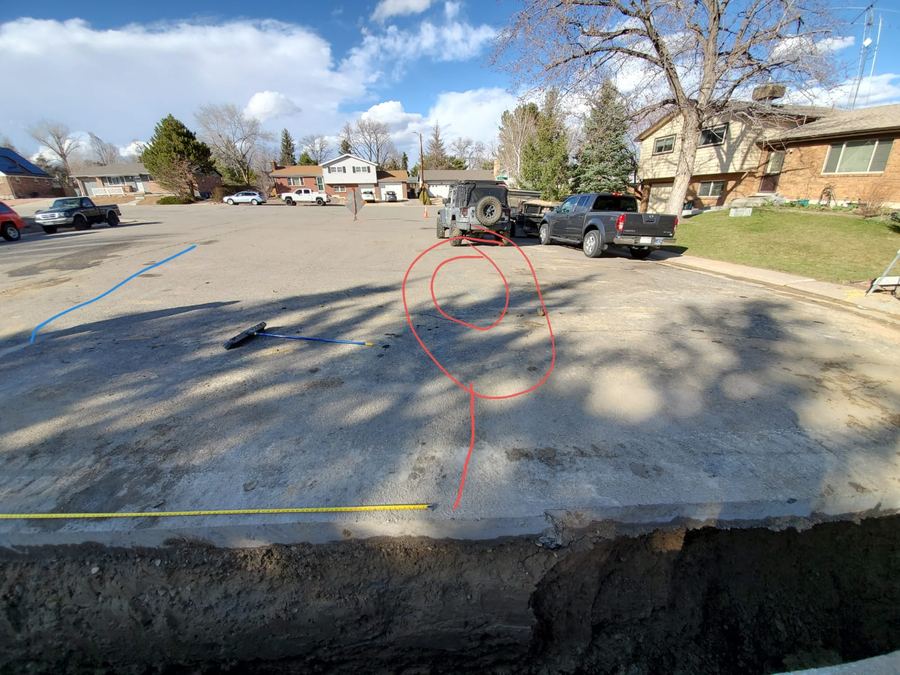
The camera head carries a small transmitter called a sonde. Above ground, a receiver picks up its signal and shows us exactly where the camera head is and how deep it sits.
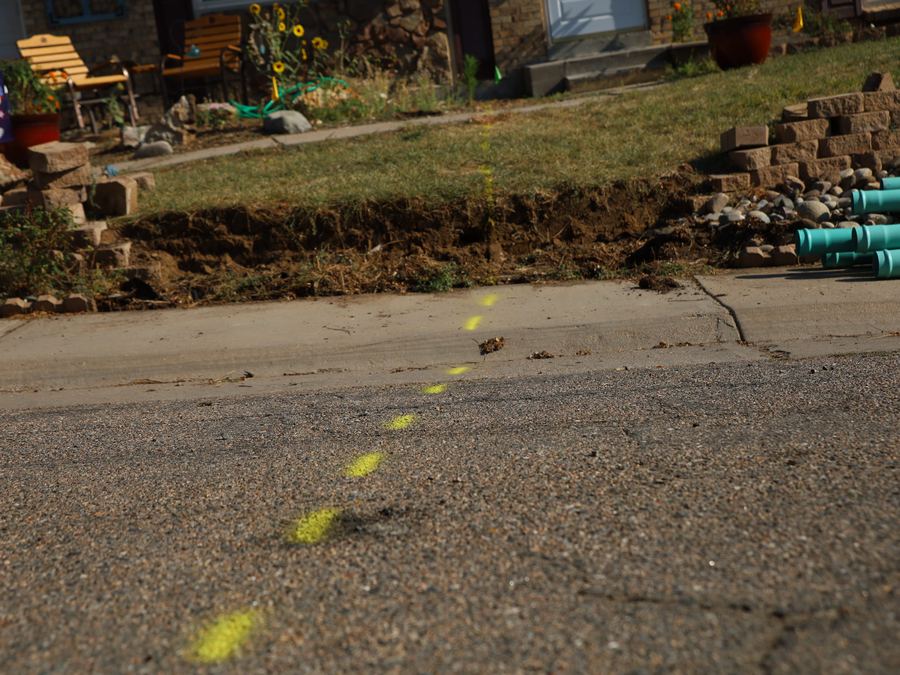
We walk the line and mark it every few feet. Metal pipe and pipe with tracer wire can also be traced end to end with an electromagnetic locator, no camera needed.
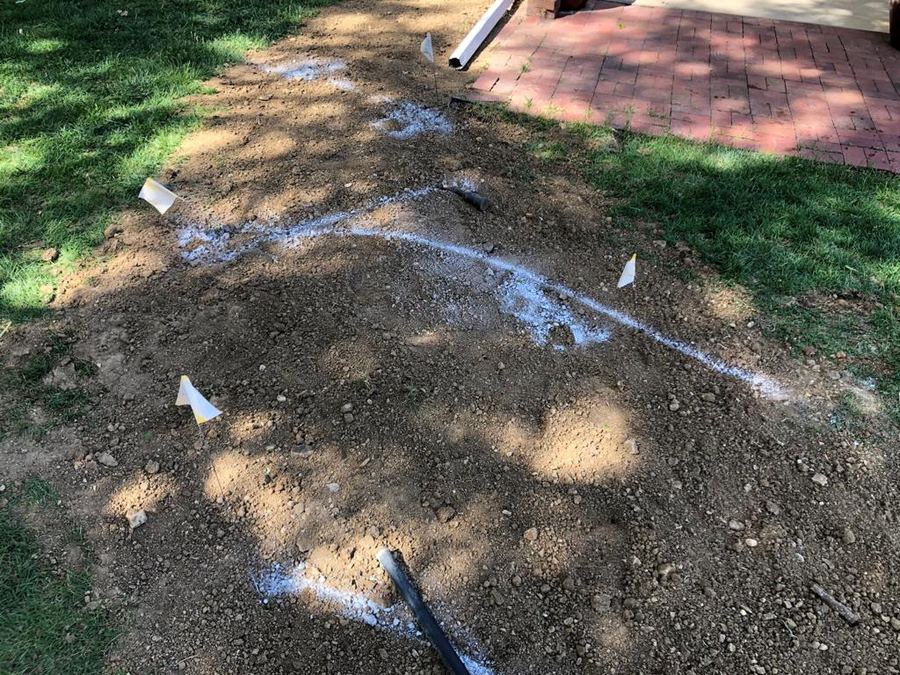
Paint and flags on the surface, depth written at key points, and photos of the marks sent to you or your contractor. If a break was found, we mark the dig spot too.
A cracked sewer line costs thousands to repair. A fence post through it costs the same. Knowing where the line runs before anyone digs is the cheapest step in any project.
You are not paying for a guess. Every locate ends with marks on the ground and a record you can keep.
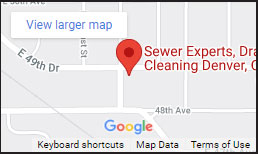
Based in Commerce City, we cover Denver and the suburbs on both sides of the city, plus the Front Range from Fort Collins to Castle Rock. Same crews, same equipment, wherever the pipe is.
Sewer Experts6510 E. 49th Ave. Ste A, Commerce City, CO 80022 · (720) 663-7473
Start with the cleanout: a capped pipe near the foundation, in the basement floor or in the yard. The line runs from there toward the street, usually the shortest route to the sewer main. Your city may have a map of the mains but not of your private line. For the exact path and depth, a camera with a sonde traced from above ground is the only reliable way. Our guide to finding your sewer line covers the free clues first.
Usually not for the private line. Denver and most Front Range cities publish maps of the public sewer mains and sometimes the tap location, but the lateral from your house to the main is private and rarely on any map. Building permits or an old plumbing inspection may show a rough route. A locate visit gives you the actual path, depth and a photo record you can keep.
No. Colorado 811 members mark the utility-owned lines up to your meter or property line. The sewer lateral from your house to the main is private property in Denver and most Front Range cities, so 811 locators do not mark it. A private locating company like Sewer Experts does.
We run a camera through the pipe with a sonde transmitter in its head, then follow the signal above ground with a receiver. The receiver shows the pipe’s path and depth. Metal pipe and pipe with tracer wire can also be traced electromagnetically from the surface.
Most residential sewer lines around Denver sit between three and eight feet deep. They start shallow near the house and get deeper toward the main in the street. Water service lines are usually about four and a half feet deep to stay below the frost line. A locate tells you the actual depth on your lot.
Usually. We can enter the line through a roof vent or by pulling a toilet. If access is the problem, we can install a cleanout, which also makes every future cleaning and inspection faster and cheaper.
Yes. We trace the outlet line from the house to the tank and mark the lid, then follow the line to the distribution box and the laterals of the drain field.
Paint lasts a few weeks on concrete and less on grass that gets mowed and watered. Flags last until someone pulls them. That is why we also give you photos with measurements from fixed points, so the line can be found again later.
A single-line residential locate is a flat visit fee. Extra lines, no cleanout access, long commercial runs and septic drain fields add to it. Call for a price for your address, and ask about applying the locate fee to a repair if we end up fixing the line.
Yes. Our locate covers your private lines. The gas, electric and communication lines owned by the utilities still have to be marked through Colorado 811 before anyone digs, and Colorado law requires that request. If we are doing the excavation, we file it for you.
Send us the address and what you are planning. We will quote the locate, schedule it, and have the marks down before your project starts.
Tell us the address and what you need found. We will call you back.
 6510 E. 49th Ave. Ste A,
Commerce City, CO 80022
6510 E. 49th Ave. Ste A,
Commerce City, CO 80022