Sewer line repairs fail more often than most homeowners expect. You pay for a fix. The problem comes back. Then you pay again. This cycle is frustrating and expensive. Understanding why sewer line repairs fail can save you thousands of dollars.
At Sewer Experts Denver, our team has over 25 years of experience diagnosing and fixing sewer problems across the Denver metro area. We see the same failure patterns repeat. Sewer line repairs fail because of poor diagnosis, wrong repair methods, and material problems. So before you invest in any repair, you need to know what causes these failures. This guide breaks down every major reason sewer line repairs fail and what you can do about it.
1. Why Sewer Line Repairs Fail So Often
2. Poor Diagnosis Causes Sewer Repairs to Fail
3. Wrong Repair Method Makes Sewer Line Repairs Fail
4. Material Problems That Cause Sewer Repairs to Fail
5. How to Stop Sewer Line Repairs From Failing Again
6. Step-by-Step Sewer Line Repair Process
7. FAQ: Sewer Line Repairs Fail Questions Answered
Why Sewer Line Repairs Fail So Often
Sewer line repairs fail at a surprisingly high rate. Many repairs last only a few months. Some fail within weeks. The root cause is almost never bad luck. Sewer repairs fail because of specific, avoidable mistakes made before or during the repair process.
Sewer pipes carry waste and water under pressure. They sit underground where conditions change constantly. Soil shifts. Tree roots grow. Water tables rise and fall. A sewer repair that ignores these factors will not last. So the repair itself is only part of the story.
According to the U.S. Environmental Protection Agency, aging sewer infrastructure causes billions in damage each year. Most of that damage comes from repairs that were incomplete or poorly planned. Sewer line repairs fail when the full scope of the problem is not understood first.
Common Signs a Sewer Repair Has Failed
You need to spot failure fast. Slow drains are the first sign. Then come bad smells from drains or the yard. Wet patches in the lawn with no rain are a red flag. Gurgling sounds in toilets or sinks also signal trouble.
Sewer line repairs fail silently at first. The pipe may look fixed on the surface. But underground, the repair is already breaking down. By the time you smell sewage or see a wet yard, the failure is advanced. So watch for early signs and act quickly.
How Failure Patterns Repeat Over Time
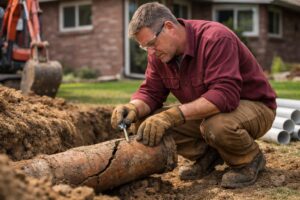
Sewer repairs fail in patterns. The same pipe fails in the same spot. Or a new section fails right next to the old repair. This happens because the original problem was not fully fixed. A patch covers one crack. But the pipe around it is still weak.
Also, sewer line repairs fail when contractors skip the camera inspection step. Without seeing inside the pipe, no one knows the full extent of the damage. So the repair targets one area while other damaged sections keep getting worse. The pattern repeats until the whole pipe is replaced or properly lined.
Key Takeaway: Sewer line repairs fail because of incomplete diagnosis, not just bad materials or poor workmanship. The repair is only as good as the information behind it. A sewer camera inspection before any repair is the single most important step you can take to stop failure patterns from repeating.
Poor Diagnosis Causes Sewer Repairs to Fail
Poor diagnosis is the number one reason sewer line repairs fail. A contractor guesses at the problem. They dig in the wrong spot. Or they fix one crack and miss three others. The repair looks done. But the pipe fails again within months.
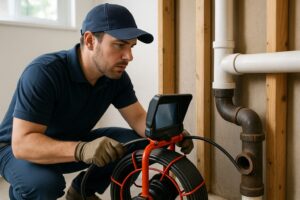
Sewer line repairs fail when the contractor skips a proper camera inspection. A sewer camera shows the exact location of damage. It shows the type of damage too. Cracks look different from root intrusion. Bellied pipes look different from collapsed sections. Without this data, any repair is a guess.
So diagnosis is not optional. It is the foundation of every successful sewer repair. When sewer line repairs fail, trace it back to the start. In most cases, the diagnosis was incomplete or skipped entirely.
Why Camera Inspections Prevent Sewer Repair Failure
A sewer camera inspection gives you real data. The camera travels through the pipe. It records video of every inch. You see cracks, root intrusion, grease buildup, and pipe collapse in real time.
This data changes everything. Instead of guessing, the repair team knows exactly what to fix. They know the pipe material. They know the damage type. They know the length of the affected section. So the repair targets the right problem in the right place. Sewer line repairs fail far less often when a camera inspection comes first.
At Sewer Experts Denver, every repair starts with a high-definition camera inspection. We do not guess. We diagnose. Then we fix.
Misreading Damage Type Leads to Repair Failure
Not all sewer damage is the same. Root intrusion needs a different fix than a cracked pipe. A bellied pipe needs a different approach than a joint failure. When sewer line repairs fail, it is often because the wrong damage type was identified.
For example, a contractor may clear roots with a snake. The drain flows again. But the roots grow back within weeks. The real fix is to seal the pipe so roots cannot re-enter. Sewer line repairs fail when the symptom is treated instead of the cause. Proper diagnosis identifies the cause. Then the right repair method can be chosen.
Wrong Repair Method Makes Sewer Line Repairs Fail
Even with a good diagnosis, sewer line repairs fail when the wrong method is used. There are several repair options available. Each one works best in specific situations. Choosing the wrong method for the pipe condition or soil type leads to fast failure.
The main repair methods are pipe patching, pipe lining, pipe bursting, and full replacement. Each has strengths and limits. Pipe patching works for small, isolated cracks. Pipe lining works for longer damaged sections. Pipe bursting works when the pipe is too damaged to line. Full replacement is the last resort.
Sewer line repairs fail when a contractor uses a patch on a pipe that needs full lining. Or they line a pipe that is too collapsed to accept a liner. Method selection must match the actual pipe condition. This is why diagnosis and method selection go together.
When Pipe Lining Fails as a Repair Method
Pipe lining, also called CIPP lining, is one of the best sewer repair methods available. When done right, it lasts 50 years or more. But sewer line repairs fail even with lining when the pipe is not properly prepared.
The pipe must be clean before lining. Grease, roots, and debris must be removed. If the pipe is not cleaned first, the liner does not bond properly. It peels away from the pipe wall. Then the repair fails fast. Also, a pipe that is more than 50% collapsed cannot accept a liner. Trying to line a collapsed pipe is a common reason sewer line repairs fail.
Our trenchless pipe lining service includes full pipe cleaning before every liner installation. This step is not optional.
When Pipe Bursting Is the Wrong Choice
Pipe bursting replaces the old pipe by pulling a new one through. It works well in many situations. But sewer line repairs fail with pipe bursting when the surrounding soil cannot handle the process.
In dense clay soil, pipe bursting can shift nearby utility lines. In areas with close pipe spacing, the bursting head can damage adjacent pipes. Also, pipe bursting does not work well with certain pipe materials like Orangeburg or severely corroded cast iron. The pipe may not burst cleanly. So the new pipe does not seat properly. Sewer repairs fail when pipe bursting is used in the wrong soil or pipe conditions.
The right method depends on the full picture. Soil type, pipe material, pipe depth, and damage extent all matter.
Pro Tip: Always ask your contractor which repair method they plan to use and why. A good contractor explains the method choice based on camera inspection data. If they cannot explain the reasoning clearly, that is a warning sign. Sewer line repairs fail most often when method selection is not tied to actual pipe condition data.
Material Problems That Cause Sewer Repairs to Fail
Material incompatibility is a major reason sewer line repairs fail. Sewer pipes come in many materials. Clay, cast iron, PVC, ABS, Orangeburg, and concrete are all common in Denver homes. Each material behaves differently. Each needs compatible repair materials.
When a contractor uses a liner designed for PVC on a clay pipe, the bond may not hold. When they use a patch compound that expands at a different rate than the host pipe, cracks form at the edges. Sewer line repairs fail because the repair material and the pipe material do not work together.
According to ASTM International, material compatibility standards exist for a reason. Sewer repair materials must meet specific standards for the pipe type and soil conditions. Skipping this step leads to fast failure.
Orangeburg Pipe and Why Repairs Always Fail
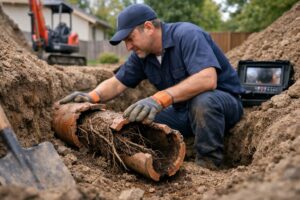
Orangeburg pipe is a special case. It was made from compressed tar paper and wood pulp. It was used in Denver homes built between 1945 and 1972. Orangeburg absorbs water over time. It softens and collapses from the inside out.
Sewer line repairs fail on Orangeburg pipe almost every time. The pipe is too soft to hold a liner. Patches do not bond to the surface. Even pipe bursting can be tricky because the pipe does not burst cleanly. The only real fix for Orangeburg is full replacement. Any other repair is a temporary patch at best. If your home was built in that era, ask your contractor to check for Orangeburg before any repair.
Joint Failures and Material Mismatch Problems
Pipe joints are the weakest points in any sewer system. Sewer line repairs fail most often at joints. This happens when the repair material does not flex at the same rate as the pipe. Soil movement causes the joint to open again.
Also, mixing pipe materials at a joint creates problems. For example, connecting PVC to cast iron without the right coupling causes leaks. The two materials expand and contract at different rates. Over time, the joint opens. Sewer repairs fail at these transition points repeatedly.
The fix is to use proper transition couplings and compatible materials at every joint. This sounds simple. But many contractors skip this step to save time or money. The result is a repair that fails within one to two years.
Common Mistake to Avoid: Do not let a contractor patch an Orangeburg or severely deteriorated pipe. Sewer line repairs fail on these pipe types almost without exception. A patch may hold for a few months. But the pipe continues to collapse around it. Full replacement is the only lasting solution for pipes in advanced decay.
How to Stop Sewer Line Repairs From Failing Again
Stopping sewer line repairs from failing starts with one decision. Get a camera inspection before any repair. This single step eliminates the guesswork that causes most failures. You see the pipe. You know the damage. You choose the right method.
But the inspection is just the start. You also need a contractor who understands material compatibility. They need to know which repair method fits your pipe type and soil conditions. And they need to prepare the pipe properly before any repair goes in.
Sewer line repairs fail when any one of these steps is skipped. So ask your contractor about each step. Ask to see the camera footage. Ask why they chose the repair method. Ask what materials they are using and why those materials work for your pipe type.
According to the American Society of Civil Engineers, proper inspection and material selection are the two most important factors in sewer repair longevity. Sewer line repairs fail when either factor is ignored.
Choosing a Contractor Who Prevents Repair Failure
Not all sewer contractors are equal. Sewer line repairs fail more often with contractors who skip steps. So look for specific things when choosing a contractor.
First, they must offer a camera inspection before any repair. Second, they must explain the repair method and why it fits your pipe. Third, they must be licensed and insured in Colorado. Fourth, they should offer a warranty on parts and labor. At Sewer Experts Denver, we back every repair with a 5-year parts and labor warranty. That is how confident we are in our process.
Check our reviews to see what Denver homeowners say about our work. A 4.8 out of 5 rating from 129 verified reviews tells you something real about how we operate.
Long-Term Maintenance to Prevent Sewer Repair Failure
Even a perfect repair can fail without proper maintenance. Tree roots grow back. Grease builds up. Soil shifts over time. So ongoing maintenance is part of preventing sewer line repairs from failing again.
Schedule a camera inspection every 3 to 5 years. This catches new problems early. It also confirms that your existing repair is holding. Hydro jetting once a year keeps grease and debris from building up inside the pipe. These two steps together dramatically reduce the chance that sewer line repairs fail on your property.
Also, be careful what goes down your drains. Grease, wipes, and food scraps are the top causes of new blockages. Even a well-repaired pipe can fail if it is constantly overloaded with debris.
What This Means for You: If your sewer repair has failed before, you are not alone. Sewer line repairs fail for specific, fixable reasons. Poor diagnosis, wrong method, and bad material choices are all preventable. You now know what to look for and what questions to ask. The next repair does not have to fail. Start with a camera inspection. Choose a licensed contractor with a real warranty. And commit to basic maintenance after the repair is done. That combination stops the failure cycle for good.
Sewer line repairs fail because of three core problems: poor diagnosis, wrong method selection, and material incompatibility. Each one is preventable. Each one starts with better information before the repair begins. A sewer camera inspection is the most important investment you can make before any sewer repair.
At Sewer Experts Denver, we have spent over 25 years stopping sewer line repairs from failing across the Denver metro area. We inspect first. We choose the right method. We use compatible materials. And we back every repair with a 5-year warranty. Do not let another repair fail. Contact our team today to schedule your sewer camera inspection and get a repair plan that actually lasts.
Expert Insight from American Society of Civil Engineers, Infrastructure Research Division: Sewer infrastructure failures are rarely random. In the majority of cases, failure can be traced to one of three root causes: inadequate pre-repair inspection, method selection that does not match pipe condition, or material incompatibility at repair joints. Addressing all three factors before repair begins reduces repeat failure rates by more than 60 percent. The inspection step alone accounts for the largest share of preventable failures in residential and commercial sewer systems.
Key Takeaway: Sewer line repairs fail when contractors skip the diagnosis step, choose the wrong repair method, or use materials that do not match the pipe type. A camera inspection before any repair is the single most effective way to prevent failure. Pair that with a licensed contractor and a solid warranty, and your repair has a real chance of lasting decades.
Frequently Asked Questions
Why do sewer line repairs fail so quickly after being done?
Sewer line repairs fail quickly when the diagnosis was incomplete. The repair targets one spot. But other damaged sections keep breaking down. So the repair holds briefly, then the pipe fails nearby. A full camera inspection before the repair prevents this. It shows all damage at once.
What is the most common reason sewer repairs fail in Denver?
In Denver, sewer line repairs fail most often because of root intrusion and Orangeburg pipe decay. Roots grow back fast after clearing. Orangeburg pipe cannot hold a liner or patch. Both problems need specific repair methods. Skipping a camera inspection means these issues go undetected until the repair fails again.
Can sewer pipe lining fail, and what causes it?
Yes, sewer pipe lining can fail. Lining fails when the pipe is not cleaned before installation. Grease or debris stops the liner from bonding to the pipe wall. Lining also fails on pipes that are more than 50 percent collapsed. Proper pipe prep and a camera inspection prevent lining failure.
How do I know if my sewer repair has failed?
Signs that sewer line repairs have failed include slow drains, sewage smells, wet patches in the yard, and gurgling sounds in toilets. These signs appear when the pipe is leaking or blocked again. A sewer camera inspection confirms whether the repair is holding or has broken down.
How can I prevent sewer line repairs from failing again?
To stop sewer line repairs from failing, start with a camera inspection before any repair. Choose a licensed contractor who explains their method and uses compatible materials. Schedule inspections every 3 to 5 years after the repair. Annual hydro jetting also keeps the pipe clear and extends repair life significantly.
Step-by-Step Process
Step-by-Step: How to Prevent Sewer Line Repairs From Failing
1. Schedule a sewer camera inspection before any repair work begins
2. Review camera footage to identify all damage locations and types
3. Confirm the pipe material type before choosing a repair method
4. Select the repair method that matches pipe condition and soil type
5. Clean the pipe fully with hydro jetting before any liner or patch goes in
6. Use repair materials that are compatible with your specific pipe material
7. Install the repair using a licensed, CIPP-certified contractor
8. Run a post-repair camera inspection to confirm the repair is seated correctly
9. Schedule annual hydro jetting to keep the pipe clear after repair
10. Book a follow-up camera inspection every 3 to 5 years to catch new issues early
Quick Reference: What Is Sewer Line Repair Failure?
Sewer line repair failure happens when a completed sewer repair stops working. The pipe leaks, blocks, or collapses again after the repair was done. Sewer line repairs fail for three main reasons. First, the diagnosis was incomplete. Second, the wrong repair method was used. Third, the repair materials did not match the pipe type.
Sewer repairs can fail within weeks or months. So early signs matter. Watch for slow drains, bad smells, and wet spots in the yard. These signs mean the repair has broken down. A camera inspection confirms the failure and shows what went wrong. Then the right repair can be done correctly the second time.
Additional Resources
• Trenchless Pipe Lining in Denver — Learn how CIPP lining works, when it is the right repair choice, and why it lasts 50 years or more when installed correctly.
• Trenchless Pipe Bursting Denver — Understand when pipe bursting is the right method, what soil conditions it works best in, and how it compares to pipe lining.
• Sewer Experts Denver Reviews — Read verified reviews from Denver homeowners who have had sewer repairs done by our team and see how we handle real repair challenges.
• Contact Sewer Experts Denver — Schedule your sewer camera inspection or get a repair assessment from our licensed Colorado sewer specialists today.
Reviewed by Marisa Beaver, Owner · Updated

About the author
Marisa Beaver
Owner · Demolition license (Colorado); 27 drain-layer's licenses (Colorado)
Marisa Beaver is the owner of Sewer Experts, a locally owned sewer, drain, and water line company based in Commerce City, Colorado, serving Denver and the Front Range including Aurora, Lakewood, Thornton, and Boulder. She oversees client relations and business operations, working directly with customers on sewer line repair, drain cleaning, and water line services, and personally answers client calls and coordinates technical consultations. Beaver holds a demolition license and 27 drain-layer's licenses in Colorado. Sewer Experts is licensed, insured, and bonded with state-certified technicians, and generated over $2 million in revenue in 2020. A woman- and minority-owned business, Sewer Experts has held an on-call Denver Housing Authority contract and been featured on the cover of Dig Different magazine.